
Employee Communication Platform: A 2026 Guide
Learn what an employee communication platform is and why it matters for your business in 2026. Improve engagement and streamline messaging.
Dan Robin

You can usually tell when internal communication is broken before anyone names it. A manager forwards a policy update, someone prints it out, another person hears a different version on a group chat, and the night shift finds out last. The work keeps moving, but the message turns to fog.
That's why an employee communication platform matters. Not as a perk, not as another app, but as workplace infrastructure for people who don't sit at the same desk, check the same inbox, or work the same hours. When the job depends on shifts, locations, and handoffs, the communication system has to behave like part of operations.
The Update That Arrived Three Days Late
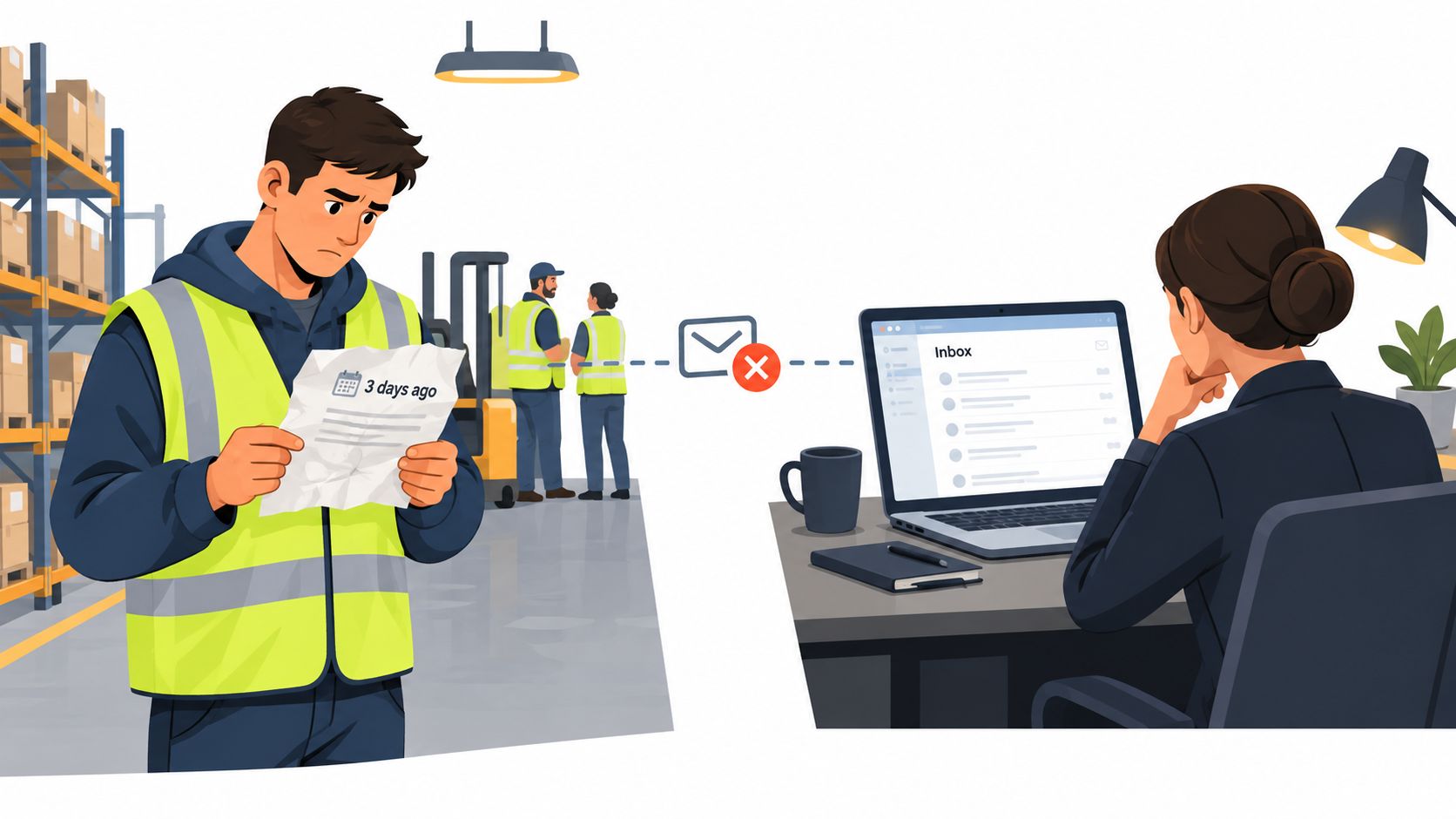
The notice was simple enough. A policy changed, the floor leads knew first, and the warehouse team was supposed to follow the new version by the next shift. By the time the message reached the people moving pallets and loading trucks, it had already passed through a manager's inbox, a text thread, and a printed sheet taped near the break room.
That kind of delay feels small until you live with it. Then it becomes the reason a team misses a safety update, uses the wrong version of a process, or spends time fixing work that shouldn't have been wrong in the first place. Communication stops being “internal comms” and becomes a daily operating problem.
The real cost is confusion
A frontline team doesn't need more noise. It needs a reliable place where updates land, stay visible, and can be found again later. The shift worker on a phone, the nurse in a handover, and the store manager on the floor all need the same thing, a record they can trust.
That's why I think the category exists at all. An employee communication platform is what you buy when email, chat, and noticeboards stop being enough. It gives a company one place to send updates, collect replies, and keep operating knowledge from scattering across ten tools.
A message isn't delivered when it's sent. It's delivered when the right people can act on it.
That's the practical test. If your current setup can't pass it, the tool stack is costing you more than it looks.
What an Employee Communication Platform Actually Is
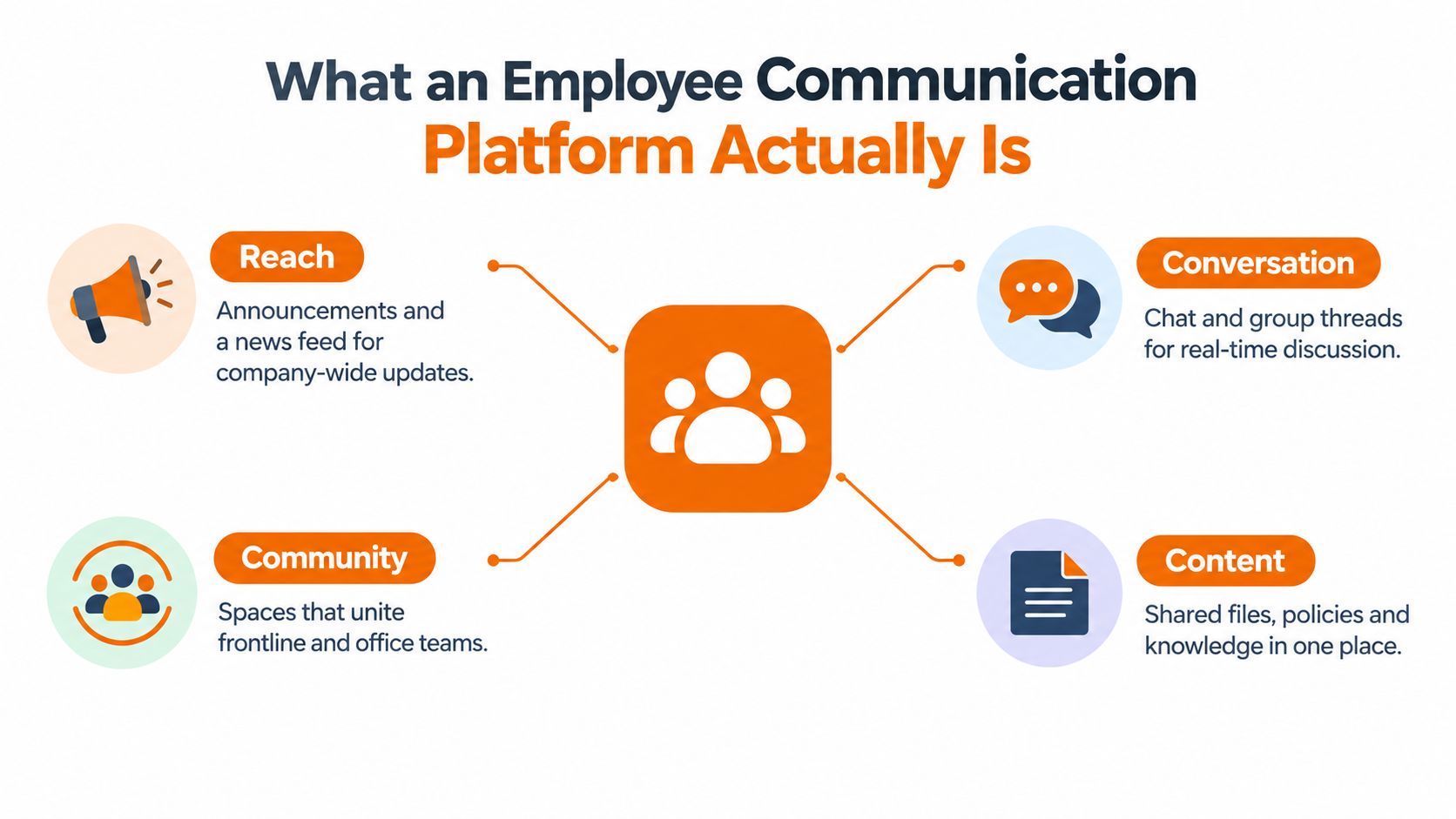
A real employee communication platform is workplace infrastructure. It brings together announcements, team conversation, work files, tasks, and knowledge in one place so people do not have to chase updates across email, text, and outdated intranet pages.
Four jobs it has to do
First, it has to reach people. Company updates need to land on a phone, not just a laptop, and targeted announcements must still be easy to find later. If frontline staff never see the message, the system is only paper with a login.
Second, it has to support conversation. Private chat, group threads, and Spaces give teams a place to talk without forcing every topic into one giant company channel. The goal is not more noise, it is a place where work-related discussion can happen without resorting to consumer apps.
Third, it has to handle operations. Tasks, shifts, files, onboarding, and policy references need a home that sits next to communication, not somewhere off to the side. Pebb uses a unified model for that kind of workflow, which matters when distributed teams need updates, replies, and the next action in the same place.
Fourth, it has to support culture. Profiles, recognition, and feedback help people feel part of the company, but only if they sit inside a system that also carries the work. Culture grows faster when people can see one another and act on shared information, not when they are buried in separate tools.
Email, intranets, and consumer chat apps can still get a small team through the day. They start to break down once shifts, locations, handoffs, and workers without regular email access enter the picture. A platform becomes useful when it gives everyone the same source of truth without asking them to stitch together a pile of separate tools.
That is why a practical comparison helps. If you are sorting through options, MR2 Solutions has a practical guide to compare UC software vendors, and that kind of reference is useful for checking whether a tool can support finding, sharing, and acting on information.
The Core Features That Actually Matter
A lot of feature pages read like a wish list. Nice words, weak structure. The parts that matter are the ones that keep a company from losing messages, work, and context.
Spaces, feeds, chat, and the places work lives
A good platform gives teams Spaces for the work that belongs together. Posts, files, tasks, and discussions stay in one place instead of spreading across inboxes and scattered chats. Pebb uses configurable Spaces, a heartbeat-style news feed, chat, posts, tasks, and file sharing, which fits the way one team handles shifts while another handles office work.
The news feed does more than look tidy. It gives leadership one place to post company-wide updates without relying on every manager to pass the message along. Pebb's team update news feed shows that format clearly.
Voice and video belong here too, but they are support tools. They matter when a live conversation clears confusion, not when they become the only way information moves.
If a feature does not help someone finish work or find truth faster, it is probably decorative.
Knowledge, tasks, and the stuff people need on a Tuesday
The other quiet winners are the Knowledge Library and Tasks. Policies, onboarding material, and step-by-step guidance live there. Too many teams treat those as secondary features, then wonder why managers keep answering the same questions.
That is the point where a platform stops acting like a chat tool and starts working like infrastructure. When people can read a policy, complete a task, and check the latest file in the same app, there is less room for version drift and fewer excuses for “I did not see it.”
A useful comparison is to compare UC software vendors with the same question in mind: can the tool support finding, sharing, and acting on information without forcing people to assemble the process themselves?
Analytics should tell you something useful
Analytics matter, but only if they lead to action. Basic message counts are not enough. You want to know whether people saw the update, whether they acknowledged it, and whether the platform helped the team keep moving.
Pebb is useful as a working example because it puts announcements, Spaces, tasks, knowledge, and analytics in one app. That shape matters for teams that do not want communication split off from execution. It also leaves room for HR and identity systems to sit beside it without turning the workflow into a tangle.
That is why communication infrastructure needs the same kind of planning as any other operational system. In a company with shifts, locations, and mixed access to email, the platform has to carry the message, the response, and the follow-through.
How Unified Tools Work for Frontline and Office Teams
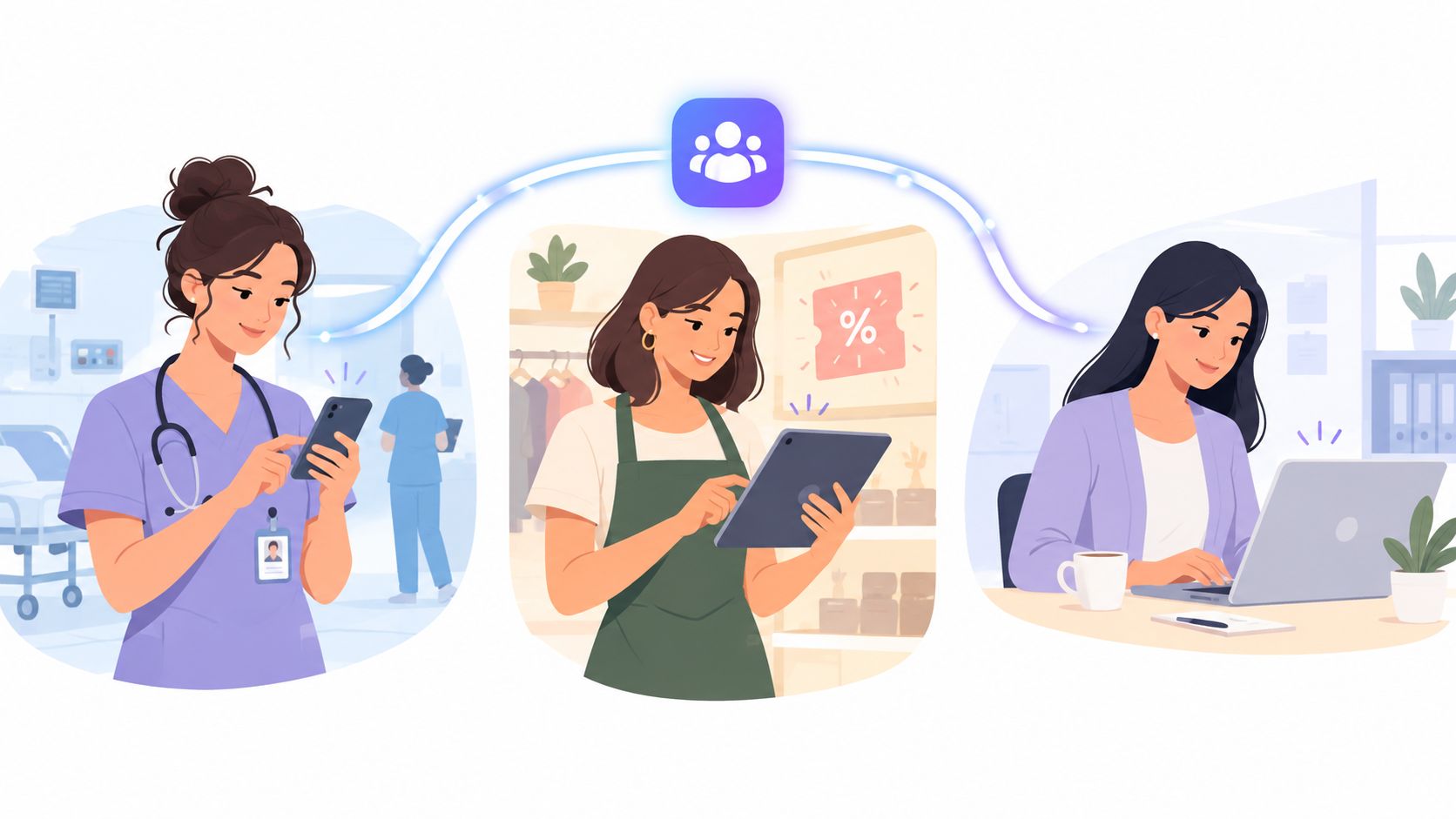
A shift starts before the first meeting. A nurse checks handover notes on a phone. A retail manager posts a promo change to the team. A warehouse lead reads a safety update and acknowledges it before the next task. An HR lead checks which location keeps missing announcements and sees a pattern instead of guessing.
What disappears when the system works
The first thing that drops away is message loss. Updates do not sit in one manager's inbox, get buried in chat, or arrive after the shift that needed them. The second thing that drops away is second-guessing, which is often the primary cost.
For frontline teams, timing is part of the job. The U.S. Bureau of Labor Statistics reported that 15% of wage and salary workers usually worked a non-daytime schedule, with 40% of leisure and hospitality workers, 25% of transportation and utilities workers, and 20% of wholesale and retail trade workers on non-daytime schedules (BLS data). A message posted once and forgotten is not a communication system. It is a note left on a desk no one shares.
For a concrete model of an app built for this reality, see Pebb's frontline employee app. It reflects a simple truth, shift-based work needs timing, acknowledgment, and follow-through, not just another place to post updates.
Shared devices, personal phones, and the trust question
Real workplaces are messy. People share devices. Some use personal phones. Some read in a language different from the one leadership used in the original draft. A good platform has to work inside that reality without turning into surveillance software.
That means role-based access, simple mobile reading, and clear permissions. It also means giving people what they need without forcing them into a constant monitoring setup. Communication should help work happen, not add a new layer of anxiety around it.
For teams that already use Microsoft's ecosystem, a Microsoft Teams integration guide can help frame how a unified app sits beside existing tools instead of asking everyone to change habits at once. Adoption drops fast when the new tool feels like homework.
One system, one source of truth, and timing that matches the shift clock, that is what unification buys you.
Measuring What Communication Actually Does
Many teams fool themselves here. They report opens, clicks, reactions, and logins, then call it engagement. That's not measurement. That's counting noise.
Use a simple chain, not a vanity dashboard
Start with reach. Did the message get in front of the right people? Then measure attention. Did they open it, read it, or at least spend time with it? After that comes comprehension, which is where pulse questions and acknowledgments tell you whether the message made sense.
Then look for behavior change. Did the policy get followed, the task get completed, or the form get returned? Only after that should you ask about business impact, because that's where communication connects to safety, retention, fewer mistakes, and faster issue resolution.
The trap is pretending all of these are the same thing. They're not. A person can click a post and still not know what to do.
Good analytics tell you where the message stopped, not just that it was sent.
Watch for privacy creep
Analytics should help leaders see patterns by team, shift, and location. They shouldn't become a way to stare at individuals all day. If a platform can't show aggregate signal without making workers feel watched, it's trading trust for optics.
That's why acknowledgment flows and task completion matter more than social reactions. They turn communication into something verifiable without pretending every employee is always online, always reading, and always available.
Pebb's analytics and acknowledgment workflows fit that better than shallow dashboards do, because they connect message delivery to follow-through. That's the right direction for any tool in this space, whatever logo sits on the box.
Choosing the Right Platform for Your Team
A lot of buyers start with a feature tour and end with regret. The better approach is to ask the boring questions first, because the boring questions decide whether the system will hold up in daily work.
What to check before you sign anything
Frontline access: Can people use it on the devices they already carry, or does it assume everyone has a laptop and a corporate inbox?
Routing and relevance: Can messages target by role, location, and shift without flooding people with alerts they will ignore?
Operational fit: Does it include shifts, tasks, files, PTO, and approvals in one place, or does work still live in separate systems?
Governance: Are permissions, audit trails, and data handling clear enough that HR and IT can work with it confidently?
Rollout speed: Can you launch with a single invite link and get value quickly, or does setup turn into a quarter-long project?
The point is to match the tool to the work. A deskless workforce does not need the same setup as a software team that lives in email and meetings.
A simple way to test the fit is to ask where the platform hands off to people operations. If that boundary is unclear, HR ends up cleaning up after IT, or IT ends up guessing what HR needs. A Trupeer Inc. HR solutions page is a useful reference for that boundary.
A simple comparison table
Criterion | What Good Looks Like | Red Flag |
|---|---|---|
Mobile access | Works well on phones and shared devices | Assumes everyone sits at a desk |
Targeting | Reaches the right role, site, or shift | Sends the same blast to everyone |
Operations | Brings tasks, files, and scheduling together | Forces users into separate tools |
Governance | Clear permissions and audit trail | No obvious control over access |
Rollout | Simple onboarding and fast adoption | Heavy setup before anyone can use it |
Pebb fits the unified model better than a stack of disconnected tools because it ties communication to work, not just messages. That matters when teams are spread across shifts and locations, where a missed update can turn into a missed task.
One more thing. Do not confuse a chat tool with a platform. Chat is part of the job. It is not the whole job.
Why Communication Infrastructure Is a Leadership Decision
Tools don't create culture on their own, but they absolutely shape how culture travels. If updates only flow one way, if a night-shift worker gets less information than an office colleague, or if the answer lives inside one manager's head, the company is choosing fragmentation.
That's why I see a unified employee communication platform as a leadership decision, not just an IT purchase. It says something about whether the business wants one shared workplace or several disconnected ones. Pebb's idea of a company digital home fits that thinking, especially for teams spread across shifts and locations, and it's presented here as an employee engagement platform for teams that want communication tied more closely to daily work.
The question worth sitting with is simple. Do your people have to chase information, or does your system bring it to them?
Pebb brings communication, operations, and engagement into one workplace app for frontline and office teams. If you're trying to replace scattered tools with a calmer system that people can use, visit Pebb and see how it fits the way your teams work.
