
10 Ways to Say Congratulations That Actually Matter
Tired of the generic 'Congrats'? Find meaningful congratulations messages for new job announcements. Real examples and tips for making your message count.
Dan Robin

When someone on your team lands a new role, the quick "congrats" in a chat channel feels cheap. It’s the digital equivalent of a polite nod in the hallway. We’ve all gotten one. We appreciate it for a second, then forget it forever.
But a new job is a big deal. It’s a messy, exciting mix of nerves and ambition. The way a company acknowledges it says everything about its culture. I’ve seen it time and again: great organizations don’t just announce promotions; they turn them into moments that reinforce what they stand for.
Let's be honest, most of us wing it. We search for a template, tweak a sentence, and hit send. But what if we treated these messages with the same thought we put into a product launch or a customer email?
Here’s the thing: it’s not about finding the perfect words. It’s about having a better way to deliver them. This isn't just about being nice; it’s about building a place where people feel valued enough to stick around. I’ve managed teams across offices and continents, and I've learned that how you celebrate the small wins determines the big outcomes.
So, let’s skip the fluff. Here are ten specific ways to send congratulations messages for a new job that actually mean something. We'll look at everything from company-wide announcements and notes from leadership to celebrations that build real connection.
1. Make It Public in Company Spaces
An individual message is good, but a public announcement in a shared digital space is better. It takes the recognition from a private whisper to a public cheer. It makes the person feel seen by everyone. This is critical for distributed teams, where people in different cities or on different shifts would otherwise miss the news entirely.
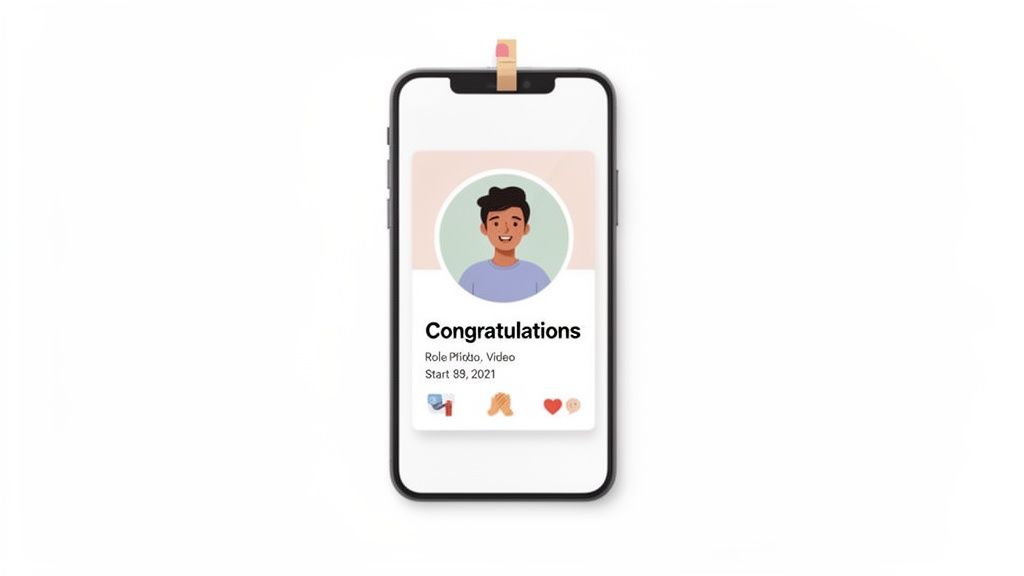
Using a dedicated channel in an employee communication platform like Pebb's Spaces transforms a simple message into a company-wide event. A hospital can post about a nurse practitioner's promotion, and the night shift will see it just like the day shift. A retail chain can announce a new store manager across 500 locations at once, creating a shared sense of momentum.
Why This Works
It’s about more than just informing people; it’s about building culture. It shows everyone that hard work gets noticed and that there’s a real path for growth here. It also helps the person build an unbeatable professional reputation. It’s a quiet but powerful tool for keeping people motivated.
My take: Public recognition isn’t just about celebrating one person. It’s about signaling to everyone else what your company truly values. It shows what kind of work gets rewarded.
How to Do It
Add a face and a voice. A photo of the person and a short quote from them makes it human.
Tag the right people. Mention the employee, their new manager, and their old one. It brings the key players into the conversation.
Ask for engagement. End the post by asking colleagues to "share a piece of advice" or "leave a welcome message." It encourages people to participate.
Time it right. Post it when you know most people are actually looking at their apps.
2. A Direct Message from a Leader
Public praise is powerful, but a personal message from a leader has a different kind of weight. It cuts through the noise. It feels direct. It says, "I see you, and I’m personally paying attention to your success."
A direct message in a tool like Pebb makes this easy and immediate. A CEO can send a quick video message congratulating a new department head. A manager can text a frontline employee about their promotion to shift supervisor. It reaches them instantly, whether they’re on the night shift or in another time zone.
Why This Works
Trust. That’s what this builds. When a leader takes a few minutes to send a personal note, the employee feels seen as an individual, not just a number. That small act can be the start of a strong working relationship. These thoughtful congratulations messages for a new job create a sense of belonging that big announcements sometimes miss.
My take: A direct message from a leader is a high-impact, low-effort move. It costs nothing but a few minutes, yet it pays back in loyalty and morale because it feels sincere.
How to Do It
Be quick. Send it within 24 hours of the announcement. It shows you’re genuinely excited.
Be specific. Don't just say "congrats." Say, "Your problem-solving on the Q3 project is exactly why you got this role."
Offer real support. Follow up with something concrete, like "Let's grab coffee next week to talk about your first 30 days."
Use your voice. A quick voice note or a short, informal video feels far more personal than text. It carries a tone that words alone can't.
Check in. A week later, a simple "How's it going?" shows you're still invested.
3. A Team Celebration with a Hashtag
A single congratulatory message is nice. A wave of them is a cultural event. You can spark that wave with a simple hashtag. This turns a standard announcement into an interactive, almost-viral moment inside your company. The person’s win becomes a win for everyone.
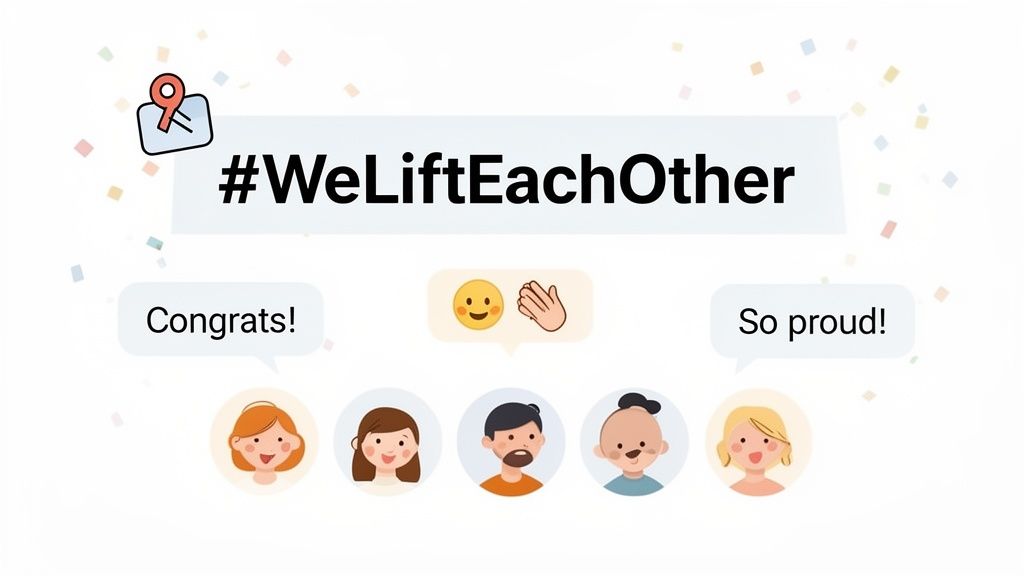
Think about using a company channel to launch a #ProudOfOurTeam campaign when a warehouse worker gets promoted. Colleagues can then share their own messages with the hashtag, creating a digital wall of celebration. For a healthcare system, a #NewChapterAlert hashtag can celebrate a nurse moving into a leadership role. It’s more than news; it’s a living repository of team spirit.
Why This Works
It’s about building a story together. A hashtag makes recognition a group activity. It gives everyone an easy way to join in, which amplifies the celebration. The collection of posts becomes proof that your company is a place that genuinely supports its people. This is one of those employee recognition program ideas that actually work because it’s authentic and peer-driven.
My take: A hashtag campaign turns individual recognition into a cultural artifact. It creates a searchable record of team success and reinforces the idea that promotions are a celebration for everyone.
How to Do It
Start with a story. Open your post with a short anecdote about the person. A personal touch sets a warm, genuine tone.
Make it easy to participate. Ask for emoji reactions in addition to comments. It’s a low-effort way for busy people to show support.
Tag the key players. Mention the person, their new manager, and a few colleagues who worked closely with them to get the ball rolling.
Wrap it up. After a day or two, post a follow-up comment thanking everyone for participating. It closes the loop and shows the team you appreciate their input.
4. An Onboarding Space with a Welcome Package
A great congratulations message doesn't just celebrate; it prepares. This approach combines a warm welcome with immediate, practical resources. You create a dedicated onboarding "Space" for the new employee—a single hub that pairs the congratulatory announcement with everything they need for their first few weeks.
Instead of juggling emails with HR forms, Slack DMs with IT instructions, and calendar invites for orientation, the employee gets one clean entry point. It’s the difference between a high-five at the door and a guided tour of the whole building.
For instance, a new warehouse hire gets a welcome to their Pebb Space that includes their congratulations, a safety checklist, a video on how to clock in, and their first week's training schedule. It’s all right there.
Why This Works
It’s not just efficient; it makes someone feel prepared and valued from the moment they say yes. It cuts down on first-day anxiety by giving them a clear path. This organized welcome shows you’ve thought about their experience and are invested in their success long before Day 1. The best onboarding is about people, not paperwork. This is how you put that idea into practice.
My take: A dedicated onboarding Space turns congratulations into a useful tool. It shows new hires that your company is organized and respects their time, which builds confidence before they even start.
How to Do It
Record a welcome video. A short, personal video from their direct manager, pinned to the top of the Space, makes a huge difference.
Build a first-week checklist. Use a tasks feature to create a clear list: "Complete HR paperwork," "Set up email signature," "Meet your buddy."
Assign a buddy. Invite a peer mentor into the Space to answer informal questions. It creates an immediate connection.
Share fun facts. Post a few fun facts about the new person (with their permission) to help break the ice.
Schedule check-ins. Set up automated messages to post in the Space on Days 1, 3, and 7 to check in and offer encouragement.
5. A Video Montage from Their Old Team
A written message is good. A video compilation from former teammates is something else entirely. It turns a text-based note into an emotional experience. By collecting short video clips from colleagues, you create a keepsake that celebrates not just the new job, but the relationships built along the way.
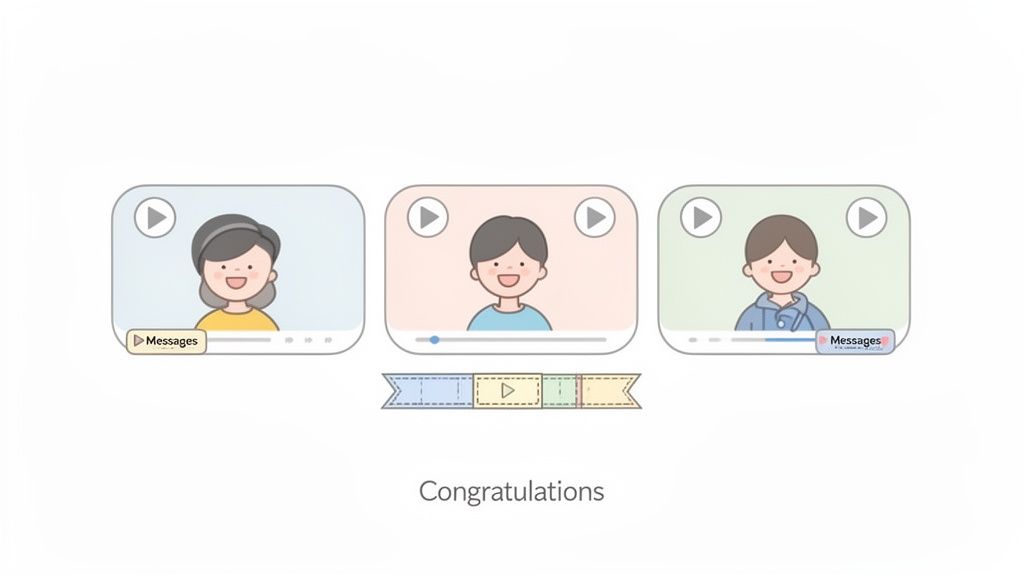
Imagine gathering 30-second videos from 15 team members to congratulate a peer on becoming a new department lead. Or a newly promoted hospital administrator receiving a compilation of warm wishes from the nursing staff they used to work with. It transforms a simple congratulations into a memorable event.
Why This Works
This is all about human connection. Hearing familiar voices and seeing friendly faces makes the good wishes feel real. It acknowledges the past relationships that helped shape the person’s career, reinforcing a culture where people matter. It’s not just a message; it’s a tribute.
My take: A video compilation is a high-impact, low-cost way to show genuine appreciation. It creates an emotional artifact that reminds the employee of their value and strengthens their connection to the company culture.
How to Do It
Plan ahead. Ask for video submissions a week in advance. Give people time.
Keep it simple. Ask for short clips (30-60 seconds) and suggest a simple format: "Say your name, how you know them, and share a quick message or a fond memory."
Use easy tech. People can record on their phones. A platform like Pebb lets them upload videos directly into a message or a Space.
Share it as a surprise. Compile the clips and send the final video in a private message for a personal touch, or post it in a team channel for a group celebration.
6. A News Feed Post That Tells a Story
A channel-specific announcement is great, but a post in the main company news feed takes it to another level. It moves the conversation from the team room to the town square. This approach frames the promotion not just as a personal win, but as a story about the organization's culture. It’s a way to send congratulations messages for a new job that also say something about who you are as a company.
Imagine a healthcare system celebrating a nurse’s promotion to Chief Nursing Officer. The post can connect her journey to the core value of "caring leadership." Or a retail chain highlighting a new regional manager who started as a store associate, showcasing a commitment to internal growth. These stories turn a simple congratulations into a cultural touchstone.
Why This Works
It's about storytelling, not just announcements. It connects an individual's success to the company's mission. By showing how a person’s contributions led to their advancement, you provide a clear, inspiring example for everyone else. It shows that your values aren’t just words on a wall; they’re the foundation for real career growth.
My take: A news feed announcement that ties a promotion to company values does two things at once. It celebrates the person while reinforcing the desired culture for everyone.
How to Do It
Reference specific work. Mention a key project the person led. For a new logistics director, highlight their work on a successful safety program.
Include a quote. Ask the person for a brief quote about what the new role means to them.
Link to career resources. Add a link to your internal job board or career development portal. Show others a clear path for their own growth.
Post it when people are looking. Between Tuesday and Thursday is usually when internal platforms see the most activity.
7. An Interactive Poll in the Team Space
A standard congratulatory post is passive. Turning it into a group activity makes it memorable. Combining your message with an interactive poll transforms the announcement into a fun, participatory event. It’s a way to move beyond just saying "congrats" and invite the team to engage with their new colleague.
Imagine a newly promoted supervisor in a busy warehouse. A post in a shared space could include a poll asking, "Which of Alex's skills will help our team the most?" with options like "Expert problem-solving," "Calm under pressure," or "Great at teaching." The team gets to voice their excitement, and Alex gets immediate, positive feedback.
Why This Works
It's interactive. Instead of just reading, team members get to participate. This strengthens team bonds and makes the new person feel instantly connected. The poll isn't just for fun; it provides real insight. The results can give the new hire a snapshot of team expectations before their first day. It’s a warm, data-driven welcome.
My take: An interactive poll democratizes the celebration. It gives everyone a voice and turns a top-down announcement into a bottom-up conversation.
How to Do It
Keep it positive. Frame your poll questions to be celebratory and forward-looking.
Ask about things that matter. Use polls to gather useful input, like "What’s the best way for our new team lead to share updates?" with real options.
Share the results. Don't just let the poll die. Post a follow-up sharing what the team said. It shows you were listening.
Keep the conversation going. After the poll, ask a follow-up question in the comments. For instance, "For those who voted for 'problem-solving,' share a time Alex helped you out!"
8. A Mentor Announcement and Shadowing Schedule
A great congratulations message doesn’t just celebrate; it sets the person up to succeed. By pairing the announcement with a mentor and a clear shadowing schedule, you turn a celebratory moment into a structured onboarding experience. It shows the new hire that you’re not just happy for them, but you’re invested in their growth.
This method moves beyond a simple welcome and gets straight to building confidence. For example, a hospital can announce a new nurse and simultaneously introduce their experienced charge nurse mentor, complete with a four-week shadowing calendar visible to the whole team.
Why This Works
This strategy combines praise with practical support. It's a powerful mix. It shows the new person exactly how they'll be supported and gives the chosen mentor public recognition for their expertise. It tells everyone that development is a team sport. Sending these structured congratulations messages for a new job shows a deep commitment to employee success.
My take: Announcing a mentorship pairing publicly does two things at once. It honors the mentor for their skill, and it gives the new employee an immediate, visible support system.
How to Do It
Frame the mentorship as an honor. Announce the mentor selection by acknowledging their expertise and willingness to guide others.
Provide a clear plan. Attach a 30- or 60-day learning plan or shadowing schedule directly in the post. Clarity is kindness.
Schedule check-ins. Use a shared calendar to pre-schedule regular mentor-mentee meetings. It ensures accountability.
Link to resources. Include links to relevant training modules or company documents to create a one-stop resource.
9. A Career Timeline with Personal Reflection
A simple "congratulations" is nice. A story is powerful. Instead of just announcing a promotion, you can frame it as the latest chapter in an employee's journey. A visual timeline post does exactly this, showing their progression through different roles in the company. It turns a single event into a compelling narrative of growth.
This is especially effective for celebrating long-term employees. You can map out a restaurant employee's path from line cook to shift lead, then to general manager. Or showcase a hospital aide's journey to becoming a charge nurse. This visual story makes the achievement feel earned and significant.
Why This Works
Stories connect with people emotionally. A timeline doesn't just celebrate the "what" (the new job), but the "how" and "why" (the journey). This offers a tangible example of career mobility within your company, making it one of the most inspiring congratulations messages for a new job you can share. It shows other employees that loyalty and hard work are rewarded.
My take: A career timeline isn't just a celebration for one person; it's an internal marketing tool for your company's culture. It provides a real, visible blueprint for success that motivates everyone.
How to Do It
Interview the employee. Ask them about their journey. Who were their mentors? What were the turning points?
Gather quotes. Include short quotes from their current and former managers. Hearing from leaders at each stage adds credibility.
Highlight the skills. Note the key skills they developed in each role that prepared them for the next one.
End with their own words. Pair the timeline with a direct quote from the employee about what the new role means to them. It adds an authentic, human touch.
10. A Coordinated, Multi-Channel Campaign
A single message is nice. A coordinated campaign is unforgettable. Instead of a one-and-done announcement, a multi-channel campaign stretches the recognition over several days. It uses different formats and channels to build sustained excitement. It turns a moment into a milestone.
This works because it meets people where they are. A manager’s direct message feels personal. A team post encourages peer celebration. A company-wide news feed announcement gives it official weight. A hospital could start with a manager’s private DM to a newly promoted nurse, followed by a celebratory post in the department’s channel, and then a formal announcement in the all-staff news feed. It’s a drumbeat of recognition, not a single clap.
Why This Works
Sustained recognition reinforces that promotions are a big deal. By celebrating across different channels, you show the employee their growth is valued at every level. Each message builds on the last, creating a powerful story of achievement. It's a strategic way to turn simple congratulations messages for a new job into a powerful cultural statement.
My take: A multi-channel campaign immerses people in the celebration. By staggering messages across DMs, team channels, and public feeds, you create layers of recognition that make the employee feel seen from every angle.
How to Do It
Plan the sequence. Map out the campaign before you send the first message. Day 1: Personal DM from the manager. Day 2: Team celebration. Day 4: Company-wide announcement.
Vary the tone. The direct message should be personal. The team post should be energetic. The company-wide announcement should be professional and inspiring.
Coordinate with leaders. Loop in HR, the manager, and department heads so everyone is aligned on the timing and content.
Make it official. The campaign can conclude with something practical, like their name appearing on new shift schedules. It connects the celebration to their new responsibilities.
10 Types of New-Job Congratulations Compared
Approach | Implementation Complexity 🔄 | Resource Requirements ⚡ | Expected Outcomes ⭐📊 | Ideal Use Cases 💡 | Key Advantages ⭐ |
|---|---|---|---|---|---|
Professional Achievement Announcement in Company Spaces | Low–Medium — structured post setup | Low — content, optional multimedia | ⭐ Broad visibility; documented milestone; moderate engagement | Company-wide or multi-site promotions; frontline visibility | Reaches entire workforce; permanent record |
Direct Message Congratulations from Leadership | Low — one-to-one message | Low — leader time; optional media | ⭐ High personal impact; private connection; lower public reach | High-touch recognitions; immediate leader-employee touchpoints | Feels genuine; strengthens leader relationship |
Team Celebration Post with Hashtag Campaign | Low — simple post + hashtag | Low — post creation; moderation | ⭐ High peer engagement; authentic UGC; searchable thread | Teams with active social culture; peer recognition drives | Builds peer-to-peer recognition; viral-style participation |
Onboarding Space Announcement with Welcome Package | Medium–High — Space creation + pinning | High — HR+ops coordination; documents, tasks | ⭐📊 Faster time-to-productivity; reduced onboarding friction | New hires, frontline roles needing consolidated info | Combines emotional welcome with practical onboarding resources |
Video Testimonial Congratulations from Previous Team Members | Medium — collect and compile clips | Medium–High — coordination, editing, storage | ⭐ Very high emotional resonance; memorable content | Long-tenured departures/promotions; leadership transitions | Highly engaging; reusable for culture/recruitment content |
Cross-Functional Recognition Post in Company News Feed | Low–Medium — curated announcement | Medium — professional curation, imagery | ⭐📊 Maximum audience reach; reinforces values; motivational | Strategic promotions that illustrate career paths company-wide | Positions promotion as cultural touchstone; inspires others |
Interactive Poll and Celebration in Team Space | Low — create poll and post | Low — poll design and follow-up | ⭐ High engagement uplift; quick team insights/data | Shift-based teams; wanting asynchronous participation | Boosts interaction; gathers team perceptions quickly |
Mentor Connection Announcement with Shadowing Schedule | Medium–High — pairing + calendar setup | High — mentor time, scheduling, program resources | ⭐ Improves retention; structured support; measurable progress | Developmental promotions; roles requiring knowledge transfer | Creates accountability; accelerates on-the-job learning |
Career Milestone Timeline Post with Personal Reflection | High — interview + design work | Medium–High — storytelling, infographic design | ⭐ Inspires others; clarifies progression pathways | Internal promotions and long-tenured growth stories | Compelling narrative that models career advancement |
Multi-Channel Congratulation Campaign with Coordinated Messages | High — planning across channels | High — cross-team coordination, scheduling, analytics | ⭐📊 Sustained recognition; higher reach; multiple touchpoints | High-visibility promotions; distributed shift workforces | Ensures message is seen; tailored tone per channel |
It’s a System, Not a Secret
Looking back at these ten methods, a clear pattern emerges. It’s not about finding the one perfect message. It’s about building a system. The most effective congratulations messages for a new job are rarely a single action. They are part of a process that weaves together personal acknowledgment, public celebration, and practical support.
Think of it like this: sending a quick, one-off email is like sending a greeting card. A nice gesture. But building a system around the moment is like throwing a welcome party where you also hand over the keys to the new house. One is a pleasantry; the other signals true belonging.
From Gesture to System
The real shift happens when you stop seeing congratulations as a task to check off and start seeing it as an opportunity to reinforce your culture. Each promotion is a test. Does your response make the person feel like a name on a report, or does it make them feel seen, valued, and connected to the mission?
You’ll notice a common thread here: these ideas rely on tools that connect the entire workforce. That’s not an accident. A disconnected communication stack is often where a good culture frays.
The Core Insight: If your heartfelt congratulations can't reach a frontline employee on their phone with the same energy it reaches a desk worker on their laptop, you're only celebrating with half your team. You're creating tiers of belonging.
The goal isn't to copy these templates. The real takeaway is to look at your own process and ask some honest questions. What system are we building? Does it create clarity or confusion? Does it foster connection or isolation?
Making Recognition Part of the Workflow
When a peer gets a promotion, do you hear about it through the grapevine, or in a celebrated announcement where everyone can join in? When a new person starts, do they get a generic HR email, or a welcome post from their manager with a video from their new teammates?
These aren't "nice-to-haves." They are the small, consistent actions that build a strong culture. They show people, through action, that their growth matters. A thoughtful congratulations message is more than good manners; it's a strategic tool for keeping your best people. It tells them that their next great career move can happen right here.
Your system should answer a few key questions for the employee:
Am I seen? A personalized message shows you're paying attention.
Do I belong? Public recognition integrates them into the wider team.
Am I set up for success? Connecting them with mentors turns words into action.
Every career move inside your company is a chance to answer these questions with a resounding "yes." Don't waste it on a simple, forgettable 'Congrats.' Turn the moment into a memorable experience. Build a system that celebrates people, not just positions.
We built Pebb because we believe a company’s culture lives in these everyday moments. It’s the all-in-one platform designed to connect your entire team, from headquarters to the frontline, so you can turn congratulations into a system that strengthens your culture with every new hire and promotion. See how you can build a more connected workplace at Pebb.
