The problem with "employee engagement" is the software
Explore the best employee engagement platforms and find top tools to boost team morale, collaboration, and productivity in 2026.
Dan Robin
We’ve all seen it. The email lands in your inbox announcing the annual engagement survey. You click the link, fill out the bubbles, and send your feedback into a digital void. A few months later, an all-hands meeting presents a few high-level charts, and then… nothing. The whole exercise feels like a chore, a corporate ritual disconnected from the reality of daily work.
The truth is, most employee engagement platforms miss the point. They treat engagement as a problem to be measured, not a culture to be built. They’re often clunky, separate from the real work, and designed for HR reports, not for the people doing the work—especially those who aren't sitting at a desk all day.
I’m not here to sell you on another dashboard. This is a guide for leaders who are tired of fragmented tools and want a single, sensible way to connect with their entire team. We’re going to look at the best employee engagement platforms from a practical, no-nonsense perspective. Does it actually help people work together better? Does it solve a real problem? Or is it just more noise?
Let's cut through the marketing fluff and find a tool that actually helps you build a better place to work.
1. Pebb
Best for: A single, mobile-first place for communication and operations, especially for frontline teams.
We've tried countless tools that promise to connect teams, but most just add another icon to an already crowded phone screen. Pebb is different. It’s not just another app; it’s a digital home for your team, particularly for the people who are on their feet all day. It combines communication, operations, and HR into one simple, mobile-first app that people actually want to use.
Here’s the thing: Pebb replaces the chaotic mess of WhatsApp groups, spreadsheets, and forgotten intranets. Instead of juggling separate apps for chat, schedules, and company news, everything is in one place. Imagine a single feed where a nurse sees a shift change, a retail associate requests time off, and a warehouse manager posts a safety update. That’s what Pebb delivers. It just works.
This unified approach makes it one of the best employee engagement platforms out there. It’s trusted by over 10,000 customers because it connects scattered workforces, from healthcare to hospitality, and you can roll it out in a single day. The focus on a mobile-first experience means it works where your people work. For more on this, check out some insights from the Parakeet AI blog.
Why It Matters
One Place for Everything: Pebb brings together group chat, private messages, a central news feed, and even voice/video calls. This stops important information from getting lost in personal apps and ensures everyone gets the message.
Tools for Real Work: Beyond chat, Pebb includes practical tools like task management, shift scheduling, and time-off tracking. A manager can build a schedule, assign tasks, and approve leave without ever leaving the app.
A Central Hub for Knowledge: It serves as a single source of truth with a searchable library for documents and a simple people directory. This is perfect for onboarding new hires or when someone needs to find a policy or contact a colleague.
Clear Oversight for Leaders: Admins get solid controls and permissions. The analytics dashboard offers real insight into what’s happening, helping you see which messages are landing and which teams are most active.
Pricing
Pebb is affordable and lets you sign up for free. For their bigger plans, you'll need to talk to their sales team for a direct quote.
Pros & Cons
Pros | Cons |
|---|---|
Truly All-in-One: Combines communication and operational tools, which means fewer apps to manage. | Opaque Enterprise Pricing: You have to contact sales for a full quote on larger plans. |
Mobile-First & Fast Setup: You can get teams onboarded with a single link, which is great for frontline staff. | Niche Tool Replacement: It won't replace highly specialized systems like advanced payroll. |
Works for Many Industries: Designed for diverse sectors with over 50 HR and payroll integrations. |
2. Culture Amp
If you’re looking for a tool built on a deep foundation of people science, Culture Amp is a serious contender. We’ve seen it work well in companies that need more than just data; they need a clear path from survey results to real action. It’s less of a simple survey tool and more of an integrated engine for the entire employee experience.
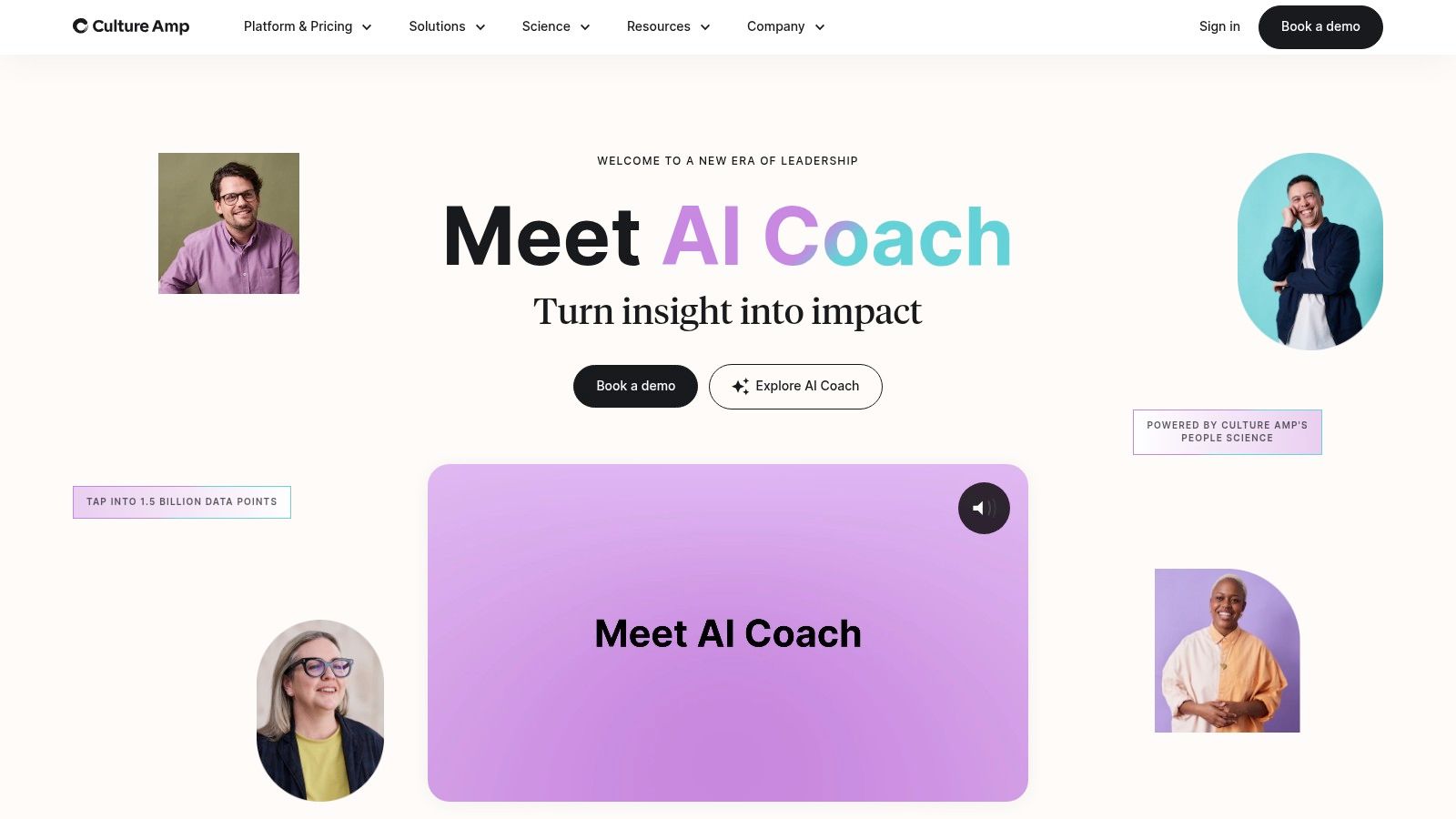
What I like is how it connects the dots. A manager sees their team's survey results, drills into AI-summarized comments, and then uses the same tool to set development goals or start a performance review. This workflow stops feedback from dying in a dashboard. The benchmark data is also a huge plus, letting you see how you stack up against similar companies.
Why It Matters
Best For: Mid-market to enterprise companies that want a science-backed, all-in-one platform for engagement, performance, and development.
Standout Features: The powerful text analytics, industry benchmarks, and integrated action-planning tools that guide managers from insight to action are top-notch.
Pricing: You’ll need to talk to their sales team for a custom quote, which can be a hurdle for smaller teams.
A Tip: Use their expert-designed survey templates. Don't try to reinvent the wheel; they’re crafted by people scientists to get useful data.
3. Workday Peakon Employee Voice
For large companies already in the Workday ecosystem, Workday Peakon Employee Voice feels like a natural extension of their HR system. This is an enterprise-grade listening platform built for continuous feedback. Instead of big, annual surveys, it uses an "always-on" model with pulse questions that give you a constant stream of sentiment data.
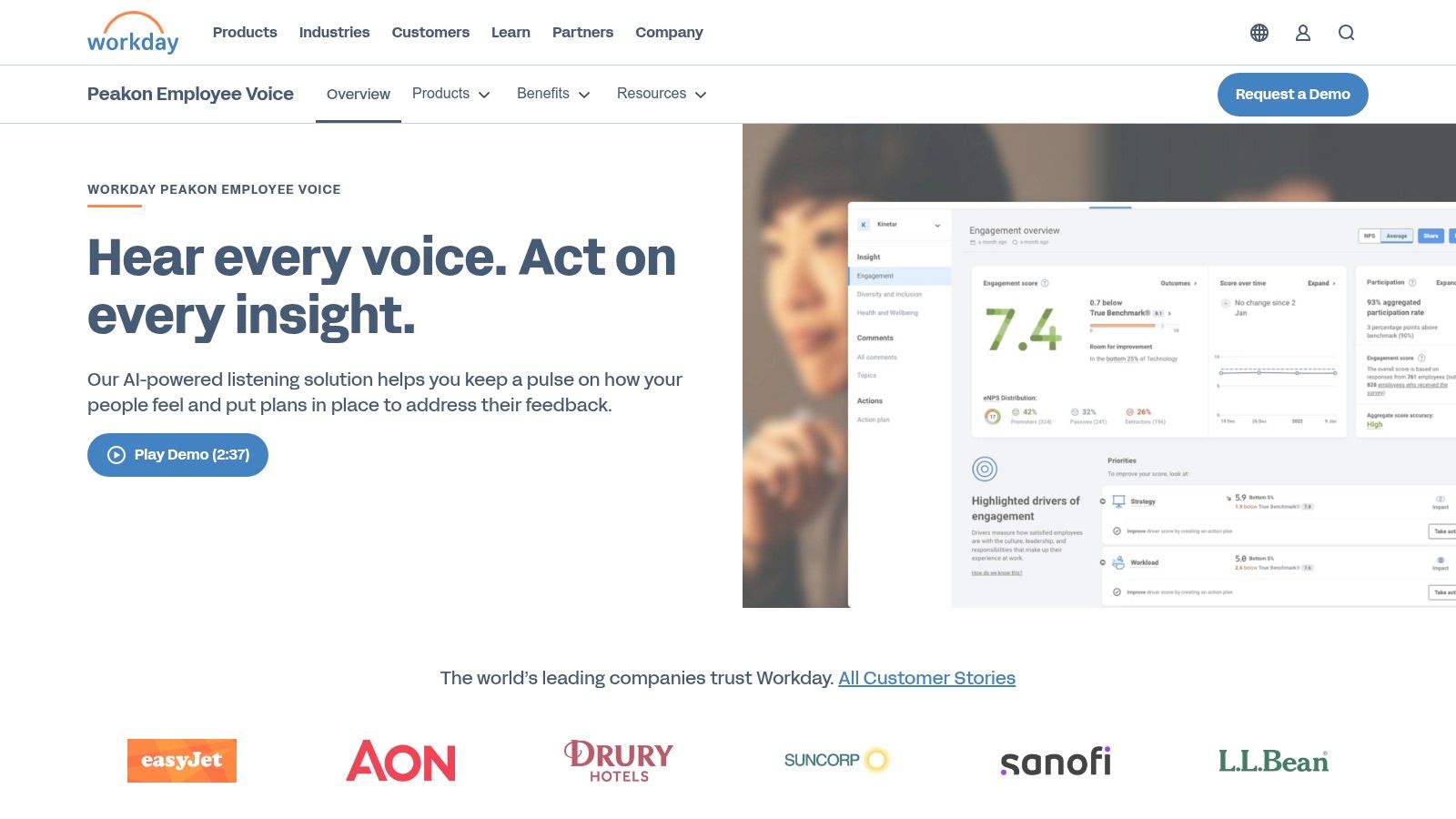
What's impressive is its scale and intelligence. Its AI analyzes millions of employee comments to spot trends and risks, and can even predict who might leave, all without manual effort. A manager gets a dashboard not just with scores, but with recommended actions and learning resources from Workday. That tight integration is its superpower.
Why It Matters
Best For: Global enterprises, especially those already using Workday, that need a sophisticated, continuous listening tool.
Standout Features: The always-on pulse surveys, massive dataset for benchmarking, and AI-driven comment analysis are top-tier.
Pricing: This is a significant investment. Pricing is quote-based and tailored to enterprise needs.
A Tip: Use their pre-built listening programs for things like DEI or retention. They’re designed to target specific challenges and provide immediate value.
4. Qualtrics EmployeeXM
If your company treats employee experience with the same seriousness as customer experience, Qualtrics EmployeeXM is probably on your list. I see this as the choice for businesses that need to go incredibly deep with their data. It’s less of a plug-and-play tool and more of a powerful, configurable engine for running a full listening program.
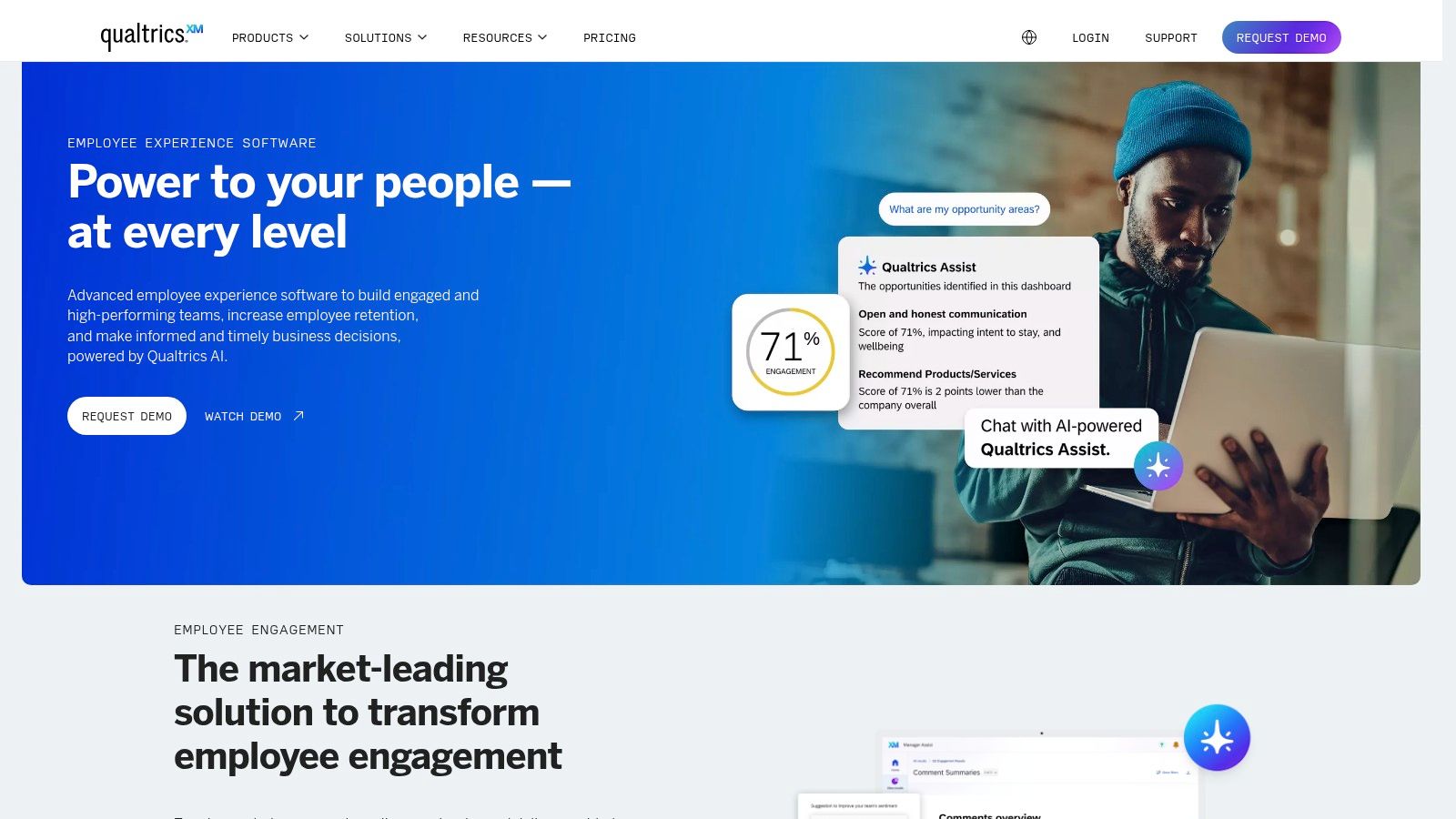
What makes Qualtrics different is that you can connect employee feedback with customer data to see how team engagement impacts customer satisfaction. For big, complex organizations that need custom surveys and advanced analytics to pinpoint what drives attrition or performance, Qualtrics offers an unmatched level of depth.
Why It Matters
Best For: Large enterprise companies that need a highly flexible and powerful analytics platform for a mature employee experience program.
Standout Features: The real power is in its advanced driver analysis, role-based dashboards, and deep integrations with other business systems.
Pricing: Pricing is quote-based, which is typical for enterprise-grade software.
A Tip: Be ready for a more involved setup. This isn't a weekend project. You'll need someone to own the implementation to get the most out of it.
5. Microsoft Viva Engage (formerly Yammer)
For companies already deep in the Microsoft 365 world, Microsoft Viva Engage feels like a natural fit. It turns the familiar interface of Teams and Outlook into a social space for connection. It’s a good way to bridge communication gaps, especially in large companies where leaders want a direct line to every employee.
The real draw here is the integration. You can host a company-wide Q&A, share leadership announcements, or create interest-based communities without asking people to leave the apps they already use. This removes friction and encourages people to join in. It brings the 'water cooler' conversation into the digital workspace.
Why It Matters
Best For: Companies heavily invested in Microsoft 365 who want to foster social communities and leadership visibility.
Standout Features: Deep integration with Teams and Outlook, a dedicated "Leadership Corner," and storyline features that feel like familiar social media.
Pricing: The basics are included in most Microsoft 365 business plans. Advanced features require a premium Viva license.
A Tip: Start by creating a few key communities led by enthusiastic champions. Focus on topics that are both business-relevant and social to build momentum.
6. Lattice
If you want to tie employee engagement directly to performance management, Lattice is a name you’ll hear a lot. It’s a people platform where engagement isn’t just a score; it’s an input for performance reviews, 1:1s, and goals. It’s great at making feedback a continuous, normal part of the work week.
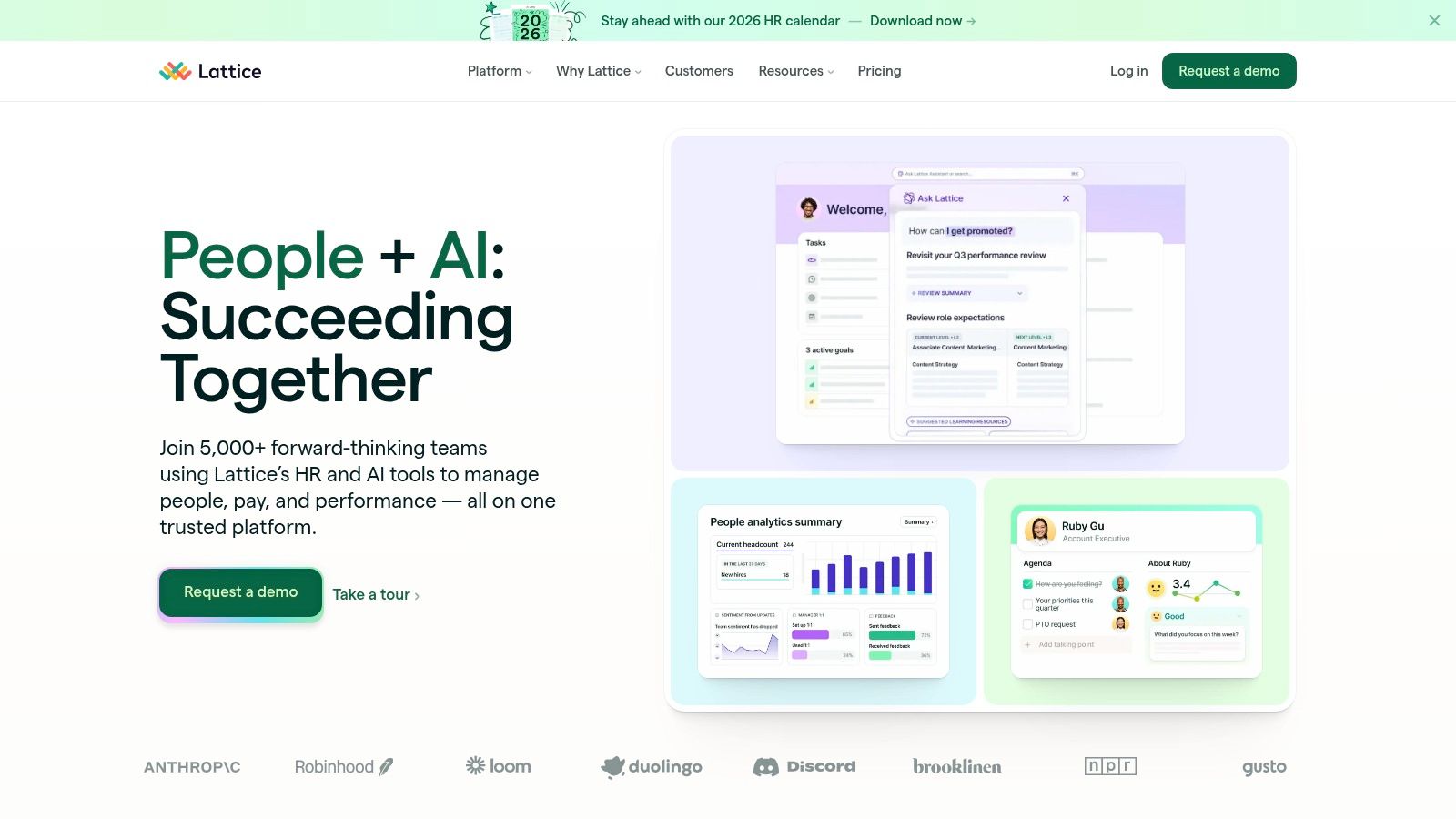
What stands out is how Lattice helps managers connect team mood with team performance. A manager can see their team's pulse survey feedback and use those insights to shape their next 1:1 agenda or set new goals, all in the same system. This direct link from listening to acting is what makes it so useful.
Why It Matters
Best For: Mid-market companies that want to embed engagement surveys directly into their performance and goal-setting workflows.
Standout Features: Its strength is its unified approach, connecting surveys, performance reviews, 1:1s, and goal tracking in one place.
Pricing: Pricing is modular and billed annually. There’s a reported $4,000 minimum annual contract, which might be a barrier for small businesses.
A Tip: Use the integrations with Slack and Microsoft Teams. Pushing notifications into these tools dramatically increases participation.
7. Workleap Officevibe
If you want a straightforward way to check your team's pulse without the complexity of an enterprise suite, Workleap Officevibe is a great choice. I’ve found it’s a perfect entry point for small businesses or for teams running a pilot engagement program. It’s designed to be simple, fast, and focused on opening a continuous, anonymous feedback loop.
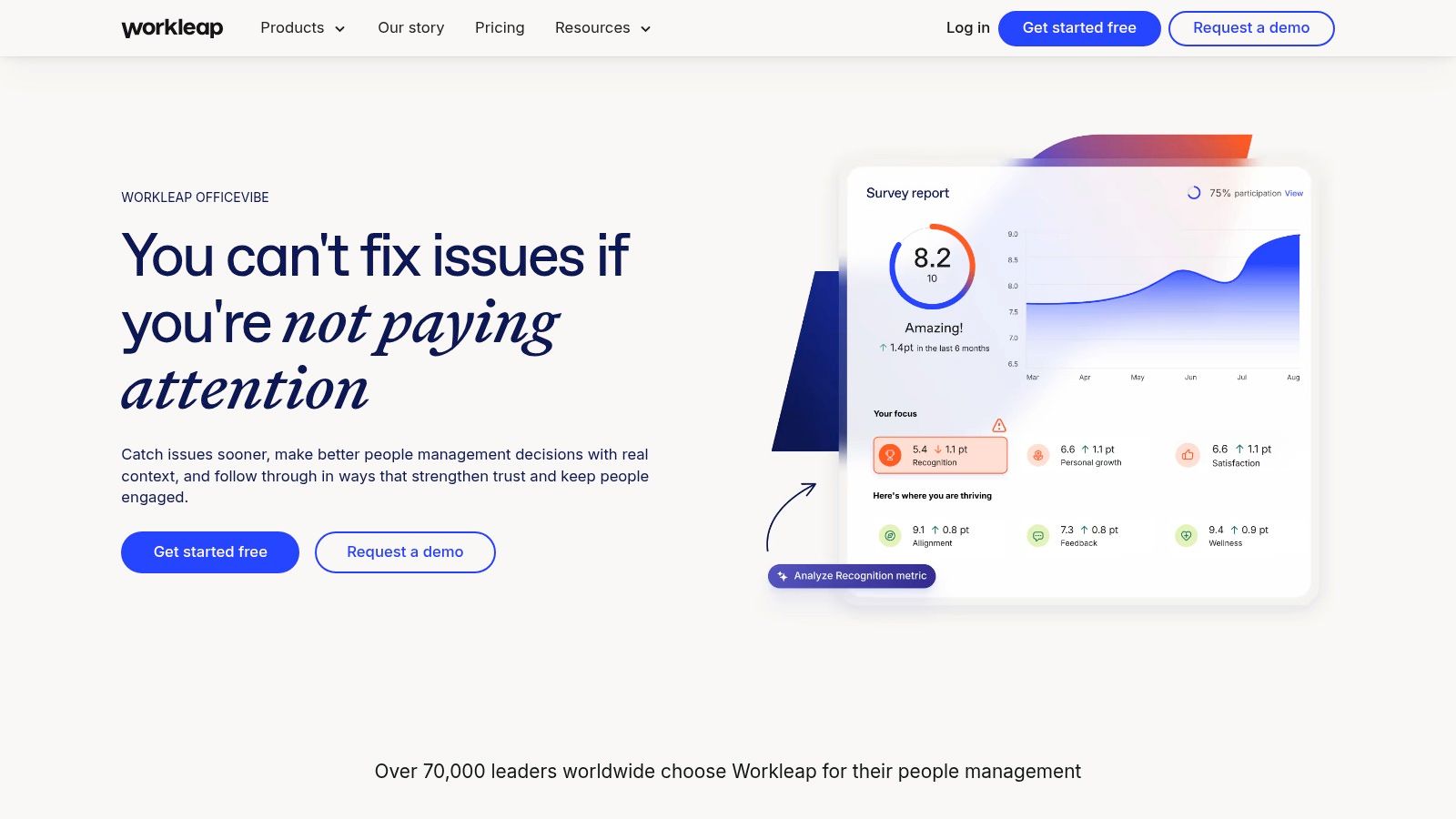
Let’s be honest, simplicity is a feature. The platform sends automated pulse surveys and makes it incredibly easy for managers to see trends and respond to anonymous feedback. The peer-to-peer recognition feature, "Good Vibes," is a light but effective way to boost morale. It’s one of the best employee engagement platforms if your goal is to start listening and acting on feedback quickly.
Why It Matters
Best For: Small to mid-sized businesses and teams that need a user-friendly, feedback-focused tool with transparent pricing and quick setup.
Standout Features: The automated pulse surveys, anonymous two-way messaging, and seamless Slack/Teams integrations are easy to adopt.
Pricing: It offers transparent, self-serve pricing tiers, starting with a free plan for one team.
A Tip: Lean into the Slack and Teams integrations from day one. Pushing surveys and "Good Vibes" to where your team already works will make all the difference.
8. Bonusly
If your goal is to make recognition a daily habit, not a quarterly event, Bonusly is one of the most effective tools I've seen. It’s built on a simple idea: let everyone give small, frequent bonuses to their peers. This creates a continuous stream of positive feedback that reflects your company's values.
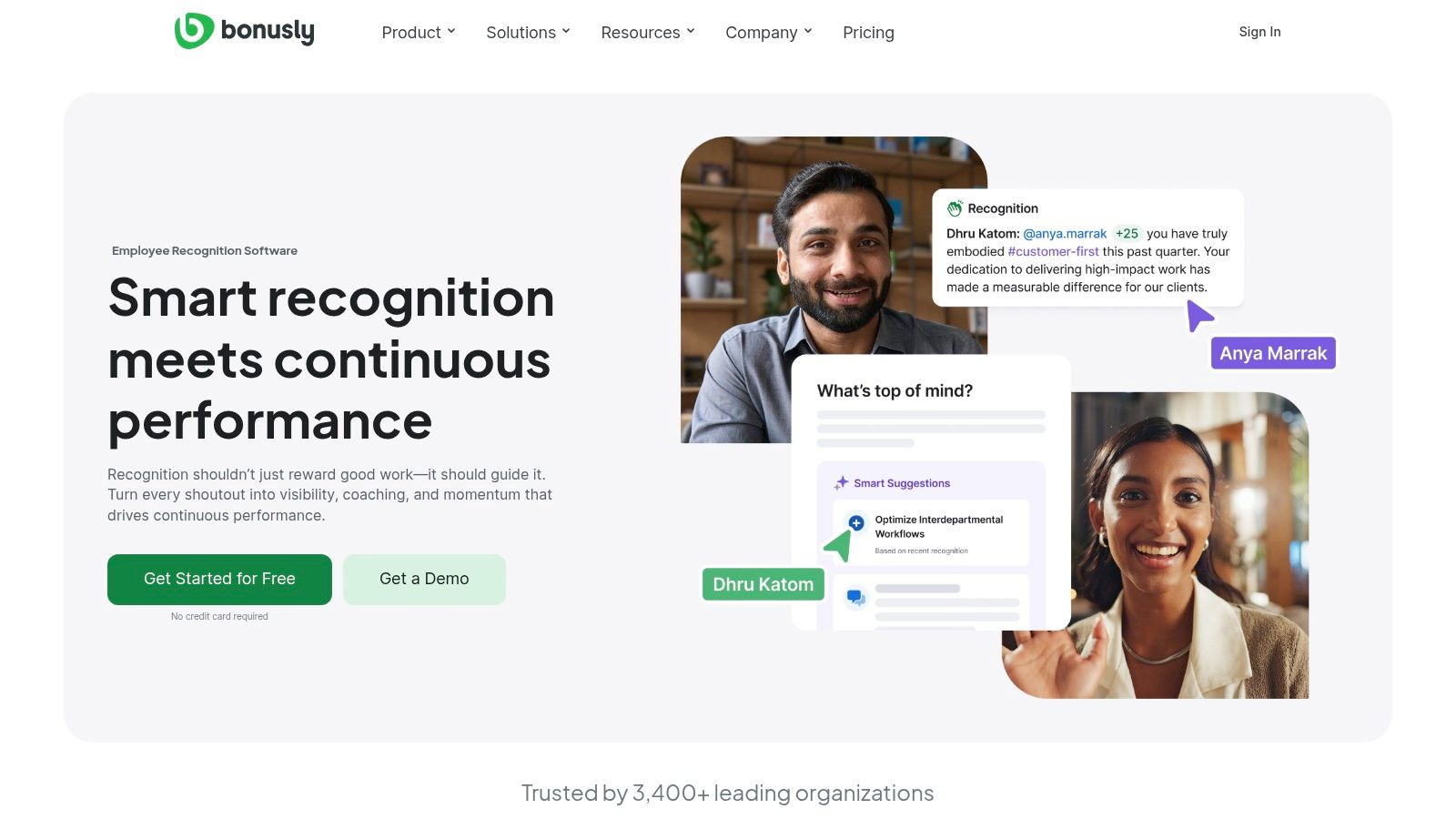
It works because it’s so easy to use, especially with Slack and Microsoft Teams. Giving a "bonus" feels as natural as sending a message. I’ve seen it take hold incredibly fast in remote teams, helping bridge physical distance with visible, real-time appreciation. The public feed becomes a living record of wins that might otherwise go unnoticed.
Why It Matters
Best For: Remote or hybrid companies of all sizes looking to build a strong culture of appreciation.
Standout Features: The public recognition feed, extensive rewards catalog (with no markups), and powerful integrations with chat tools.
Pricing: Transparent, per-user pricing is on their website, with a free tier for tiny teams. The budget for rewards is a separate cost.
A Tip: Connect recognition to your company values. When someone tags a bonus with a value like "#collaboration," it reinforces what matters.
9. Achievers
When your company spans multiple countries, recognition can't be one-size-fits-all. This is where Achievers comes in. It shines in large, global companies that need an enterprise-grade recognition and rewards engine. It’s a robust platform designed to make every employee, no matter where they are, feel seen.
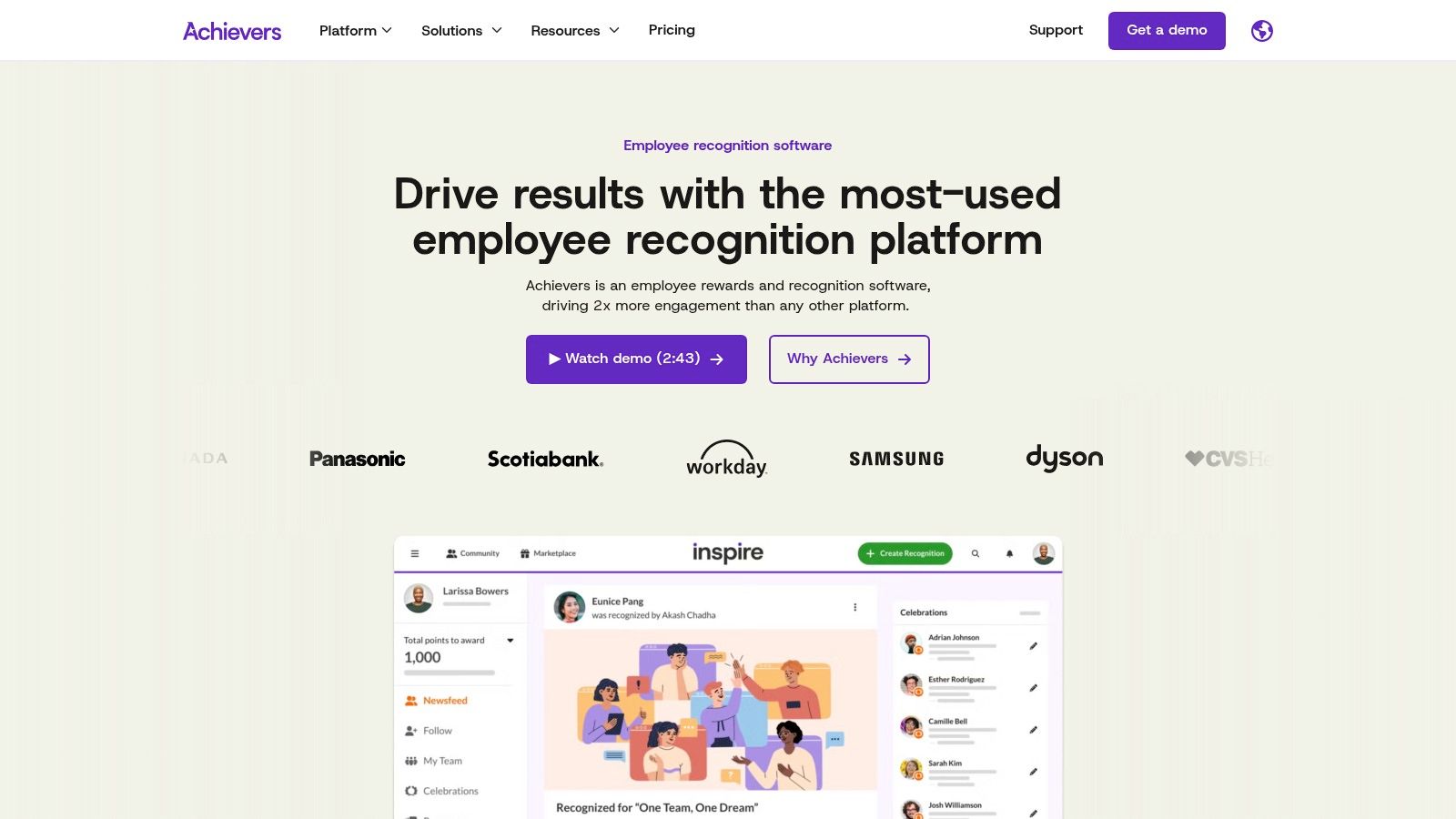
What’s different here is its massive global rewards marketplace. An employee in Tokyo can redeem points for something relevant to them, just as easily as an employee in Toronto. This focus on global parity is a huge deal. They also don't mark up rewards, which builds trust. The platform's analytics let HR teams drive specific behaviors, like safety or innovation, by tying recognition to strategic goals.
Why It Matters
Best For: Mid-size to enterprise companies with a global workforce that need a powerful recognition program.
Standout Features: The extensive global rewards marketplace, robust multilingual support, and detailed analytics.
Pricing: Pricing is quote-based and customized for enterprise needs. Not really for smaller businesses.
A Tip: Use their pre-built campaign templates to start. Tying recognition to a specific company initiative can significantly boost adoption.
10. WorkTango
WorkTango is a solid choice for companies that want to build a culture of appreciation and listen to their people at the same time. Its strength lies in how it connects recognition with engagement insights. Instead of being separate things, the platform links survey feedback with celebrating great work, creating a positive loop.
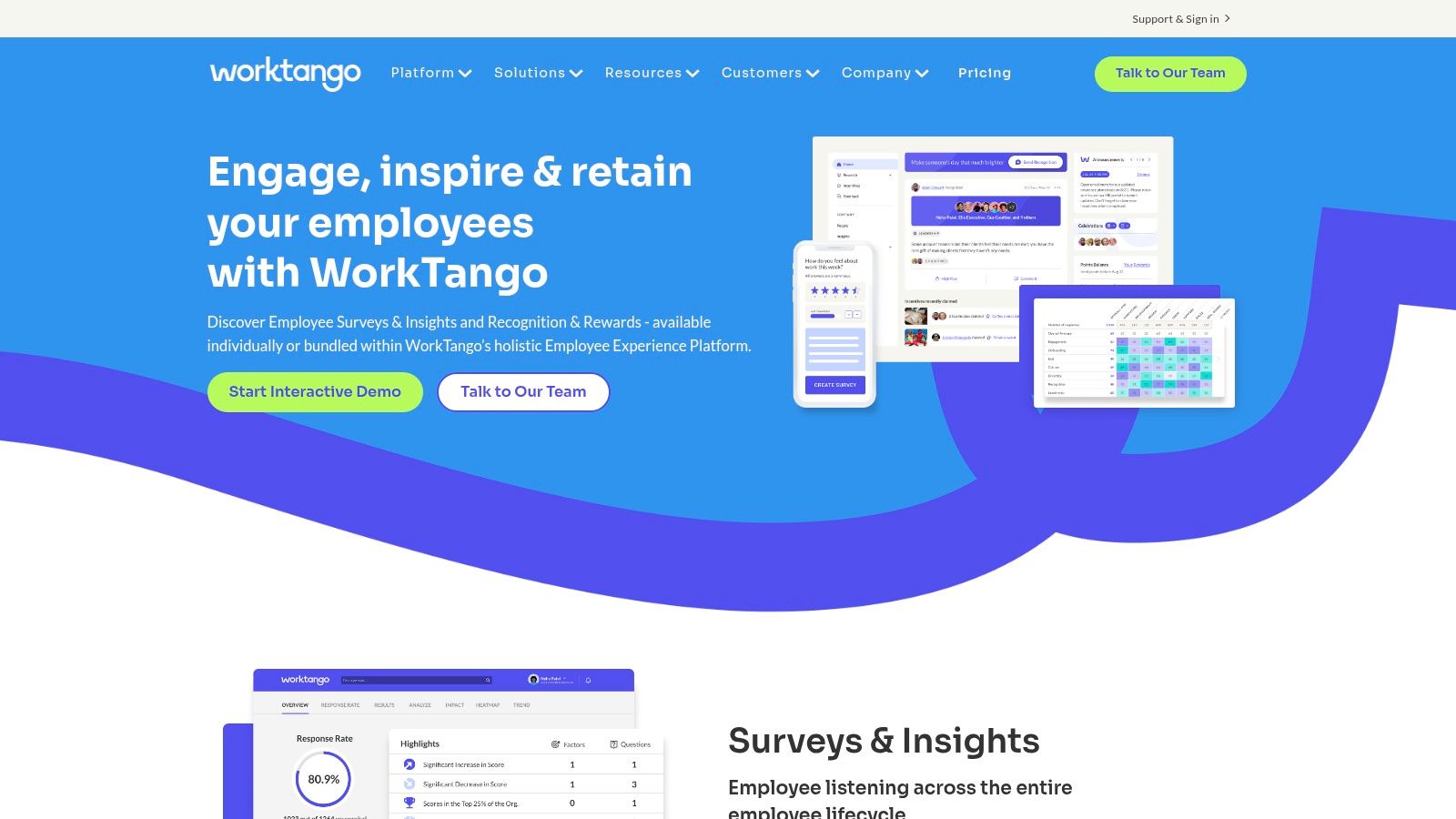
What stands out is its modular approach. You can start with just Recognition & Rewards or Surveys & Insights, then combine them later. This flexibility is great for businesses that want to solve one problem at a time without committing to a full suite. The pay-as-you-redeem model for rewards is also refreshingly transparent.
Why It Matters
Best For: Mid-sized companies looking for a flexible platform that can start with either recognition or surveys and scale up.
Standout Features: The unified modules, a no-markup rewards catalog, and strong integrations with Slack and Teams.
Pricing: You’ll need to connect with their sales team for a custom quote, typically with a 12-month contract.
A Tip: Start by deeply integrating the recognition features into your daily chat tools. Making recognition visible and easy is key.
11. Reward Gateway | Edenred
When you need an all-in-one hub that feels less like a corporate tool and more like your company’s own internal social network, Reward Gateway is a serious contender. It shines in large organizations that want to consolidate everything—recognition, rewards, company news, and wellbeing resources—into a single, branded portal.
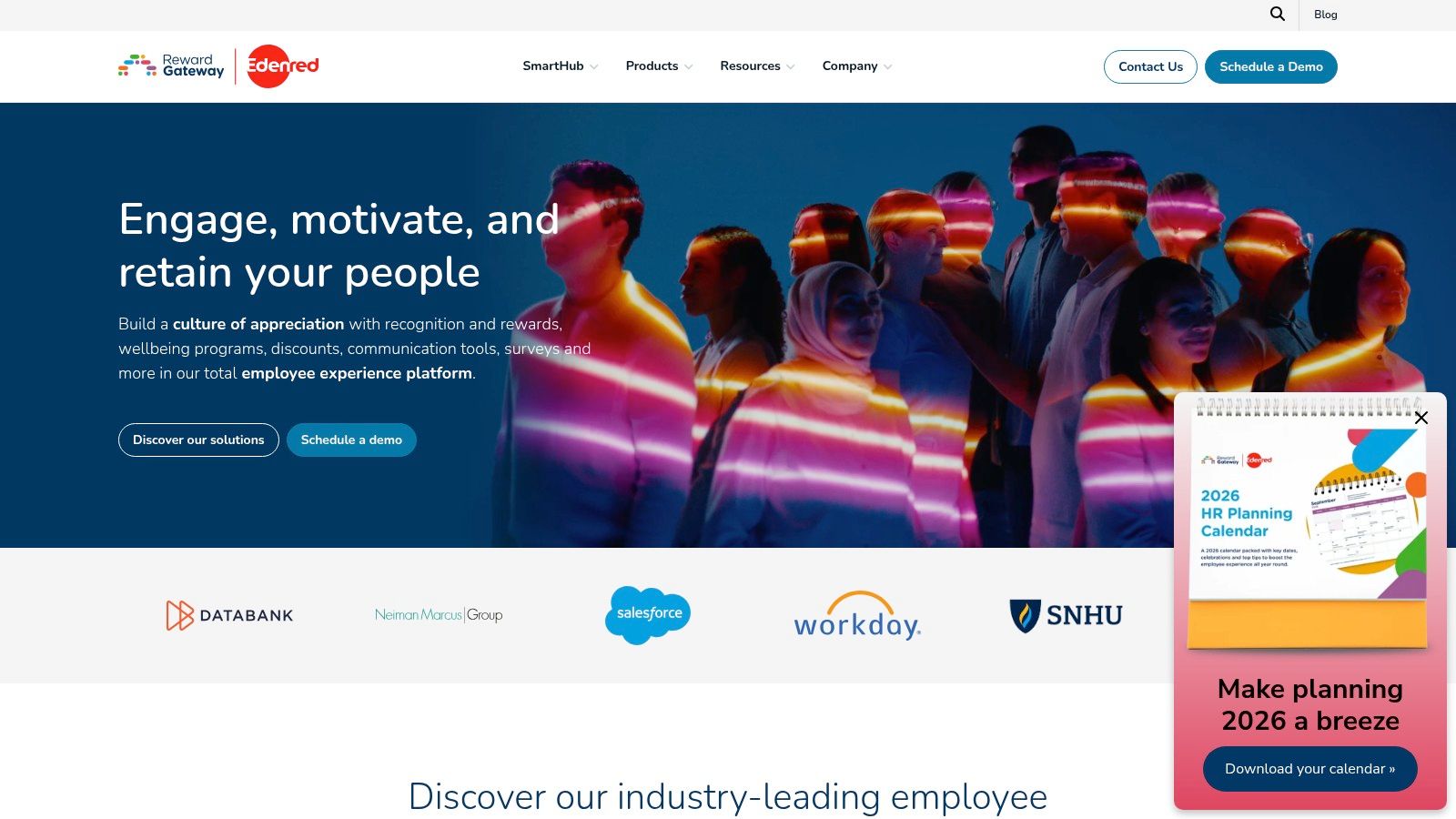
What I like is the depth of its customization and how it connects rewards directly to communications. You can launch a company-wide initiative, and employees can immediately recognize colleagues who embody its values, all in the same place. The global rewards catalog and extensive perks module are also incredibly robust.
Why It Matters
Best For: Global enterprises and large companies looking for a highly customizable, unified platform.
Standout Features: The branded engagement hub, extensive global rewards catalog, and powerful communication tools.
Pricing: Pricing is quote-based. It's a significant investment, better suited for established programs.
A Tip: Lean on their implementation support. A platform this customizable can be complex, so work with their team to align the setup with your goals.
12. Workvivo (by Zoom)
If you're trying to create a digital hub that feels less like a corporate intranet and more like a lively social network, Workvivo is a fantastic option. Acquired by Zoom, it excels at connecting everyone, especially in organizations with large distributed or frontline teams. It’s a powerful tool for broadcasting culture and centralizing communications.
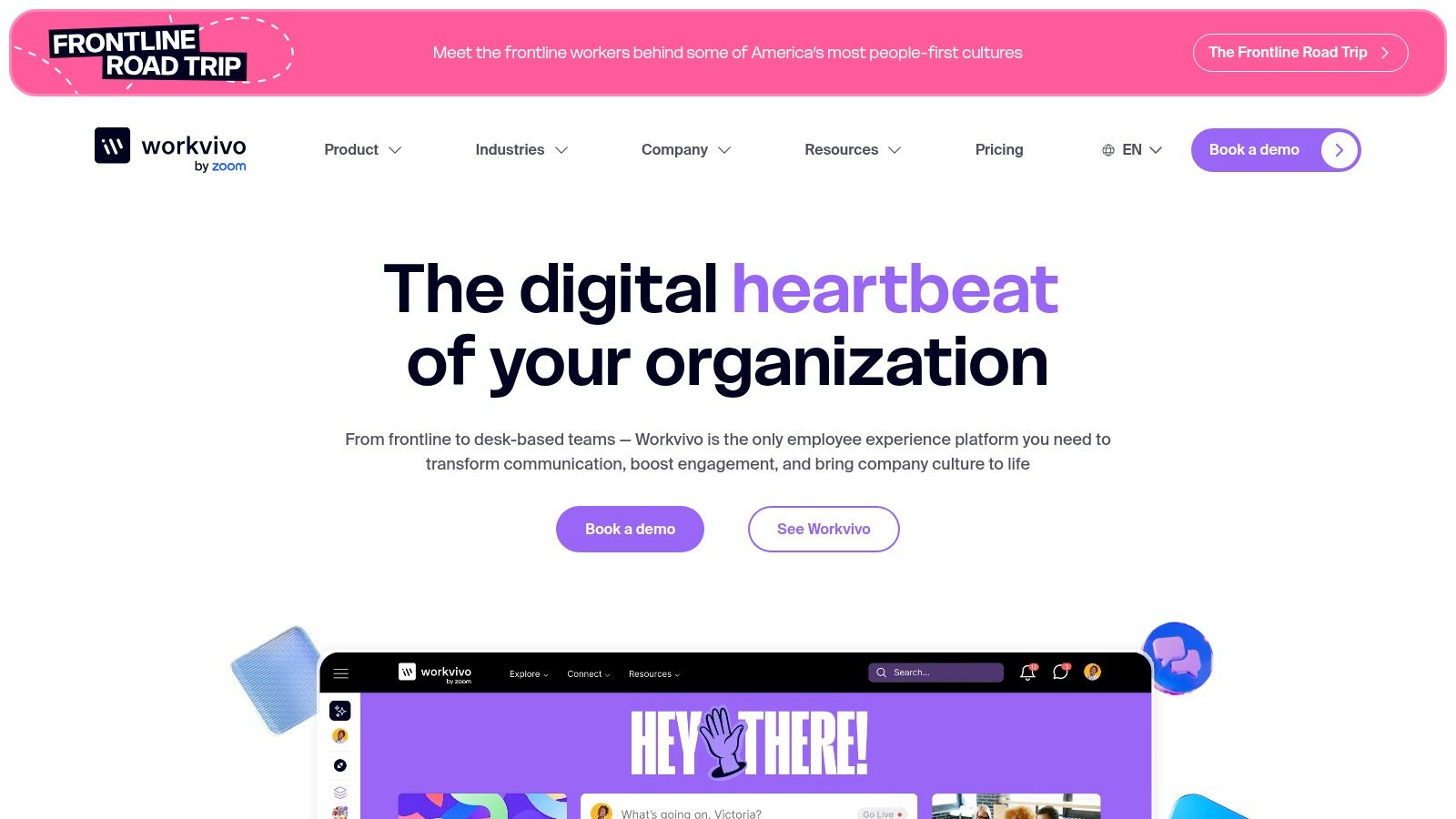
What really stands out is its mobile-first design. The company-wide feed, live streams, and recognition shout-outs work seamlessly on a phone, which is critical for non-desk workers. It successfully bridges the gap between top-down announcements and peer-to-peer connection, creating a single source of truth people actually want to check.
Why It Matters
Best For: Companies with significant frontline or distributed workforces who need a mobile-first communication hub.
Standout Features: The integrated social feed, live streaming, and digital signage add-on create a cohesive experience.
Pricing: Pricing is quote-based. Be mindful that add-ons like Chat will increase the total cost.
A Tip: Start by identifying "community champions" in different departments to post content early on. This will help seed the platform and encourage organic adoption.
Top 12 Employee Engagement Platforms — Feature Comparison
Product | Key features | UX / Quality | Value & Pricing | Target audience | Unique selling points |
|---|---|---|---|---|---|
Pebb 🏆 | Chat, voice/video, Spaces, tasks, shifts, PTO, Knowledge Library | Mobile-first, quick onboarding — ★★★★☆ | 💰 Free sign-up; affordable plans; enterprise quotes | 👥 Frontline, hybrid & office teams (cross‑industry) | ✨ All‑in‑one Spaces; 50+ HR/payroll integrations; fast deploy |
Culture Amp | Engagement & pulse surveys, performance tools, benchmarks | Science-backed survey UX — ★★★★☆ | 💰 Quote-based; annual billing | 👥 Mid‑market → enterprise HR teams | ✨ Benchmarks + survey‑to‑action workflows |
Workday Peakon Employee Voice | Always-on pulse, AI insights, manager action plans | Enterprise analytics & security — ★★★★★ | 💰 Quote-based; enterprise‑focused | 👥 Large enterprises, Workday customers | ✨ Continuous listening; deep Workday integration |
Qualtrics EmployeeXM | Advanced surveys, driver analysis, XM analytics | Powerful analytics & flexibility — ★★★★★ | 💰 Quote-based; premium pricing | 👥 Large orgs with complex EX needs | ✨ XM Platform: deep analytics & customizability |
Microsoft Viva Engage | Company communities, leadership comms, Teams/Outlook | Familiar MS UX; broad reach — ★★★★☆ | 💰 Included for many M365 tenants; some Viva add‑ons | 👥 Microsoft 365 users (desk + frontline) | ✨ Native Teams/Office integration & compliance |
Lattice | Engagement surveys, performance reviews, OKRs | Manager-focused workflows — ★★★★☆ | 💰 Modular pricing; annual; ~$4k min reported | 👥 High-growth mid-market companies | ✨ Links engagement to performance & goals |
Workleap Officevibe | Pulse surveys, anonymous feedback, recognition | Simple, mobile-first — ★★★★☆ | 💰 Transparent self-serve pricing | 👥 SMBs & pilot programs | ✨ Quick setup; clear pricing |
Bonusly | Peer recognition feed, rewards catalog, pulse checks | Fast adoption; engaging UI — ★★★★☆ | 💰 Transparent plans; free tier; rewards spend extra | 👥 Distributed & small teams | ✨ P2P recognition with redeemable rewards |
Achievers | Recognition, global rewards marketplace, analytics | Enterprise-grade & multilingual — ★★★★☆ | 💰 Quote-based; enterprise pricing | 👥 Mid-size → global enterprises | ✨ Large global rewards catalog & 24/7 support |
WorkTango | Recognition, surveys with AI insights, dashboards | Modular EX; good analytics — ★★★★☆ | 💰 Quote-based; typical 12‑month term | 👥 HR teams wanting modular or unified EX | ✨ Modular product mix; no reward markup |
Reward Gateway (Edenred) | Recognition, comms hub, perks, wellbeing modules | Highly customizable portal — ★★★★☆ | 💰 Quote-based; implementation services | 👥 Enterprises needing branded engagement hubs | ✨ Branded engagement + Edenred backing |
Workvivo (by Zoom) | Company feed, recognition, live streams, add-ons | Mobile-first communications — ★★★★☆ | 💰 Quote-based; add‑ons increase cost | 👥 Distributed & frontline teams | ✨ Backed by Zoom; strong frontline adoption |
The "best" platform is the one people actually use
We've looked at a dozen different tools. Some are all-in-one giants, others are specialists. Some are built for deep data analysis, others for the daily hustle of frontline teams. If there’s one thing to take away from all this, it’s that the "best" platform has nothing to do with the longest feature list.
It’s about adoption. Period.
The smartest, AI-powered, data-rich platform is worthless if your employees never open it. The real test is whether the tool becomes a natural part of their day. Does a retail associate check it for their schedule? Does a remote engineer use it to give a colleague a shout-out? Does a new hire find onboarding documents there without asking?
Don't buy a race car for a trip to the grocery store
It’s easy to get wowed by complex dashboards. But choosing a platform is less about what it can do and more about what you need it to do. If your main goal is to improve communication with your deskless workforce, a heavy survey tool like Workday might be overkill. You'd be better off with a mobile-first hub like Pebb or Workvivo.
On the other hand, if you're a data-driven HR team at a global company trying to figure out why people are leaving, a lightweight recognition app won't cut it. That’s where a tool like Lattice or Qualtrics earns its keep. Match the tool to the job. Don't pay for features you won't use.
The real test: Will your people like it?
Before you sign anything, put yourself in your employees' shoes. Is the app intuitive? Is it fast? Does it make their work life genuinely easier or more connected? A tool's success lives or dies on its usability. The platform's user experience is everything.
A clunky interface or slow load times will kill adoption before you start. This is especially true for frontline teams who don’t have time for frustrating tech. They need something that just works, right from their phone.
So, what’s next?
Don't get stuck overthinking it.
Define your single biggest problem. What’s the one engagement challenge you need to solve right now? Communication? Recognition? Feedback? Start there.
Shortlist 2-3 options. Pick a few platforms from this list that directly address that problem and fit your company.
Ask for live demos. Make them show you how their tool solves your specific problem.
Involve your people. Get a small group of future users—especially your biggest skeptics—to play with the platform. Their feedback is worth more than any sales pitch.
Choosing an employee engagement platform is a big decision, but it doesn't have to be complicated. Focus on your people, prioritize simplicity, and pick the tool they'll actually want to use. That’s the one that will make a difference.
If you’re looking for a simple, mobile-first platform that your frontline teams will actually use from day one, take a look at Pebb. We built it to connect your entire workforce with tools for communication, scheduling, recognition, and more, all in one easy-to-use app. See how Pebb can help you engage every employee.
