
Author: Ron Daniel
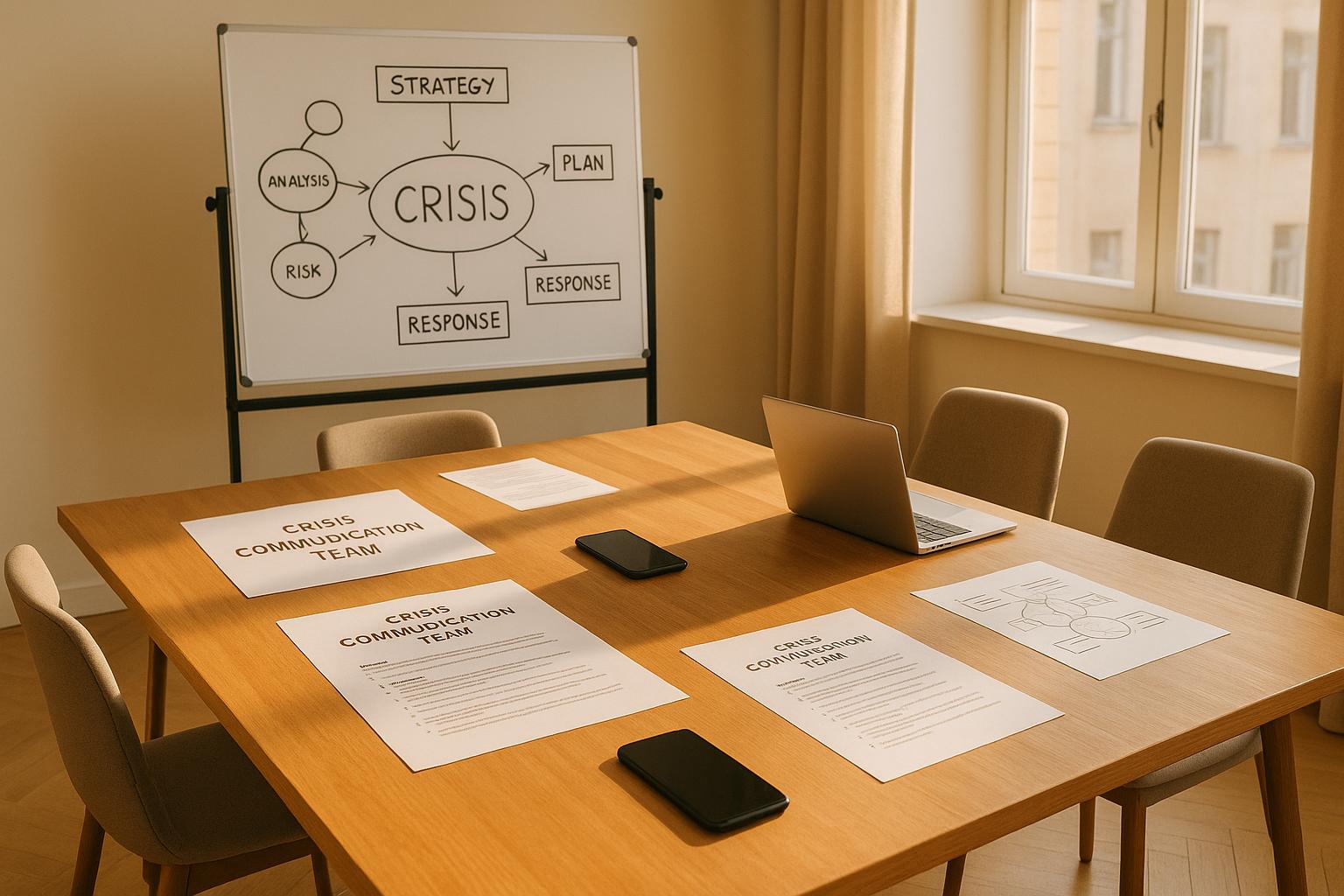
How to Create a Crisis Communication Team
Learn how to build an effective crisis communication team to manage unexpected challenges and maintain clear communication during crises.
<article> When everything's running smoothly, it’s easy to assume your team is ready for anything. I used to think the same - until the day a cybersecurity breach hit one of our clients. It was chaos. Emails went unanswered, misinformation spread like wildfire, and the team spent more time scrambling than solving the actual problem. That’s when it hit me: having a dedicated crisis communication team isn’t optional - it’s the backbone of keeping your business steady when the unexpected happens.
Here’s the reality: crises don’t wait for you to be ready. Whether it’s a product recall, a natural disaster, or even a social media backlash, your team needs to act fast and stay aligned. And trust me, without a clear plan, things can spiral out of control faster than you’d believe. I’ve seen it firsthand.
But here’s the good news: building a crisis communication team isn’t as overwhelming as it sounds. Over the years at Pebb, we’ve fine-tuned a step-by-step approach that ensures every employee gets the right information at the right time - whether they’re on the retail floor, working remotely, or in the office. Today, I’m sharing the exact strategies we’ve seen work, the tools that make it all possible, and the lessons we’ve learned along the way.
Let’s dive in and break it down together.
Building the Right Team: Key Roles and Responsibilities
When the unexpected happens, having the right team in place can mean the difference between chaos and control. At Pebb, we've seen firsthand how a well-structured crisis team can turn potential disasters into manageable challenges. It's all about having clear roles and responsibilities so everyone knows exactly what to do when things go sideways.
Let me walk you through the essential roles and skills that make up a strong crisis response team.
Key Roles You Need on Your Team
To tackle a crisis effectively, you need a mix of expertise and leadership. Here's who should be on your roster:
Crisis Team Leader: Think of this person as the quarterback. They call the plays, make the tough decisions, and ensure everyone is aligned. Like a conductor leading an orchestra, they keep the team in sync and moving forward.
Communications Lead: This role is all about messaging. They craft clear, actionable communication that cuts through the noise, ensuring employees and stakeholders stay informed. They're also the fact-checker, making sure nothing gets released that could worsen the situation.
HR Representative: Crises often hit people hardest. Your HR rep handles employee concerns, coordinates staffing adjustments, and ensures everyone understands how the situation impacts their work. They're also the go-to for sensitive issues, like safety or wellbeing.
Operations Coordinator: This is your behind-the-scenes expert who knows how the business runs on a daily basis. They identify disruptions, find workarounds, and keep things moving even when the usual processes are affected.
IT Specialist: When digital platforms are your lifeline, you need someone who keeps them running smoothly. This person troubleshoots technical issues, manages access controls, and ensures your communication channels stay secure and operational.
Legal Advisor: While they won't write your messages, they will review them to ensure compliance and minimize legal risks. Their input is crucial for staying transparent without creating additional liabilities.
Adapting Roles for Smaller Teams
If you're working with a smaller team, don't worry - you can still cover the essentials by combining roles. For example:
The Crisis Leader might also take on communications.
HR and Operations can merge into one role.
IT support and legal advice can be outsourced or kept on-call.
At a minimum, you'll need three core people: someone who leads and communicates, someone who handles HR and operations, and someone who provides IT support. This lean setup ensures you can act quickly without missing critical functions.
What to Look for in Team Members
Beyond titles, the right people make all the difference. Over the years, I've learned to prioritize certain traits when pulling together a crisis team:
Clear communication under pressure: In a high-stakes situation, there's no room for miscommunication. You need people who can explain themselves clearly and listen just as effectively, even when tensions are high.
Quick decision-making: Crises move fast, and so must your team. Look for individuals who can process information, weigh options, and make decisions without getting bogged down in endless deliberation.
Cross-functional thinking: The best team members understand how their actions ripple across the business. They think beyond their own areas and consider the bigger picture.
Tech proficiency: Digital tools are your best friends in a crisis. Everyone on the team should be comfortable using communication platforms efficiently - there's no time for fumbling with technology.
Emotional resilience: Crises are tough, especially when they involve people's safety or livelihoods. You need team members who can keep their cool and stay focused, even when emotions run high.
Step-by-Step Guide to Forming Your Crisis Communication Team
Now that you’ve got a clear picture of who should be on your team, let’s roll up our sleeves and get into the nitty-gritty of actually building it. At Pebb, I’ve been through this process with more organizations than I can count, and here’s what I’ve learned: the difference between a team that handles a crisis like pros and one that crumbles often comes down to how carefully you approach these initial steps.
How to Identify the Right People
Picking the right people isn’t just about job titles - it’s about finding the right mix of skills and experience. If you’re using Pebb’s People Directory, this part gets a lot easier. It’s a quick way to browse profiles and see who might be a good fit across departments.
Here’s what I’d recommend focusing on:
Diverse Voices: Make sure you’ve got representation from key areas like marketing, product, R&D, and HR. Each department brings something unique to the table, and you’ll need those perspectives when things get tough.
Proven Under Pressure: Look for people who’ve already shown they can handle high-stress situations. Maybe it’s that marketing manager who steered the ship during a product recall or the HR rep who managed a difficult layoff with empathy and professionalism.
Availability Matters: Crisis response can demand a lot of time and energy. You’ll want folks who can commit and remain responsive, even when the situation gets intense.
Once you’ve identified your core team, make sure everyone’s connected through a single, reliable communication platform. That way, when the time comes, you’re not scrambling to get everyone on the same page.
Setting Up Communication Channels
Even the best team in the world will struggle if they can’t communicate effectively during a crisis. That’s why having a unified communication platform is absolutely critical. It’s the glue that keeps everything together, no matter where your team members are - on the frontline, at their desks, or working remotely.
At Pebb, we’ve seen firsthand how a platform that supports one-to-one chats, group conversations, and calls can transform team dynamics. Teams using Pebb, for example, have reported a 39% boost in communication and engagement - a game-changer when every second counts.
Here’s how to set it up right:
Centralize Resources: Keep all critical documents - crisis plans, contact lists, pre-approved messaging templates, and legal guidelines - in one shared library. These should be accessible in seconds, not minutes.
Control Access: Not everyone needs to see everything. Use administrative controls to manage who gets access to sensitive information. This keeps your communication focused and prevents unnecessary noise.
Once you’ve got your communication channels locked down, the next step is to make sure everyone knows exactly what’s expected of them.
Defining Roles and Responsibilities
This is where things can go sideways if you’re not careful. It’s one thing to assemble a team, but if no one knows their specific role when a crisis hits, you’re setting yourself up for confusion and delays. Trust me, I’ve seen it happen.
Here’s how to avoid that:
Document Roles Clearly: Use your platform’s admin tools to outline who does what. For instance, your Head of Communications might be responsible for publishing company-wide alerts, while your Social Media Manager handles pre-approved posts. The People Directory can also help you match team members’ expertise to specific crisis roles.
Establish Reporting Lines: Decide upfront who reports to whom. Who’s responsible for finalizing external communications? Who has the authority to approve crisis-related spending? These decisions shouldn’t be made in the heat of the moment.
Practice Handoff Procedures: Make sure everyone understands how their role connects to the larger workflow. For example, if the operations coordinator spots a supply chain issue, they should alert the team leader, who then activates the communications lead to draft messaging while the HR rep prepares to address employee concerns. Practicing these workflows ensures they become second nature.
The ultimate goal is to create a well-oiled machine where everyone knows their part, how it fits into the bigger picture, and what to do without hesitation. When a crisis strikes, you don’t want your team scrambling - you want them executing like clockwork.
Best Practices for Effective Crisis Communication
Having a solid team and clear processes is just the beginning. The real test of any crisis plan comes when you're in the heat of the moment, and every decision feels like it could make or break the outcome. At Pebb, I've witnessed teams rise to the occasion and others falter under pressure. The difference? It usually boils down to a few essential practices. Let me walk you through how we use the right tools, prepare with training, and prioritize clear communication to navigate those high-stakes moments.
Use the Right Tools
In a crisis, speed and clarity are your best allies. The last thing you want is your team scattered across three or four platforms, trying to piece together a response. Centralizing communication is non-negotiable - it’s the backbone of an effective crisis strategy.
With Pebb’s unified platform, we’ve streamlined this process. Group chats handle real-time coordination, urgent updates go out through the news feed, and sensitive conversations happen via direct messaging. Everything is in one place, which eliminates the chaos of switching between apps.
"Talk privately or as a team - it's all here. From focused one-to-one chats to calls and group conversations that keep everyone aligned, communication stays easy and natural."
Here’s how this plays out in practice: the crisis team lead uses group chats to coordinate tasks, while company-wide updates are shared on the news feed. Meanwhile, HR can address individual employee concerns through direct messages. And with administrative controls, you can adjust access levels on the fly, ensuring sensitive information stays secure while keeping the team in the loop.
"Set roles and decide who sees what - keeping information organized, secure, and relevant for every team."
Run Regular Training and Practice Drills
Even the best crisis communication plan will crumble if your team doesn’t know how to execute it under pressure. That’s why regular training and realistic drills are an absolute must.
We’ve made it a habit to schedule quarterly drills tailored to scenarios we’re likely to face. For example, a retail company might practice handling a product recall, while a tech team could simulate a data breach. These drills test everything - communication channels, decision-making processes, and even messaging templates. The goal? Identify bottlenecks and fix them before a real crisis hits.
One thing that’s been a game-changer for us is having pre-approved templates ready to go. These templates, created in collaboration with legal and communications teams, are stored centrally and can be quickly adapted to fit different situations.
"Keep everything your team needs - updates, files, and events - in one shared library. Then turn plans into action with simple, clear tasks."
After each drill, we document everything: what worked, where communication broke down, who stepped up, and where we need more training. This feedback loop helps us refine our strategy continuously. These drills don’t just prepare us logistically - they also help build confidence and reinforce consistent communication when it matters most.
Maintain Consistency and Transparency
Mixed messages during a crisis? That’s a recipe for disaster. When employees, customers, or media outlets receive conflicting updates, trust erodes fast, and the situation becomes even harder to manage.
This is where centralized messaging saves the day. All official communications should flow through a single platform, where updates can be reviewed, approved, and distributed from one source. This avoids the classic "telephone game" where messages get distorted as they pass from person to person.
At Pebb, we rely on our unified platform to keep everyone aligned. The news feed acts as a central record of all official communications, so there’s no confusion about what’s been said or shared.
"In Pebb, they live in a heartbeat news feed, dedicated clubs, and profiles that connect people beyond their roles. It's engagement that feels genuine - not forced."
Transparency is just as critical as consistency. If legal constraints prevent you from sharing certain details, say so. If you’re still gathering information, be upfront about it. People value honesty, even when the news isn’t great.
A practical tip? Designate a single voice for external communications. This point person, supported by the crisis team, ensures every message is clear, unified, and on-brand. Collaborative tools make it easy for multiple team members to contribute their perspectives before anything goes public, but having one spokesperson guarantees clarity and avoids mixed signals.
Maintaining and Improving Your Crisis Communication Team
At Pebb, I've learned that building a crisis communication team is just the first step. The real challenge - and opportunity - lies in keeping that team agile and ready to face whatever comes next. Over time, I've seen how continuous improvement can make all the difference. Let me walk you through how we keep our crisis communication strategy sharp.
Regular Reviews and Updates
A crisis communication plan isn’t something you can create once and forget about. The world moves too fast for that. What worked six months ago might be outdated today. That’s why we make regular reviews a priority.
Every review is a chance to reassess. We look at new risks, team changes, updated contact details, and lessons from past drills or real incidents. For example, when remote work surged in 2020, many companies - including ours - had to completely rethink their crisis protocols.
To make these updates painless, we centralize all our crisis documentation in Pebb’s knowledge library. This way, templates and protocols are always easy to find and update. We also assign specific roles for reviewing different aspects - like messaging, employee notifications, or technical guidelines. And, because certain times of the year bring unique risks (think Black Friday or graduation season), we factor those into our updates too.
Team Building and Skill Development
Here’s the thing: even the best processes won’t matter if your team isn’t equipped to carry them out under pressure. That’s why we focus so much on team development. It’s not just about knowing what to do - it’s about being able to execute when it counts.
One approach we’ve found incredibly useful is cross-functional training. During drills, team members switch roles to see the bigger picture and identify blind spots. It’s eye-opening and helps everyone feel more confident in their abilities.
We also bring in outside experts for workshops on topics like media relations, legal compliance, or even psychological first aid. These sessions not only build skills but also strengthen team relationships. And mentorship is a big part of our strategy. Pairing seasoned team members with newer ones ensures that institutional knowledge gets passed down while fostering a supportive environment.
Since technology plays such a huge role during crises, we emphasize hands-on training with our unified Pebb platform. The goal? Build the kind of muscle memory that makes responding second nature when the pressure’s on.
Using Analytics for Continuous Improvement
If there’s one thing that’s elevated our crisis response, it’s data. Pebb’s analytics tools have become our secret weapon for spotting patterns and refining our approach.
After every drill, we dive into the data to see what worked and what didn’t. For instance, we’ve pinpointed delays and engagement gaps that needed addressing. One key takeaway? Real-time updates during emergencies outperform slower communication channels every time.
We also use analytics to fine-tune our messaging. By tracking follow-up questions, we can spot where a message might have caused confusion and tweak it for clarity. Plus, we monitor how well different departments collaborate during simulations. This helps us catch potential silos before they become a problem.
With Pebb’s platform, we can track everything - message delivery, task completion, and more - all in one place. It’s a game-changer for ensuring smooth, efficient communication when it matters most.
Conclusion: Building Confidence in Crisis Management
At Pebb, we’ve learned that being prepared for a crisis isn’t just about having a plan on paper - it’s about building confidence through clear roles, solid communication strategies, and the right tools. When a crisis hits, whether it’s a data breach, a natural disaster, or a PR nightmare, the question isn’t if you’ll face it, but how ready you’ll be to respond. And trust me, preparation makes all the difference.
Here’s what I’ve seen firsthand: having a dedicated team with clearly defined roles, dependable communication channels, and regular practice drills can transform chaos into a coordinated response. Technology, when used wisely, becomes your secret weapon. At Pebb, we’ve designed an all-in-one employee app that brings everything together - chat, document sharing, task management, and real-time updates - so your team can focus on solving problems instead of scrambling between scattered tools. In those high-pressure moments, efficiency is everything, and a unified platform can be the game-changer.
"Pebb has entirely redefined our communication. It feels like Facebook, but for work."
Pebb Customer
The best part? You don’t need a sky-high budget to get started. Our free Standard plan supports up to 15 employees and includes essentials like unlimited chat history, news feeds, knowledge libraries, and task management. If you’re looking for advanced features like analytics, voice and video calls, integrations, or Enterprise SSO, the Premium plan is just $4 per user per month - enterprise-level capabilities without the sticker shock.
So, what’s next? Start small but start now. Pull together your key team members, set up your communication channels, and run that first practice drill. The confidence you’ll build knowing your team is ready and equipped with the right tools is priceless.
FAQs
What key roles should be included in a crisis communication team, and why are they essential?
From my time at Pebb.io, I've learned that building a solid crisis communication team is all about having the right people in the right roles. At the core, you need three key players: a spokesperson, a communications lead, and a social media manager. Here’s how they each contribute:
The spokesperson is the face and voice of your message, ensuring everything communicated is clear, consistent, and aligned with your goals.
The communications lead keeps the information flowing smoothly, organizing and overseeing every detail to avoid confusion.
The social media manager monitors the digital pulse, handling real-time updates and engaging with the public directly.
But here’s the thing - having the right team is only half the battle. You also need tools that make it easy to stay connected and on the same page. That’s where Pebb comes in. Our all-in-one employee app simplifies everything, letting your team collaborate seamlessly, even under pressure. And the best part? It’s free to get started for up to 15 employees, or just $4 per user per month for our Premium plan. Trust me, it’s a game-changer when every second counts.
How can small teams manage all critical crisis communication roles with limited staff?
When you're part of a smaller team, being adaptable and wearing multiple hats becomes second nature. Picture this: one day, you're the go-to spokesperson, and the next, you're crafting social media updates on the fly. It’s all about making sure everyone on the team has a grasp of the basics when it comes to crisis communication. That way, anyone can jump in and keep things moving seamlessly.
This is where a tool like Pebb truly shines. It brings everything together - group chats, task management, digital forms, calendar events, and real-time updates - so your team can stay in sync, no matter how small. Even with fewer people to lean on, you’ll be ready to tackle any crisis with confidence and clarity.
What are the best ways to ensure effective communication during a crisis with tools like Pebb?
When a crisis strikes, communication can either be your biggest ally or your greatest hurdle. At Pebb, we’ve made it our mission to simplify staying connected during those critical moments. Here’s how we do it:
Instant updates, no delays: With Pebb's chat feature, you can share real-time updates, ensuring everyone is aligned when it matters most.
Transparency at its core: Use the news feed to post essential information and updates. It keeps your team informed and eliminates guesswork.
Focus where it’s needed: Create dedicated groups for specific crisis tasks or teams. This keeps conversations streamlined and ensures no one gets lost in the shuffle.
Connection for all: Whether your team is on the frontlines or behind a desk, Pebb bridges the gap, making sure everyone stays in the loop - no exceptions.
Pebb’s integrated communication tools are designed to help you tackle challenges head-on, keeping your team informed, connected, and ready to act.
