Author: Ron Daniel
Cultural Sensitivity in Communication: Best Practices
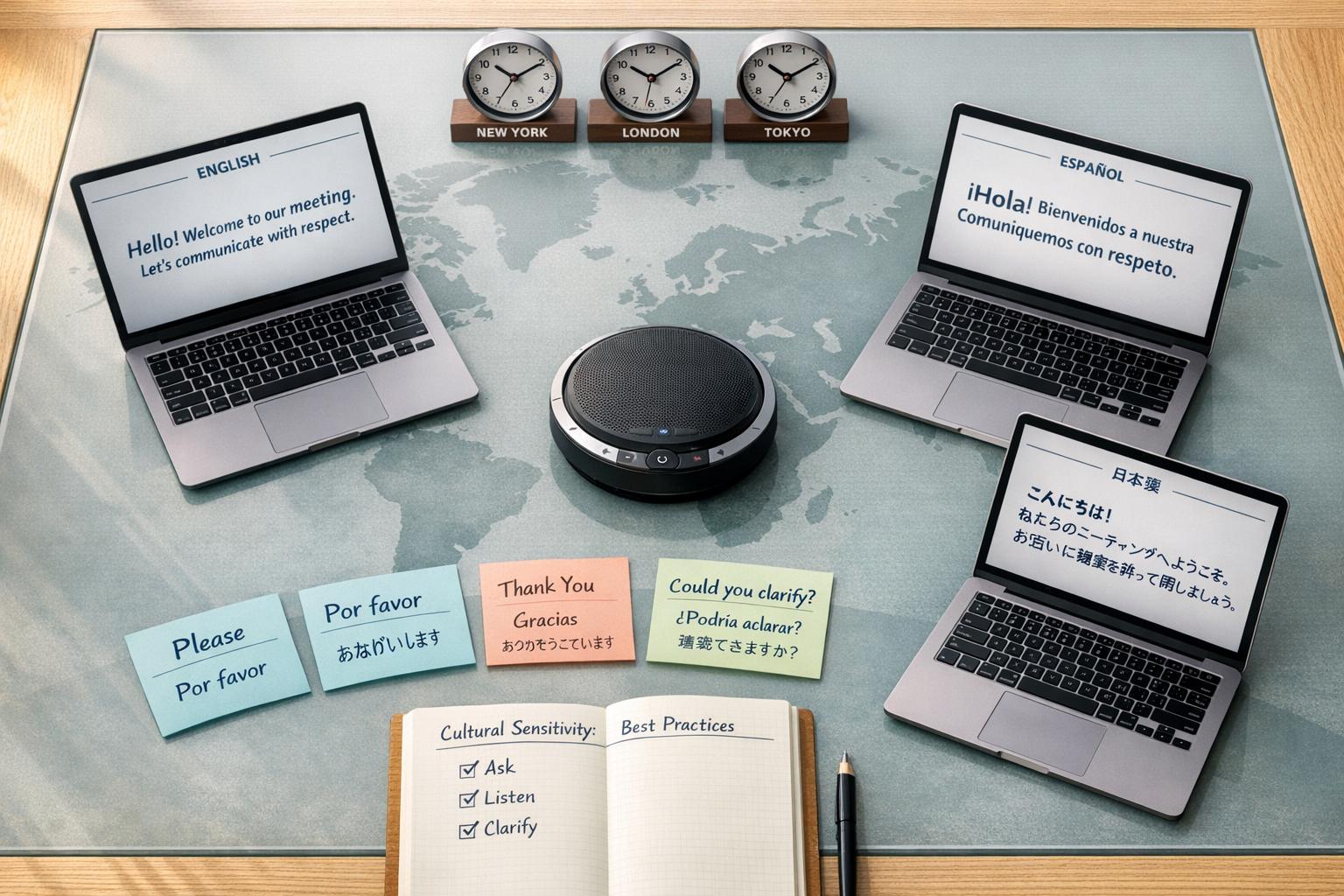
Cultural sensitivity isn't optional — it's the bridge that keeps global teams connected, reduces misunderstandings, and fosters inclusive workplace communication.
What if I told you that 63% of employees have thought about quitting because of poor communication? That stat hit me like a ton of bricks the first time I read it. And honestly, it’s not just about communication - it’s about connection. I’ve seen firsthand how a poorly timed message or the wrong tone can unravel trust faster than you can say, “We need to talk.”
Here’s where it gets even more interesting: employees who describe leadership communication as "very clear" are three times more satisfied in their roles. That’s not just a nice-to-know stat - it’s a wake-up call. When you add cultural differences, time zones, and diverse backgrounds into the mix, the stakes get even higher. Missteps, like scheduling a big meeting during Ramadan or using idioms that don’t translate well globally, can alienate employees in ways you might not even notice until it’s too late.
At Pebb, we’ve spent countless hours obsessing over how to fix this. Why? Because 80% of the global workforce is made up of frontline workers - retail associates, restaurant staff, healthcare teams - the very people who are often left out of the loop. We knew there had to be a better way to connect teams, no matter where they are or what language they speak.
In this article, I’ll break down how platforms like Pebb, Slack, and Microsoft Teams are helping companies bridge these gaps. I’ll share what works, where the cracks are, and how you can create a workplace where everyone feels heard. Let’s dive in.
1. Pebb
Communication Features
When we set out to build Pebb, we had one clear mission: to connect every employee, no matter where they work or the language they speak. With 80% of the global workforce made up of frontline workers - think retail associates, restaurant crews, warehouse teams, and healthcare staff - it was obvious that traditional communication tools weren’t cutting it. These workers are often left out of the loop, and we knew we had to change that.
That’s why we designed Pebb to bring everything into one place. Work chat with unlimited history? Check. A live news feed, shift scheduling, PTO management, tasks, and a knowledge library? All included. No more juggling multiple apps or missing critical updates. And when you’re managing a team spread across locations and languages, this simplicity becomes more than just a nice-to-have - it’s the glue that keeps everyone connected. This streamlined setup is the backbone of our multilingual and collaborative features.
Support for Multilingual Teams
Connecting with a diverse team starts with speaking their language - literally and figuratively. Pebb makes it easy to adapt content for different languages and contexts through multichannel publishing. But we didn’t stop at basic translation. A message that works for your New York office might feel completely off for your team in Tokyo or São Paulo. We get that.
Here’s the thing: some cultures, like Japan or countries in the Middle East, rely heavily on tone and unspoken cues. Others, like the US or Germany, prefer direct, straightforward communication. Pebb gives you the tools to adjust your messaging style so it resonates with everyone through work chat, news feed updates, tasks, calendar events, digital forms, and shift scheduling. Whether you’re announcing a company-wide update or tweaking shift schedules, your message stays clear, accessible, and culturally relevant. And to make sure no one’s left out, we’ve built in tools for real-time feedback and collaboration.
Tools for Feedback and Collaboration
Good communication isn’t just about sending messages - it’s about creating space for dialogue. With Pebb, teams can collaborate in ways that suit their preferences. Whether it’s a private one-on-one chat, a group discussion in our spaces, calendar-driven coordination, digital forms, or task-focused collaboration, we’ve got you covered. Some people thrive on direct feedback, while others prefer brainstorming in a group setting. Pebb respects those differences.
We also made sure Pebb is accessible to teams of all sizes. At just $4 per user per month for our Premium plan - and a free Standard plan for teams of up to 15 - we’re making these tools available to everyone. Because here’s the bottom line: every team, no matter their budget, deserves to feel heard and valued. And with Pebb, we’re making that possible.
2. Slack
Communication Features
Slack has become a go-to tool for office teams, and I can see why. Its channels make it easy to organize conversations by project, department, or topic - an absolute lifesaver when you're working across multiple time zones. And let me tell you, the Clips feature is a game-changer. Team members can record video or audio updates that others can watch on their own schedule. For globally distributed teams, this is a huge win.
The numbers back it up too: 85% of Slack users say their communication has improved, and 86% feel more prepared to work remotely. Another favorite of mine is the Huddles feature. It’s perfect for those spontaneous audio or video chats that help capture the nuances - like tone or facial expressions - that text alone can miss. Plus, the ability to share images and videos speeds up understanding, bridging any gaps that might arise. At Pebb, we’re all about structured communication, so I can definitely appreciate Slack’s approach.
Support for Multilingual Teams
Now, Slack doesn’t have built-in translation, which might seem like a drawback at first. But here’s the thing: they’ve tackled this through their App Directory, which integrates with over 2,400 third-party tools. Need to help non-native English speakers? Tools like Grammarly Business can step in to ensure clarity and avoid any awkward missteps. And let’s not overlook the Do Not Disturb feature - it’s a lifesaver for maintaining work-life balance when your team spans continents.
Regine Nelson, Internal Comms & Employee Engagement Lead at Couchbase, nailed it when she said, "Language is more than words, right? It's identity, it's context, it's connection". That’s why small adjustments, like avoiding idioms such as “ballpark figure” in global channels, can make a big difference. Even using local spelling conventions - like “color” for U.S. teams and “colour” for U.K. ones - shows an extra level of respect and reduces confusion.
Tools for Feedback and Collaboration
Slack also shines when it comes to fostering an open and collaborative culture. I love their #yay-we-failed channels, where teams can share and discuss mistakes without fear of judgment. It’s a refreshing way to promote psychological safety. And those emoji reactions? They’re not just fun; they’re an easy way to give quick, low-pressure feedback. Fun fact: 88% of Gen Z workers find emojis useful at work, though you do need to be mindful of how emoji meanings can vary across cultures.
That said, Slack’s pricing might make you pause. The free plan gives you 60-minute video calls for up to 100 participants and 5GB of storage. If you need more, the Pro plan costs $7.25 per user per month (billed annually). For teams managing frontline workers, though, Pebb offers a more budget-friendly option at $4 per user per month. It’s not just affordable - it also combines shift scheduling, PTO tracking, tasks, digital forms, clock in, and comprehensive communication in one package. For teams like ours, that’s a win-win.
3. Microsoft Teams
Communication Features
Microsoft Teams has become a game-changer for global communication, offering tools like live captions and recorded meetings. Regine Nelson, Internal Comms & Employee Engagement Lead at Couchbase, captures it perfectly:
"Captions are vital for diverse audiences, ensuring clarity for non-native speakers".
This feature is a lifesaver during virtual town halls or cross-functional meetings, especially when participants don’t share the same first language.
Then there are recorded meetings, which are a blessing for teams spread across time zones. They ensure no one misses out, regardless of their schedule. And let’s talk about emoji reactions - sure, they’re fun, but they’re also surprisingly effective in bridging generational and cultural gaps. With Gen Z set to make up 25% of the U.S. workforce by 2025 (and climbing to 30% by 2030), and 88% of them finding emojis useful at work, these small gestures go a long way in creating a more inclusive environment. Microsoft Teams' multilingual features further extend this accessibility, making it easier for everyone to connect.
Support for Multilingual Teams
Speaking of inclusivity, Teams takes it up a notch with its automated translation capabilities. This feature is a lifesaver for global companies, allowing teams to communicate effortlessly across language barriers.
One tip I always share? Tailor regional spellings and terminology to your audience - it’s a simple way to show respect and avoid confusion. And don’t underestimate the power of smart scheduling. Using calendar tools to time your communications thoughtfully - steering clear of major holidays like Ramadan or Lunar New Year - can make a big difference in fostering goodwill.
Tools for Feedback and Collaboration
These language and accessibility features lay the groundwork for better feedback and collaboration. By centralizing updates and policies, Teams helps cut down on silos. Here’s a stat that always sticks with me: organizations with a strong internal communication strategy are 3.5 times more likely to excel in productivity and engagement. On the flip side, disengaged employees cost U.S. companies a staggering $550 billion annually in lost productivity. Those numbers are hard to ignore.
Microsoft Teams also shines with its two-way communication tools. Features like Q&A sessions, pulse polls, and surveys give employees a voice, fostering a sense of inclusion and transparency. Interestingly, 61% of employees say they prefer getting business updates directly from senior leaders rather than through manager cascades. That speaks volumes about the importance of direct, open communication.
If you’re looking for an all-in-one employee app for communication and operations that takes inclusivity and collaboration to the next level, Pebb is worth considering. At just $4/user/month, Pebb offers a suite of tools - from work chat, news feeds, tasks, calendar events, and digital forms to shift scheduling and PTO management. It’s designed to help you connect and collaborate effortlessly while keeping costs in check.
Pros and Cons
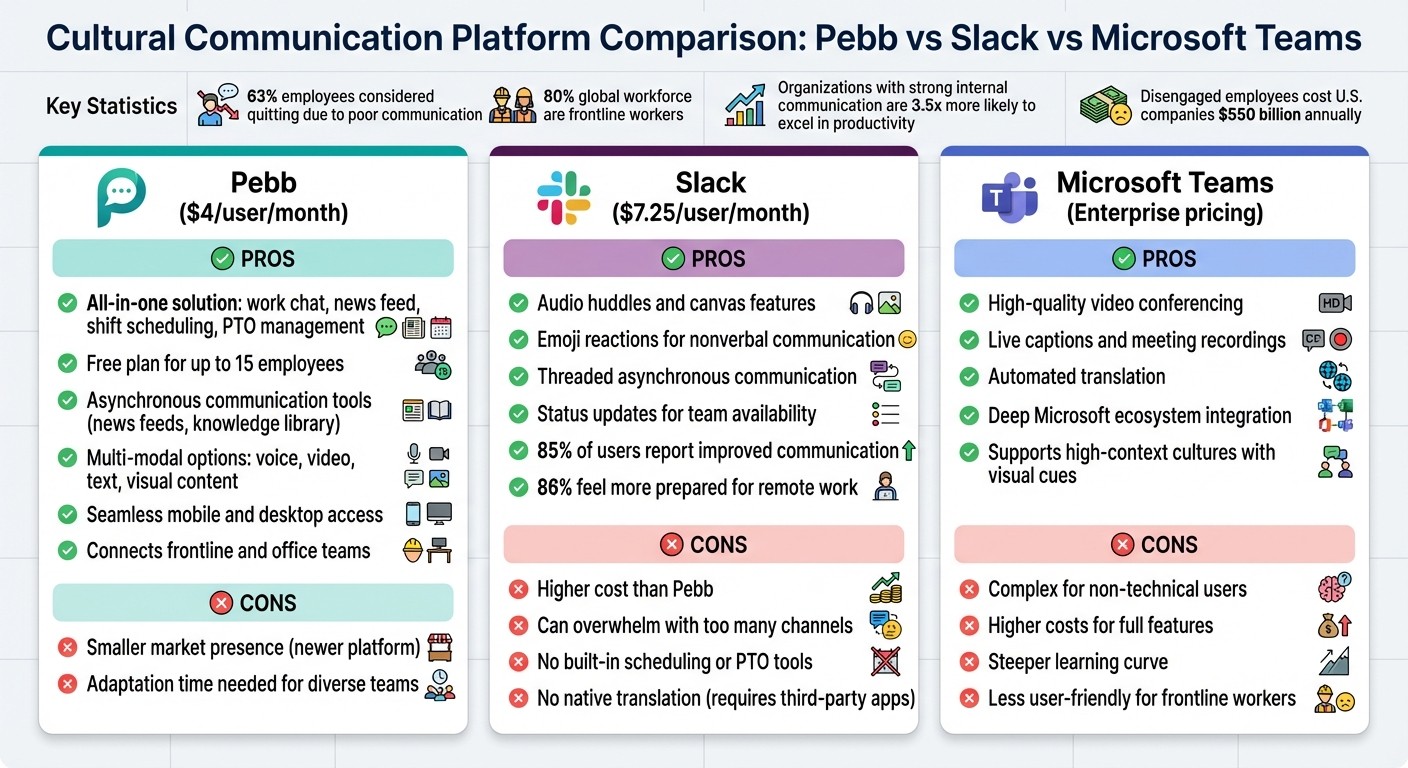
Pebb vs Slack vs Microsoft Teams: Cultural Communication Platform Comparison
Let me walk you through a quick breakdown of how Pebb, Slack, and Microsoft Teams stack up when it comes to fostering communication that works across different cultures. Each platform has its strengths and challenges, and here's what I’ve seen in action:
Platform | Pros | Cons |
|---|---|---|
Pebb | • Offers an all-in-one employee app for communication and operations for just $4/user/month, covering work chat, news feed, tasks, calendar events, digital forms, shift scheduling, and PTO management | • As a newer platform, it has a smaller market presence |
Slack | • Features like audio huddles and canvas provide clarity for diverse communication styles | • Costs more compared to Pebb |
Microsoft Teams | • High-quality video conferencing supports high-context cultures (e.g., Japan, Middle East) by emphasizing facial expressions and body language | • Can feel overly complex for non-technical users |
Here’s the thing: each platform addresses cultural nuances differently, balancing cost, features, and usability. For example, high-context cultures - like those in Japan or the Middle East - rely on subtle nonverbal cues and atmosphere during communication. On the flip side, low-context cultures, such as in the U.S. or Germany, prefer direct, explicit exchanges .
What I’ve found particularly effective about Pebb is its flexibility as an all-in-one employee app for communication and operations. It combines video calls, text chat, and a visual news feed to meet the needs of both communication styles. And at just $4 per user per month (with a free plan for teams of up to 15), it delivers enterprise-level inclusivity without the hefty price tag. That’s a win for teams looking to connect and collaborate seamlessly, no matter where they are or how they communicate.
Conclusion
Working on Pebb and watching teams tackle the complexities of cross-cultural communication has taught me one key thing: the tools you use can make or break how your team connects. It’s not just about having chat or video call options - it’s about creating a space where someone from a high-context culture can pick up on subtle, nonverbal cues, while someone who thrives in low-context settings gets the clarity they need from direct communication.
"No one is born fully-formed: it is through self-experience in the world that we become who we are." - Paulo Freire, Educator
This quote resonates deeply. Cultural sensitivity isn’t a box you tick; it’s something you cultivate over time, with experience and the right tools to guide you. That belief drives everything we do at Pebb.
Pebb is designed to strike that balance, offering all the essentials in one place for just $4/user/month - or free for up to 15 employees. It combines work chat, news feeds, video calls, tasks, calendar events, digital forms, clock in, and shift scheduling, eliminating the need to juggle multiple apps. Its multimodal approach - text, voice, video, and visual content - ensures there’s something for everyone, whether they prefer relationship-driven or efficiency-focused communication.
As we’ve seen throughout this piece, creating a communication environment that respects cultural differences is more than a nice-to-have - it’s essential. From Pebb's features to the larger challenges teams face, one thing is clear: the right platform isn’t just a tool; it’s a bridge to inclusivity. That’s what we’ve built with Pebb, and it’s the same approach that’s helping teams everywhere create workplaces where everyone feels connected and engaged.
FAQs
How does Pebb support communication for multilingual and multicultural teams?
At Pebb, we’ve learned that communication in multilingual and multicultural teams is about so much more than just translating words. It’s about creating a space where everyone feels included, respected, and truly understood. That’s why we built Pebb’s all-in-one employee app for communication and operations to do just that. Whether it’s group chats, news feeds, tasks, calendar events, digital forms, or voice and video calls, our tools are designed to connect both frontline workers and office teams seamlessly.
What really sets Pebb apart is the ability to create targeted groups and spaces. This means teams can tailor messages to specific cultural or linguistic needs, making communication not just clear but also meaningful and respectful. By reducing misunderstandings, we help build trust across diverse teams. And here’s the kicker - at just $4 per user per month, Pebb brings together cultural awareness and powerful features without breaking the bank. It’s an ideal solution for teams, big or small, looking to bridge those gaps and work better together.
How does Pebb promote culturally sensitive communication within teams?
At Pebb, we’re all about building connections that truly make a difference - and that includes making cultural sensitivity a cornerstone of workplace interactions. Our platform is designed to bring teams together, ensuring inclusivity is always a priority. With tools like group chats, news feeds, tasks, calendar events, digital forms, and an employee directory, we make it effortless for teams to stay connected while appreciating the unique backgrounds and perspectives each person brings to the table.
What sets Pebb apart is how it naturally creates spaces where diversity isn’t just acknowledged - it’s celebrated. Whether it’s through private groups for meaningful cultural conversations or using calendar events to honor key cultural milestones, Pebb helps teams foster a sense of community and mutual respect. By giving employees the tools to engage thoughtfully, we make cultural sensitivity an everyday part of how teams communicate and collaborate.
Why does cultural sensitivity matter in workplace communication?
Cultural sensitivity plays a key role in workplace communication, especially in connecting teams from diverse backgrounds. It’s about creating a space where every individual feels respected and valued. By acknowledging and understanding cultural differences - whether it’s in communication styles, traditions, or social norms - we can sidestep potential misunderstandings and build stronger, more meaningful relationships.
In today’s globalized work environment, where teams often stretch across multiple countries and cultures, cultural awareness isn’t just a nice-to-have skill; it’s essential. It encourages inclusivity, minimizes conflicts, and enhances collaboration, leading to benefits that ripple through the entire organization. When we adapt our communication to embrace different perspectives, we pave the way for a workplace that’s not only more engaged but also more unified and productive.
