
How to Improve Company Culture (Without the Fluff)
Discover how to improve company culture with honest, human-centered steps. Learn to diagnose issues, build trust, and create a workplace that works.
Dan Robin
If you really want to improve your company culture, stop talking about perks. It's time to look at the small, consistent actions that define how your team actually works. Real culture is built on the quality of communication, the way people give and receive feedback, and the unwritten rules that guide everyday decisions. It has nothing to do with ping-pong tables.
Your Culture Is What You Do, Not What You Say
Let’s be honest for a second. Most conversations about company culture miss the point. They drift toward superficial things like free snacks, office dogs, or that one time you all went axe-throwing. While those things are nice, they aren't your culture. They're just decorations.
True culture is the quiet, persistent hum of your organization. It’s how people act when the boss isn't in the room. It’s what happens in that awkward silence after a bad idea is shared in a meeting. Does someone feel safe enough to speak up, or does everyone just nod along?
That’s culture.
The Power of Everyday Actions
Think of it this way: your culture is the sum of thousands of tiny, everyday moments.
It's the difference between a manager who says, “My door is always open,” and one who actively schedules one-on-ones just to listen, with no agenda. It’s found in the clarity of an internal announcement—or the confusion that follows a vague one.
These are the moments that matter, and that's where you need to focus. A 2024 McKinsey study found a direct link between positive workplace relationships and employee satisfaction. This drives home the point that how we interact matters far more than what we offer.
The secret to attracting and holding onto the world’s best talent isn’t about the work perks — it’s about relationships. It's where employees feel seen and heard, management is transparent, and teams are proud to work together.
This guide isn’t another list of trendy initiatives. It’s a practical playbook for improving the small, consistent behaviors that truly define your work environment. We believe that internal communication is culture, and if you want to improve one, you must get serious about the other.
We’re going to share what we've learned about moving past the inspirational posters to address the real currents flowing through your organization. We'll dig into the communication patterns, feedback loops, and daily systems that are either helping your team thrive or holding them back.
The goal isn’t to install a new "culture program." It's to fundamentally change how you operate, one conversation and one action at a time.
Stop Guessing and Start Listening
If you want to understand your company culture, the first step is simple: stop talking and start listening. Too many leaders think they have a good read on team morale, but their perspective is almost always filtered. You're getting the polished, "everything's fine" version of reality.
The real story—the one that drives performance and retention—is happening in the trenches. It’s in the quiet sighs during a team meeting, the private Slack channels, and the conversations that start the second you leave the room. Your job isn't to guess what those conversations are about; it’s to build an environment where people feel safe enough to have them with you.
Beyond the Annual Survey
Let's be real. The annual employee survey is mostly corporate theater. It's a sterile, once-a-year ritual that spits out charts but rarely delivers real insight. People either rush through it or give blandly neutral answers to stay off the radar. And then, inevitably, nothing much changes.
The goal isn't to get a score for the all-hands meeting. It’s to hear the unvarnished truth about what it’s really like to work at your company. This means moving beyond anonymous, aggregated data and leaning into real, human conversations.
It’s about shifting from superficial perks to the gritty work of dialogue and connection.
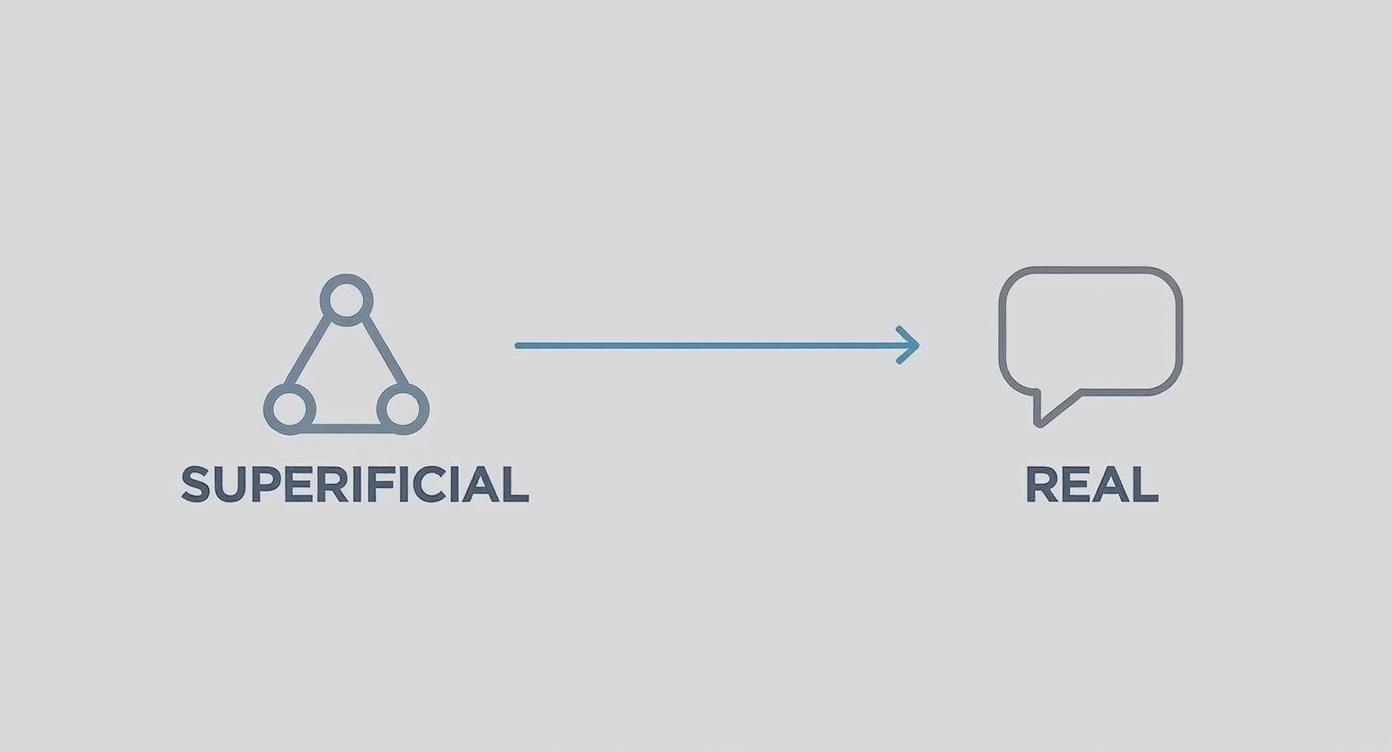
As you can see, a meaningful culture is built on a foundation of conversation and connection, not just surface-level benefits.
Creating Channels for Real Talk
So, how do you get people to open up? It comes down to building trust, and that starts with creating psychological safety. This isn't about being "nice." It’s about making it crystal clear that speaking up—with criticism, a dissenting opinion, or a tough question—won’t lead to punishment or embarrassment.
When people feel genuinely safe, they’ll tell you where the real problems are. Our own research shows that employees at companies with high trust are 11 times more likely to think their workplace is great. That kind of environment doesn't just happen; you have to design it intentionally.
Here are a few ways to get started:
Conduct 'Listening Tours': Instead of a big town hall, have a senior leader meet with small groups of 5-7 people. Keep the agenda simple, with just two questions: "What's working really well around here?" and "What's driving you crazy?" Then, just listen. No defending, no debating.
Reframe One-on-Ones: Carve out dedicated time in one-on-ones to talk about culture. Ask direct questions like, "What’s one thing we could do to make our team work better together?" or "When was the last time you felt truly stuck, and what was blocking you?"
Use Modern Tools Intelligently: An employee engagement tool can be more than a survey machine. When you use something like Pebb, you can see sentiment patterns emerge in real-time from kudos, recognition, and feedback channels. You’re not just collecting data; you’re observing the living culture as it unfolds.
The goal isn’t to solve every problem in the moment. It's to prove that you're genuinely curious and that honest feedback isn't just welcome—it's expected.
From Listening to Understanding
Once the feedback starts to flow, your next job is to look for patterns. A single complaint might be an isolated issue. But if five people in different departments all mention that cross-team collaboration is a nightmare, you’ve found a real, systemic problem.
This is where you move from scattered anecdotes to actionable insight. For a deeper look, check out our ultimate guide to employee feedback strategies. It lays out more structured approaches for collecting and analyzing what you hear.
Let’s be clear: this part can be uncomfortable. You will hear things you don't want to hear. You’ll probably discover that a policy you thought was brilliant is actually making people’s lives harder.
But that discomfort is a sign of progress. It means you've finally broken through the corporate polish and are dealing with reality. That’s the only place where real, lasting improvement can begin. It’s not about having all the answers. It’s about being brave enough to ask the right questions and humble enough to listen to the truth.
Build Connections, Not Just Teams

We’ve all been there. The forced-fun, mandatory team-building exercise that makes everyone cringe. The awkward trust falls, the cheesy icebreakers—they almost always do more harm than good. You can't manufacture genuine connection.
A strong culture isn't built on an afternoon of awkward activities. It grows from authentic human relationships, a sense of belonging, and the small, daily rituals that bring people together naturally.
The goal isn't just to create teams; it's to build connections. When people feel connected to their colleagues as people, not just as coworkers, something powerful happens. They become more engaged, more resilient when things get tough, and far less likely to burn out.
From Manufactured Fun to Real Relationships
Let’s be honest. The best conversations at work often happen in the spaces between the work. The quick chat while grabbing coffee, the five minutes before a meeting starts, the shared laugh over a ridiculous customer request.
Your job as a leader is to protect and encourage these moments, not schedule them into oblivion. Instead of another mandatory happy hour, think about how you can create an environment where connections can spark on their own.
A simple, well-stocked coffee station can become a natural hub for conversation, doing more for your culture than any formal event. In fact, there's a whole art to it. Check out The 5 Benefits of Building a Strong Office Coffee Culture to see what I mean.
This is about moving from "team building" to "community building." It's a subtle but critical difference.
Designing for Spontaneous Connection
So, what does this look like in practice? It’s about being intentional with the rhythms of the workday.
We've found that championing cross-departmental projects is one of the best ways to do this. Nothing builds bridges faster than having marketing work hand-in-hand with engineering to solve a real customer problem. These shared missions break down silos and create bonds built on mutual respect.
Another thing that works is creating meaningful rituals. Instead of forced fun, build rituals around shared wins. Ring a bell when a big sale closes. Start your weekly all-hands meeting by sharing personal and professional "wins." These small, consistent acts reinforce a sense of shared identity.
For remote teams, it's vital to protect unstructured time. Encourage "donut chats" where random pairs of employees are matched for a 15-minute non-work call. These intentional, informal touchpoints create a real sense of belonging.
The data on this is incredibly clear. Investing in connection drives real business outcomes.
The Business Impact of Connection
Metric | Improvement in Highly Connected Teams |
|---|---|
Employee Engagement | 3.7 times more likely to be engaged |
Burnout Rate | 68% less likely to experience burnout |
Employee Turnover | Significantly lower rates |
Source: Gallup and Workhuman, 2023
These numbers show that when people feel they belong, they perform better and stay longer. It's that simple.
Connection is the currency of a healthy culture. When people feel like they belong, they don’t just work for the company; they work with each other. That’s a game-changer.
Ultimately, this is about trusting your team to be adults. Give them space and encouragement to connect on their own terms. The relationships that form will be far stronger than anything you could ever orchestrate. The real work of improving company culture is often quiet and subtle. It’s less about grand gestures and more about creating an environment where people can simply be people, together.
Show You Care Through Action, Not Just Words

A mission statement framed on the wall is cheap. What’s expensive—and what actually works—is the daily, consistent effort of proving you mean it. Honestly, showing you care about your employees is one of the most powerful ways to fix a broken culture.
It’s about building systems that support people’s whole lives, not just their output. It’s about designing work that respects their time, energy, and humanity. Let’s be clear: this isn’t about being soft. It’s about being smart.
When people feel genuinely supported, their loyalty and engagement follow. This is when the fuzzy idea of "culture" becomes a real, everyday experience.
Make Recognition Feel Human
Let's face it, most corporate recognition programs feel robotic. An automated "happy work anniversary!" email or a generic gift card for hitting a target doesn’t make anyone feel seen. It just checks a box.
Meaningful recognition is personal, specific, and timely. Think about a manager pulling someone aside to say, "The way you handled that difficult client call was incredible. You turned a bad situation into a win." Or a public shout-out in a team meeting for someone who stayed late to help a colleague.
These moments cost nothing, but their impact is huge. They reinforce the exact behaviors you want and show people that their contributions are valued.
Design Work That Actually Respects People
Burnout isn't a personal failing; it's a feature of a broken system. Too many companies preach "work-life balance" while celebrating employees who answer emails at 10 PM. That contradiction is exactly where a good culture goes to die.
Caring through action means taking a hard look at how the work gets done.
Are your meetings productive? Or are they bloated, agenda-less time-sucks?
Are expectations crystal clear? Or do people spend half their day figuring out what to prioritize?
Do you respect evenings and weekends? Or is there unspoken pressure to be "always on"?
Fixing these systemic issues is a profound act of care. It tells your team you value their well-being more than the appearance of being busy. Another way to show you care is by giving your team efficient tools, like those for creating compelling presentations with AI, which saves time and cuts down on stress.
It’s simple, really. If you want a culture of high performance, you need a culture that actively prevents burnout. You can't have one without the other.
The data is screaming this at us. According to O.C. Tanner's analysis of 2025 culture trends, employees who feel their company cares about them are 84% less likely to burn out and a staggering 12 times more likely to feel highly engaged. In a tight labor market, that’s a massive competitive advantage.
Ultimately, showing you care is about closing the gap between your intentions and your actions. It’s about the thousand small, daily decisions that prove your people are more than just resources. They are the engine of your business. When you take care of the engine, it performs.
Earn Trust Through Transparency and Growth
Trust isn’t a perk. It’s earned slowly, through honesty and consistency. When things get uncertain, your team is looking to leadership not for perfect answers, but for stability and truth.
Let’s be honest. Many leaders shield their teams from bad news. The instinct is to "protect" them from the stress of a looming budget cut or a tough quarter.
That’s a mistake. People are smart; they can sense when something is off. The silence is often worse than the reality, breeding rumors and anxiety that will corrode morale faster than any piece of bad news.
The alternative? Treat your team like adults. Share the "why" behind your decisions, even the tough ones. When you’re transparent about the challenges, you’re not just relaying information; you’re inviting people to be part of the solution. You’re showing them you trust their maturity.
Trust isn’t built when things are easy. It’s forged when you’re honest about how hard things are. Transparency doesn’t just make people feel included; it makes them feel respected.
That respect is the bedrock of any real effort to improve your company culture.
Trust Them to Do the Work
Transparency is only half the story. The other half is showing that trust through your actions. Nothing says "I trust you" louder than giving people autonomy over their own work.
This is where flexible work really shines. Offering flexibility isn’t just another benefit; it’s a direct reflection of your trust. It says, "We hired you for your brain, not to watch you sit at a desk from 9 to 5."
When you trust people to manage their own time and deliver results, they often exceed expectations. They feel a sense of ownership that you could never mandate.
The World Economic Forum’s 2025 Workmonitor report backs this up, finding that 56% of employees would trust their employer more if they offered flexible working hours. This isn't just a trend; it's a fundamental shift. You can explore more insights into the evolving attitudes toward work in their full analysis. Moving from monitoring presence to measuring output is critical for building a modern, high-trust culture.
Invest in Their Future, Not Just Yours
The final piece of this puzzle is growth. If you want people to invest their careers with you, you have to invest in them first. This goes beyond the occasional webinar.
It means actively creating pathways for people to build new skills within your organization. Are you giving your junior designer opportunities to lead a small project? Are you providing resources for your operations manager to learn about new tools?
These actions send a powerful message: your career matters to us beyond your current role.
This builds deep loyalty. When people see a real future for themselves at your company, they’re far more likely to stick around through the tough times.
Here’s how to think about it:
Create Individual Growth Plans: Sit down with each team member to map out their career goals. Make it a real collaboration, not a top-down directive.
Fund Experimentation: Give people a small budget or dedicated time to explore new tools or take courses on topics that interest them. Curiosity fuels innovation.
Promote from Within by Default: Make internal promotion your first instinct, not your last resort. Nothing signals a commitment to growth more clearly.
In the end, earning trust isn’t about a single program. It’s the sum of these consistent actions—being honest when it’s hard, giving people autonomy, and investing in their futures. This creates a powerful cycle. When you trust your team, they trust you back. And in that environment, people don’t just do their jobs. They do their best work.
The Slow Work of Lasting Change
If you're looking for a finish line, you won’t find one. Improving company culture isn't a project you launch in Q1 and celebrate as "done" by Q3. It’s a continuous, often slow, process of nurturing, listening, and tweaking. It's playing the long game.
Let’s be honest, the desire for a quick win is tempting. We all love to see a dashboard with big, upward swings. But real cultural health doesn't show up in dramatic quarterly shifts. It reveals itself in the small, quiet indicators that are harder to graph but infinitely more meaningful.
This is where you have to resist the pull of vanity metrics. Instead of obsessing over a single engagement score, start looking for the subtle, human-level signs that things are getting better.
Measuring What Truly Matters
The real signals of a healthier culture are often qualitative. They live in day-to-day interactions. You’ll know you’re on the right track when you start to see small but significant shifts in behavior.
Think about it:
Are people more willing to ask for help, admitting they don’t have all the answers? That’s a huge sign of growing psychological safety.
Are difficult conversations becoming more constructive and less personal? This points to higher trust and mutual respect.
Is voluntary turnover among your best people starting to tick downward? That’s perhaps the most honest metric of all.
People vote with their feet. When your top performers choose to stay, it’s a powerful endorsement of the environment you’re building. These are the things you can’t easily put on a chart, but they are the bedrock of a culture that lasts.
Culture change is the cumulative effect of hundreds of small, deliberate actions repeated over time. Each decision, each conversation, each act of recognition is a single thread. Woven together, they create the fabric of your organization.
This slow, deliberate work requires patience. You won't always feel like you're making massive strides. Some weeks, it might feel like treading water. That’s normal.
The goal was never perfection. It was never about building some mythical, flawless workplace where problems cease to exist.
It’s about progress. It’s about the simple, honest work of building a place where good people feel seen, respected, and want to show up every day. That’s a goal worth the slow, steady effort it demands. It’s the only work that truly matters.
Common Questions We Hear About Culture
We get asked the same things all the time. Let's tackle a few of them head-on, because if these questions are on your mind, you're already thinking about the right stuff.
Where Do I Even Start?
Honestly? Just listen. Before you dream up any grand initiatives, you need a real, unfiltered look at what it’s actually like to work at your company. Don't assume you know. Ask good questions, and then just let people talk.
Once you've done that, pick one small, visible problem you heard about and fix it. Seriously, just one. Don't try to boil the ocean. Show your team you're serious by taking a single, tangible action. That first small win is what builds momentum.
How Long Does This Take?
Longer than you want, but probably less time than you fear. You’re not going to see a seismic shift in one quarter. Culture isn't a project with a deadline; it's a continuous practice.
You’ll start to feel the small changes within a few months—maybe a more honest conversation in a team meeting, or a little more cross-department collaboration. But for meaningful, lasting change that everyone can feel? Give it a solid year of consistent, daily effort. The goal isn’t to cross a finish line. It's about making things a little bit better, every single day. That's how you build a great company culture that sticks.
Ready to turn these ideas into action? Pebb brings communication, recognition, and culture together in one simple app. See how we can help you build a place where people genuinely want to work. Learn more about how Pebb works.
