
A Guide to Digital Employee Experience
Discover what digital employee experience (DEX) is, why it matters, and how to build a strategy that boosts productivity and retains top talent.
Dan Robin
Think about the best customer experience you’ve ever had. It was probably seamless, intuitive, and left you feeling great. Now, what if your employees felt that exact same way about the technology they use every single day at work? That, in a nutshell, is the goal of a great digital employee experience (DEX). It’s the sum of every digital interaction your team has with the company, from their first login to their daily project collaborations.
Why Your Digital Employee Experience Matters Now
For a long time, DEX was just an IT problem to solve. Today, it’s a boardroom-level conversation. Why the shift? Because it hits the bottom line, hard. We’re past the point of just handing out laptops and software licenses; it’s now about the quality, efficiency, and even the emotional impact of every digital touchpoint.
A good way to think about it is to compare your digital workspace to your physical office. A messy, poorly laid-out office breeds frustration and makes it hard to get things done. Your digital environment is no different. When employees have to battle slow systems, hunt for information across a dozen different apps, and wrestle with clunky software, it creates a constant state of digital friction. This isn't just a minor annoyance—it's a major driver of the modern engagement crisis.
The Staggering Cost of a Poor DEX
Letting your digital employee experience slide isn't a passive mistake; it has real, measurable consequences. When the tools you provide work against your people instead of for them, the negative effects ripple through the entire organization.
The numbers are pretty stark. In 2024, global employee engagement dropped to a dismal 21%, highlighting a massive disconnect between employees and their work. This disengagement is incredibly expensive, with a poor digital experience alone contributing to an estimated $438 billion in lost productivity. Meanwhile, 97% of executives agree that a high-quality DEX is a major productivity booster. The disconnect is clear.
A weak DEX shows up in a few critical ways:
Slashed Productivity: Team members can lose hours every single week just trying to navigate inefficient systems or waiting on IT support.
Higher Turnover: Your best talent is used to the seamless tech in their personal lives. They have little patience for a frustrating digital workplace and will leave for a better one.
Tanking Engagement: Constant digital roadblocks lead directly to burnout and the feeling that the company simply doesn't value their time.
Major Security Risks: When employees get frustrated enough, they’ll find workarounds. That often means using unauthorized (and insecure) apps to get their work done, opening up all kinds of vulnerabilities.
"A great digital employee experience removes the technological roadblocks that stand between an employee and their ability to do their best work. It transforms technology from a source of friction into a source of empowerment."
Shifting Ownership from IT to a Shared Responsibility
It wasn't long ago that the tools employees used were solely an IT decision, made in a vacuum. That approach is completely outdated now. A huge part of a modern DEX is shaped by an employee's first digital impression, which is where things like modern onboarding portals can make a world of difference. That first experience sets the tone for everything that follows.
Because DEX touches every part of an employee's day—from how they communicate and collaborate to how they access HR info—its ownership has to evolve. While IT is still a crucial partner for managing the infrastructure, HR is stepping up to take a more strategic lead. We dive deeper into this in our guide on why HR should own the digital employee experience, which explains why their expertise in the employee journey is so critical.
At the end of the day, building a world-class DEX is a team sport. It demands close collaboration between IT, HR, Internal Comms, and company leadership to create a digital ecosystem that actually works for people. This alignment ensures technology isn't just a cost center but a strategic investment in employee satisfaction, productivity, and the long-term health of the business.
The Five Components of a Winning DEX Strategy
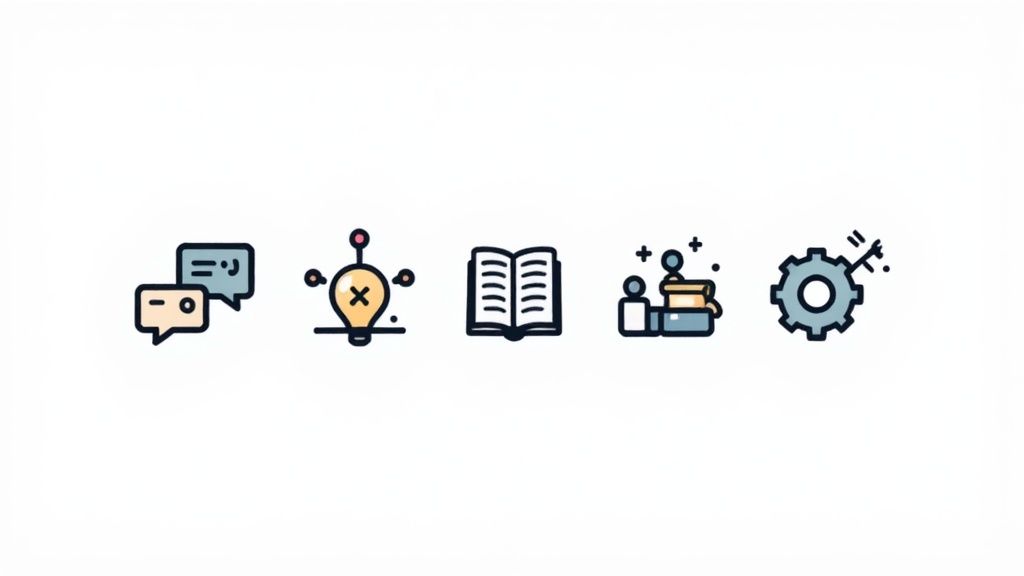
A great digital employee experience doesn’t just materialize out of thin air—it has to be designed with intention. Think of it like building a house. You can't just toss up some walls and hope it stands; you need a solid foundation and a clear blueprint. For DEX, that blueprint rests on five core components that have to work together to create a digital workplace that actually works for your people.
These pillars aren't just fluffy concepts. They're the practical, foundational elements that separate a frustrating, disjointed digital environment from one where technology genuinely helps people do their best work. Once you understand them, you can start to pinpoint the real weak spots in your own organization and see where you have the biggest opportunities to make a real difference.
1. Unified Communication Tools
Let's be honest: fragmented communication is a productivity killer. We've all been there. You need an urgent answer for a customer, so you start by digging through your inbox, then hop over to a group chat in Microsoft Teams, and finally check a DM in Slack. This digital scavenger hunt wastes time and cranks up the stress levels.
A winning DEX strategy pulls all of this into one cohesive hub. This doesn’t mean you have to ditch every specialized tool. It’s about integrating them into a central place where conversations are organized, easy to find, and accessible. The whole point is to create a single source of truth.
When communication is unified, people know exactly where to go for what they need. This simple shift massively reduces the mental gymnastics of app-switching and makes sure nothing important gets lost in the digital noise.
2. Smart Workflow Automation
So many jobs are bogged down by repetitive, soul-crushing tasks. Just think about the old-school process for submitting an expense report: fill out a spreadsheet, scan a pile of receipts, email it off for approval, and then wait... and wait. Every step is a tiny point of friction that adds up to a mountain of wasted effort across the company.
Smart workflow automation is the perfect cure for this kind of digital drudgery. It’s all about using technology to handle those routine processes, freeing up your team to focus on work that's more strategic and, frankly, more interesting.
When you automate the boring stuff, you're not just making things faster—you're handing your employees back their most valuable resource: time. That time goes directly back into innovation and high-value work.
In practice, this could look like:
An automated system that lets employees request PTO with a single click.
A digital workflow that automatically sends new contracts to the right people for sign-off.
An AI-powered bot that can instantly resolve common IT support tickets.
3. Seamless Employee Onboarding
An employee’s first few weeks set the stage for their entire experience with your company. If their onboarding is a confusing mess of broken links, outdated documents, and a mountain of paperwork, it sends a terrible message: "We weren't ready for you."
On the flip side, a seamless digital onboarding process makes new hires feel welcomed, prepared, and ready to hit the ground running. This means giving them a central portal where they can find everything they need, all laid out in a clear, intuitive way.
A great onboarding experience includes:
Day One Access: All their logins and software access are ready to go before they even start.
Guided Learning: A clear roadmap of training modules, welcome videos, and key documents.
Easy Connections: A directory that helps them find and connect with their new teammates.
This thoughtful approach turns onboarding from a bureaucratic chore into an engaging experience that gets new hires up to speed faster and makes them feel like part of the team right away.
4. Centralized Knowledge Access
In most companies, critical information is a chaotic mess scattered across shared drives, old email chains, and random folders. Trying to find something as simple as the official holiday schedule can turn into a frustrating quest. It's a huge problem, so much so that 86% of workers say "finding information and answers" is the top thing they want workplace AI to help with.
A cornerstone of any good DEX strategy is a centralized knowledge base. This is a single, searchable home for all important company info—from HR policies to project files. A well-designed knowledge system uses smart search to deliver the right answer instantly, so employees don’t have to waste time tapping a colleague on the shoulder and interrupting their flow.
5. A Supportive Digital Culture
At the end of the day, technology is only half the battle. You can have the most advanced tools on the planet, but they won't do much good if your company culture isn’t aligned. A supportive digital culture is one that actively encourages open communication, celebrates people's contributions, and fosters a genuine sense of community online.
This is where the human side of technology really shines. It's about creating digital spaces where people feel comfortable sharing ideas, giving shout-outs for great work, and connecting with coworkers on a personal level. Platforms with features for giving kudos, creating social groups, or sharing company news help build that social connection that’s so vital for an engaged workforce—especially in a hybrid or remote world. When technology helps strengthen relationships, it elevates the digital employee experience from something purely functional to something truly engaging.
How to Measure Your Digital Employee Experience
https://www.youtube.com/embed/pk-IjttMbh4
Before you can improve your digital employee experience, you have to know where you stand. Without a clear starting point, any changes you make are just shots in the dark. Measuring DEX isn't about chasing a single, perfect score; it’s about weaving together hard data and genuine human feedback to see the full picture.
Think of it like a doctor's check-up. A single reading, like your temperature, doesn't tell the whole story. You need to look at blood pressure, listen to the heartbeat, and actually ask the patient how they feel. In the same way, a healthy digital workplace requires looking at both the numbers and the human experience behind them.
Tracking Quantitative Data
Quantitative metrics are your hard evidence. They give you the objective numbers that show how people are really interacting with your company's technology. This data is fantastic for spotting bottlenecks, technical hiccups, and patterns that are slowing everyone down. It takes the guesswork out of the equation.
Here are a few key things to start tracking:
Application Adoption Rates: Are people even using the software you’re paying for? Low adoption might point to poor training, a clunky interface, or the tool simply not being useful.
Average Task Completion Times: How long does it actually take to submit an expense report or find a simple HR policy? If common tasks are taking forever, you've found a clear point of friction.
Volume of IT Support Tickets: A flood of help tickets for a specific app is a massive red flag. Digging into the types of tickets reveals the exact pain points that need a systemic fix.
System Performance and Downtime: Nothing kills productivity and morale faster than slow-loading apps and constant crashes. This isn't just an inconvenience; it's a direct hit to your bottom line.
These numbers tell a story. For instance, if you see IT tickets spike right after a new software launch, you know the rollout or the training missed the mark.
Gathering Qualitative Feedback
While the numbers tell you what is happening, qualitative feedback explains why. This is where you get to the heart of the matter—the frustration, the confusion, and the moments of delight that data points can never capture.
"Understanding the employee's perspective is non-negotiable. Quantitative data can show you a bottleneck, but only qualitative feedback can explain the frustration and confusion that bottleneck is causing every single day."
To get this crucial context, you need to listen intentionally.
Employee Satisfaction (eSAT) Surveys: Don't just send out a massive annual survey. Use short, regular pulse surveys to ask people directly about the tools they use every day.
Sentiment Analysis: Modern tools can analyze chatter on internal platforms like Slack or Teams to get a feel for the overall mood toward your company’s tech.
Focus Groups: Get a small group of people from different departments in a room (or a video call) and just talk. You’ll be amazed at what you learn from an open, honest conversation about their digital work life.
Creating a Holistic DEX Score
The real magic happens when you bring both types of data together. Your goal is to build a holistic DEX score—a single, reliable indicator of your digital workplace's health. This isn't just one metric; it's a weighted score that combines your most important quantitative data with your qualitative findings.
This balanced approach ensures you’re not just chasing technical glitches but are also improving the day-to-day usability that truly affects employee engagement. For a closer look at what to track, check out our guide on the employee engagement metrics that truly matter. By continuously measuring and listening, you can finally stop guessing and start making smart, strategic decisions that help every single employee do their best work.
Using Technology to Enhance the Digital Workplace
Technology often gets blamed for creating digital friction, but when used correctly, it’s also the most powerful way to fix it. The right tools, implemented with care, can turn a frustrating digital setup into an environment where people can actually get things done. Modern platforms and artificial intelligence aren't just buzzwords anymore; they are practical tools that can smooth out the daily bumps that ruin the digital employee experience.
These advancements are about more than just basic automation. For instance, AI is growing up. It’s no longer just a simple chatbot answering FAQs. It's becoming a proactive partner that can predict an IT issue before it tanks your workflow, handle the soul-crushing admin tasks that drain morale, and deliver personalized support that makes employees feel heard.
The Rise of AI as a DEX Partner
Artificial intelligence is fundamentally changing how we interact with our digital tools at work. That initial skepticism many of us had about AI is fading fast as its real-world benefits become undeniable. People are starting to see it as a genuine ally in their day-to-day tasks.
Recent studies really drive this point home: nearly half (49%) of workers are optimistic about AI's role, and a whopping 45% are already using it daily or weekly. They’re seeing real results, too. 47% say it improves the quality of their work, and 42% report finishing tasks faster. Many are saving at least 30 minutes a day—that's a huge win that gives them time back for more important work. You can discover insights on how AI is shaping the employee experience on Liferay.com to see just how big this trend is becoming.
"The goal of technology in the workplace should be to remove cognitive load—the mental effort required to find information or use a tool. AI-powered search and proactive support are key to achieving this, turning the digital environment into an assistant, not an obstacle."
One of the most immediate game-changers is AI-powered search. Think about it: instead of wasting time digging through a maze of shared drives or scrolling through ancient chat histories, an employee can just ask a question. Instantly, they get the right document, policy, or contact. This one feature alone tackles one of the biggest sources of frustration and wasted time in the workday.
Unifying the Digital Chaos
Beyond just AI, another huge step forward is the move toward unified platforms. The constant app-switching most of us do—bouncing between email, chat, project management tools, and HR portals—creates a fragmented and incredibly distracting day. A unified platform brings everything together into one central hub.
This kind of integration offers a few massive advantages:
A Single Source of Truth: Everyone knows exactly where to go for company news, important documents, and team updates. No more confusion.
Reduced Context Switching: When conversations, tasks, and resources all live in the same place, it's so much easier to stay focused and do deep work.
Consistent User Experience: Navigating one well-designed interface is far less mentally taxing than trying to remember the quirks of a dozen different apps.
For any organization serious about consolidating its tech stack, the first step is understanding the landscape of employee experience platforms and what to look for.
Practical Applications That Drive Real Value
At the end of the day, technology is only as good as its real-world impact. A smart tech strategy focuses on solving specific, tangible problems for your people. For example, specialized tools like Chatbot Human Resources Technology can automate answers to common HR questions about benefits or time off. This frees up the HR team to focus on more strategic initiatives instead of repetitive queries.
By focusing on tools that simplify complexity, automate the boring stuff, and provide instant access to information, companies can make sure their technology is a powerful engine for productivity and the foundation of a great digital employee experience.
Building Your DEX Improvement Roadmap
Knowing what a great digital employee experience looks like is one thing; actually building it is a whole different ballgame. A successful DEX initiative isn't a single, massive project you can check off a list. It’s a continuous cycle of improvement. To get from idea to reality, you need a clear, phased roadmap to guide your efforts, get everyone on board, and deliver results you can actually measure.
Think of it like building a custom home. You wouldn't just show up and start laying bricks at random. You'd start with a thorough survey of the land, draft a detailed blueprint, build methodically, and then live in the space for a while to see what needs a tweak. A DEX roadmap follows that same common-sense progression, breaking down a huge goal into a series of manageable steps.
Phase 1: Discovery and Audit
First things first: you have to understand exactly where you are today. You can't fix problems you don't even know exist, so this phase is all about mapping out the current employee digital journey to find the hidden pain points and friction. This isn’t about guesswork; it’s about gathering cold, hard evidence.
Start by talking to people. Interview employees from different departments and roles, and ask them to walk you through their daily digital routines. Where do they get stuck? What tasks take way longer than they should? Back up these conversations with the quantitative data we talked about earlier—like IT ticket volumes and app usage rates—to create a complete "pain point map."
This initial audit gives you the foundation you need to build a strategy that solves real, everyday frustrations. It ensures your efforts are aimed where they’ll make the biggest difference.
Phase 2: Strategy and Prioritization
With a clear picture of the current state, you can now define what "better" actually looks like. This phase is all about setting clear, achievable goals and focusing your resources on the projects that will give you the most bang for your buck. You can’t fix everything at once, so you have to be ruthless about prioritization.
A simple framework can help. Score potential initiatives based on two key factors:
Employee Impact: How many people does this problem affect, and just how bad is the pain it’s causing?
Business Impact: How does fixing this problem help the company's bigger goals, like boosting productivity, cutting costs, or keeping great people?
A classic mistake is to chase after shiny new technology without having a clear problem to solve. A smart strategy starts with the employee's pain and works backward to find the right solution—not the other way around.
Focus on a few high-impact "quick wins" to get started. For example, if your audit revealed that nobody can ever find the latest HR policies, a project to centralize all those documents into a single, searchable knowledge base is a high-priority initiative. It delivers immediate value and builds momentum for the whole program.
This infographic shows a simple process for improving the digital employee experience by using key technology.
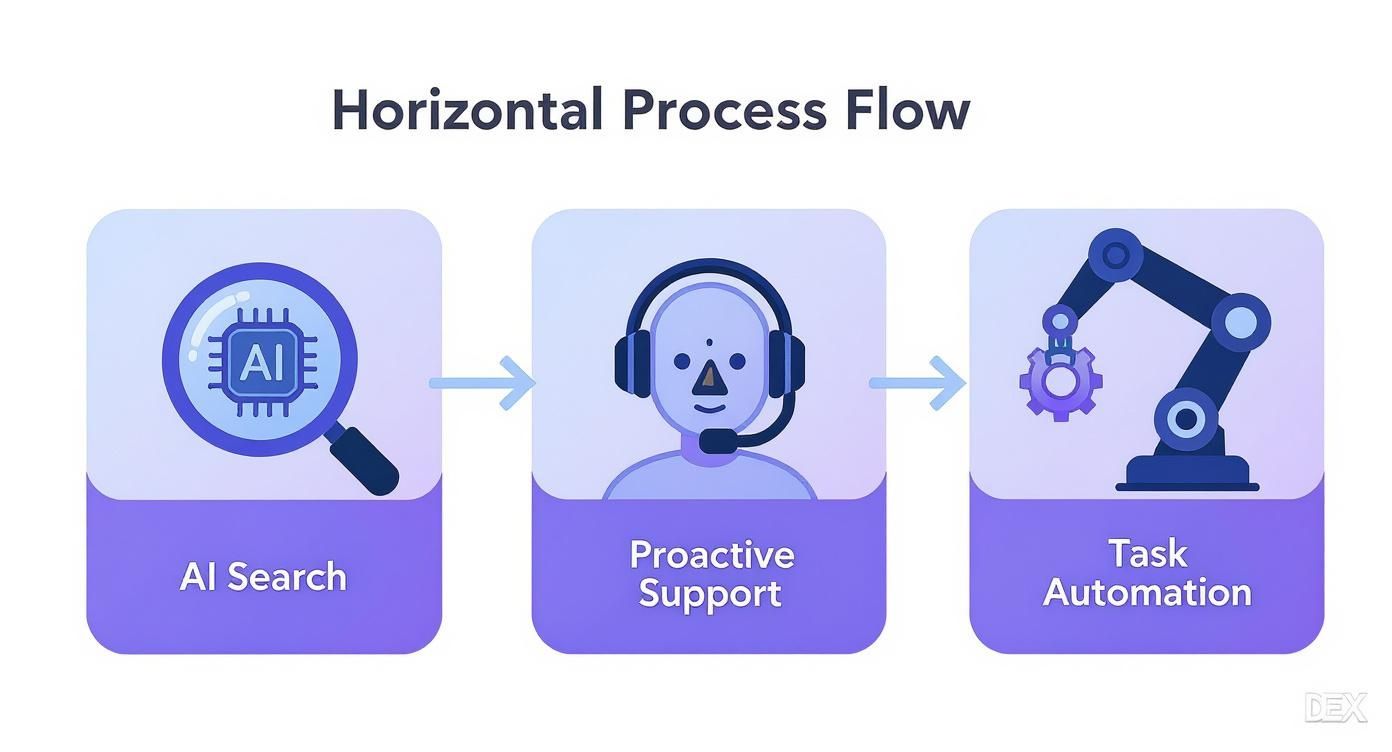
The graphic illustrates how modern tools like AI-powered search, proactive support, and task automation can work together to remove the friction that slows employees down.
Phase 3: Implementation and Change Management
Okay, it's time to bring your strategy to life. This phase involves rolling out new tools and processes, but here’s the thing: the technology is only half the battle. How you communicate and manage the change is what will ultimately decide if your new solutions are adopted or just ignored.
One of the most important things you can do here is start with a pilot program. Before launching something company-wide, roll it out to a small, representative group of employees first. This lets you:
Gather Real-World Feedback: Find unexpected bugs and usability problems in a safe, controlled setting.
Refine Your Training: See which parts of your training materials click and where people still need more help.
Build a Group of Champions: The pilot group members become your biggest advocates, helping to promote the new solution to their peers.
Throughout this phase, your communication needs to be clear, consistent, and focused on the "why." Don't just announce a new system. Explain the problems it solves and how it will genuinely make employees' lives easier.
Phase 4: Measurement and Iteration
Improving your DEX isn't a one-and-done project. It's an ongoing process of refinement. The final phase of the roadmap is really a continuous loop: measure your key DEX metrics, gather feedback, and make small improvements based on what you’re learning.
Go back to the metrics you established during the discovery phase. Did task completion times actually go down? Have IT support tickets for that specific process dropped? Are employees reporting higher satisfaction scores in your pulse surveys?
Use this data to prove the ROI of your initiatives and secure the budget for future improvements. This cyclical approach ensures your DEX strategy stays relevant and keeps adapting to the needs of your people, creating a digital environment that just gets better over time.
Common Questions About Digital Employee Experience
Making the shift to a better digital employee experience strategy is a big move, and it naturally brings up some important questions for leadership. Before you dive in, it’s worth getting clear on a few key concepts. We'll walk through the most common questions we hear from leaders just like you.
By tackling these points head-on, we can clear up any confusion and give you a solid foundation for the journey ahead. This way, your whole team can get aligned, feel confident, and start building a digital workplace that truly works for everyone.
Who Owns the Digital Employee Experience?
This is one of the first questions that comes up, and it’s a good one. It's easy to wonder who's really in charge of DEX, but the truth is, it’s not a one-person or even one-department job. The best approach is a partnership, with HR and IT leading the charge together.
HR knows the people. They understand the entire employee journey, from their first day to their last, and can pinpoint the frustrations that get in the way of engagement and satisfaction. On the other side of the coin, IT owns the tech stack, the infrastructure, and security, making sure the tools are actually working and reliable.
The most successful companies we see form a cross-functional team to steer their DEX strategy. This usually includes folks from internal communications, operations, and leaders from different departments. This kind of collaboration ensures the strategy is well-rounded, lines up with bigger business goals, and actually meets the needs of the whole workforce.
What Is the Difference Between DEX and EX?
It's really easy to mix up Employee Experience (EX) and Digital Employee Experience (DEX), but there's a key distinction. Think of Employee Experience (EX) as the whole picture—everything that shapes an employee's perception of your company.
This bigger picture includes things like:
Your company culture and values.
The physical office environment.
Relationships with managers and coworkers.
Pay, benefits, and how you recognize good work.
And, of course, all the digital tools they interact with.
Digital Employee Experience (DEX) is a huge, and increasingly important, piece of that puzzle. It zooms in on every single digital interaction an employee has at work. A clunky, frustrating DEX will absolutely poison the overall EX, no matter how amazing your office culture or benefits are.
In a world where technology touches nearly every part of our jobs, a bad digital experience is a bad employee experience. You can't separate the two anymore.
What's the First Step to Improve Our DEX?
The best place to start is always the same: listen. Before you start shopping for new software or blowing up old systems, you need a clear picture of what your employees are actually going through every day. The goal here is to get real, honest feedback from the ground level.
A great way to begin is with simple employee surveys or even just informal chats. Ask pointed questions to find out where the daily friction is.
Which tools make them want to pull their hair out, and why?
Where are they wasting time just trying to find information?
What simple tasks feel way too complicated or manual?
This isn't just about collecting a list of complaints. It's about finding the biggest pain points that are holding people back. The insights you gather will help you prioritize the quick wins that deliver real, noticeable value right away and build momentum for the bigger changes to come.
Is Improving DEX Only for Large Corporations?
Not at all. While giant corporations might have more complex tech to untangle, small and mid-sized businesses can get a huge competitive advantage by focusing on their digital employee experience. The core ideas behind a great DEX apply to everyone, no matter the company size.
For smaller teams, the benefits can be even more immediate:
Improved Efficiency: When your team is lean, every minute is precious. Smoothing out digital workflows frees up time for people to focus on tasks that actually grow the business.
Better Collaboration: Simple, integrated tools help close-knit teams communicate clearly and keep projects on track without the usual headaches.
Talent Attraction and Retention: Let's be honest, top talent expects modern, easy-to-use digital tools. A great DEX can be a secret weapon in a tough hiring market.
At the end of the day, simplifying how work gets done, choosing intuitive tech, and cutting out digital frustration is a smart move for any organization, big or small.
Ready to unify your team's digital experience? Pebb brings communication, knowledge, and culture into one simple app for every employee. Discover how Pebb can transform your workplace.
