
Author: Ron Daniel
Top Communication Apps for Logistics and Delivery Teams
Office tools fall short for frontline logistics; this guide compares seven mobile-first communication apps focused on real-time chat, scheduling, offline use, and pricing.
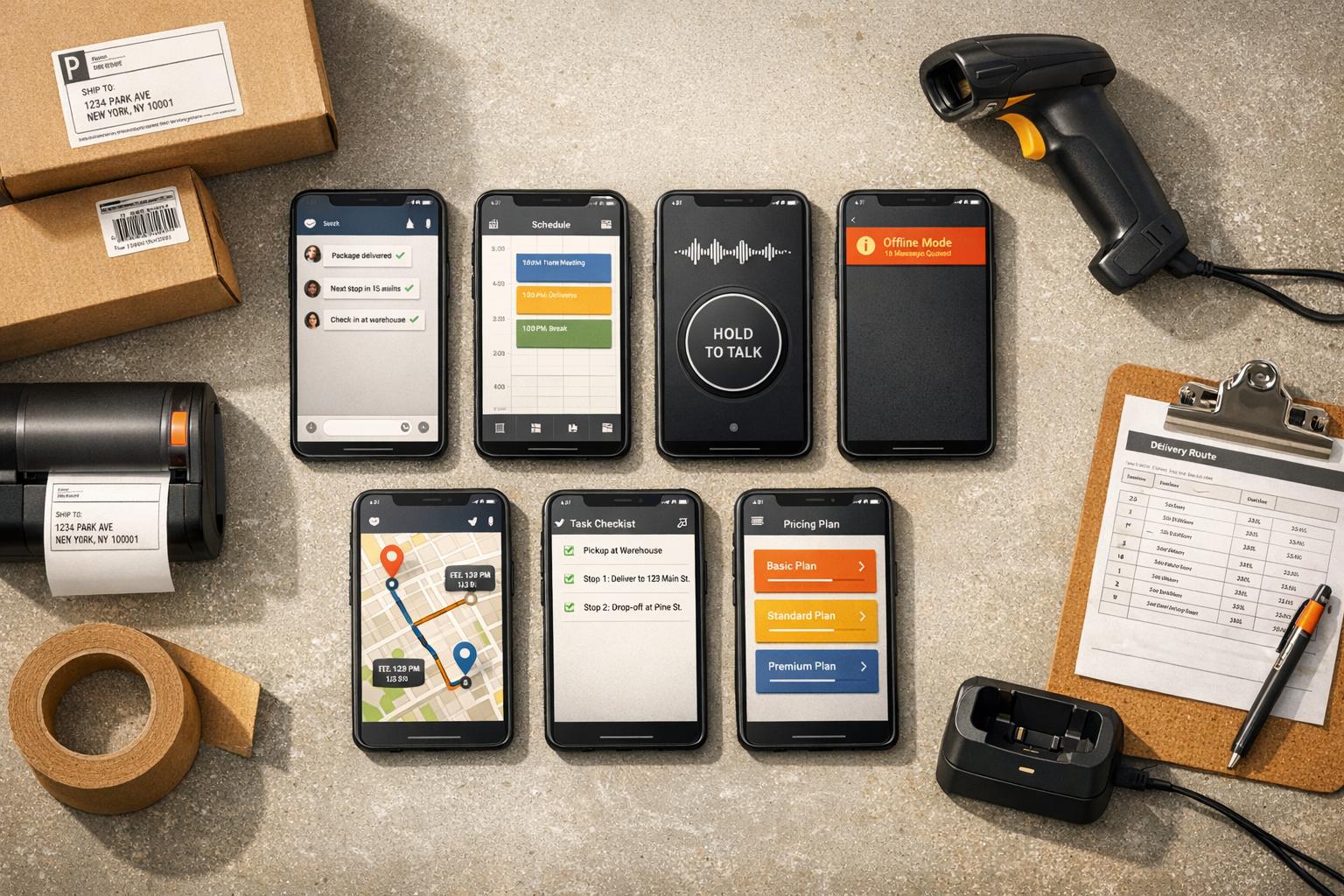
It’s 6:00 AM, and the warehouse is already buzzing. Dispatchers are juggling last-minute changes, drivers are gearing up for the day, and phones are lighting up with calls about route adjustments. Sound familiar? I’ve been there too, watching teams struggle to stay connected while chaos brews. And here’s the kicker: most of the frustration comes down to one thing - inefficient communication tools.
We’ve seen it time and time again at Pebb. Logistics teams are ditching outdated systems for something better. Why? Because the mobile workforce is growing fast - projected to hit $20 billion by 2035. The old tools just can’t keep up with today’s fast-moving, on-the-go operations. That’s where we come in. Pebb isn’t just another app; it’s our all-in-one employee app for communication and operations, built specifically for frontline teams like yours - drivers, dispatchers, warehouse staff - designed to simplify communication and cut through the noise.
So, how do you choose the right tool for your team? It’s not just about messaging. You need something that integrates with routes, works offline, and makes updates easy - without pulling drivers out of their workflow. In this guide, I’ll walk you through seven communication apps, including Pebb, Microsoft Teams, Slack, and more. Let’s explore what works, what doesn’t, and how the right tool can transform your operations.
1. Pebb
Real-time communication features
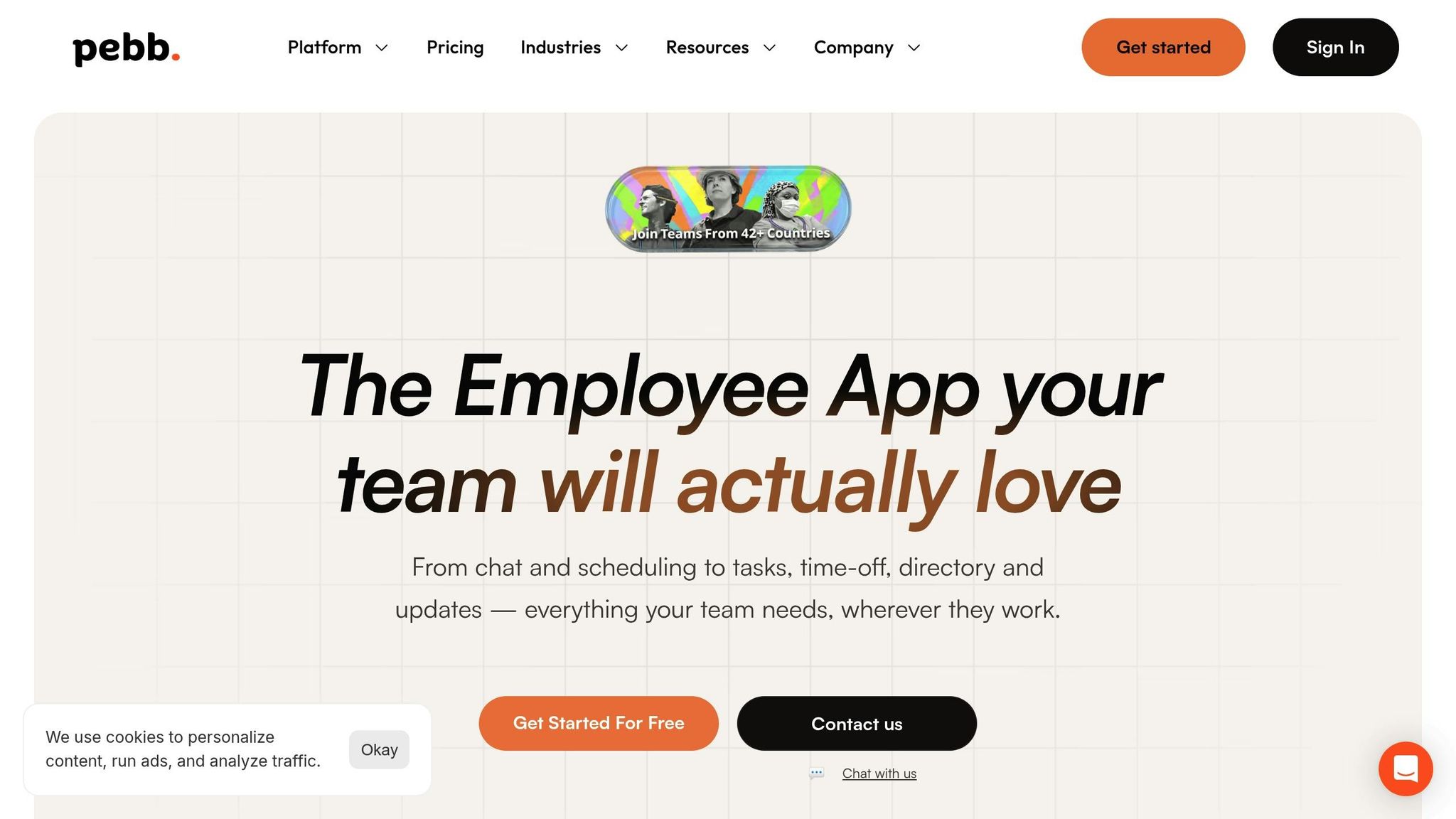
Let me tell you, keeping logistics teams connected without all the unnecessary noise is no small feat, but Pebb makes it happen. Our platform offers instant group chats, direct messaging, voice and video calls, and push notifications that stay reliable even in areas with poor signal - a lifesaver when drivers are far from the nearest WiFi hotspot. Features like voice notes and video calls mean dispatchers can tackle issues head-on, right then and there. Users have reported that this approach slashes response times in field operations by up to 40%.
What really sets Pebb apart is that it eliminates the need for app switching. Messaging, tasks, digital forms, calendar events, shift scheduling, clock in, and delivery coordination all live in one place. Take this example: a US-based delivery company using Pebb saw their delivery delays drop by 25% during peak seasons just by enabling real-time ETAs and issue reporting through our two-way messaging system. Drivers can confirm pickups instantly, and thanks to integration with fleet GPS, dynamic rerouting happens automatically - no endless phone calls or back-and-forth required.
Shift scheduling and team coordination
Remember the days when driver scheduling meant endless calls and last-minute chaos? Pebb puts an end to that. Our platform automates shift rostering, making scheduling faster and error-free. Based on data from over 500 logistics teams, users have seen 30% faster shift fill rates and a 20% cut in overtime costs.
One standout feature is geofencing, which handles automatic check-ins. Now you’ll always know when drivers arrive or leave a location - no manual confirmations needed. And for 24/7 operations, the conflict detection tool has been a lifesaver. It flags overlapping schedules before they become headaches, helping teams maintain 95% compliance in attendance tracking.
To top it off, our centralized news feed and calendar events ensure everyone is on the same page. Whether it’s route changes or safety updates, critical information is broadcast instantly so drivers and dispatchers alike stay informed.
Mobile accessibility
We’ve designed Pebb with a mobile-first approach, which means drivers can handle everything - updating delivery statuses, checking routes, and staying in touch with the team - without needing constant internet access. The offline mode automatically syncs when the connection returns, which is invaluable in areas with spotty service.
Here’s the kicker: we’ve tailored the app specifically for US operations. Think 12-hour time formats (like 2:30 PM), miles and pounds for measurements, and USD pricing displays. Plus, the multilingual interface makes life easier for immigrant drivers, ensuring they can navigate the app in the language they’re most comfortable with. It’s these small details that make our mobile design such a seamless fit for logistics teams.
Pricing and affordability
Let’s talk numbers. Pebb’s Standard plan is 100% free for teams of up to 15 employees. That includes unlimited chat history, news feed, knowledge library, tasks, digital forms, calendar, clock in, shift scheduling, PTO management, and all the core features logistics teams rely on. Ready to scale? Our Premium plan is just $4 per user per month (billed annually in USD), which is 25% less than competitors like Slack for similar frontline team features.
With the Premium plan, you unlock analytics, unlimited admins, permissions control, advanced work chat, advanced posts, voice and video calls, integrations, Enterprise SSO, and premium SLA support - no hidden fees, no surprises. Industry analysts often point out that the efficiency improvements alone usually cover the subscription cost within the first quarter.
Up next, let’s dive into how Microsoft Teams can boost team communication.
2. Microsoft Teams
Real-time communication features
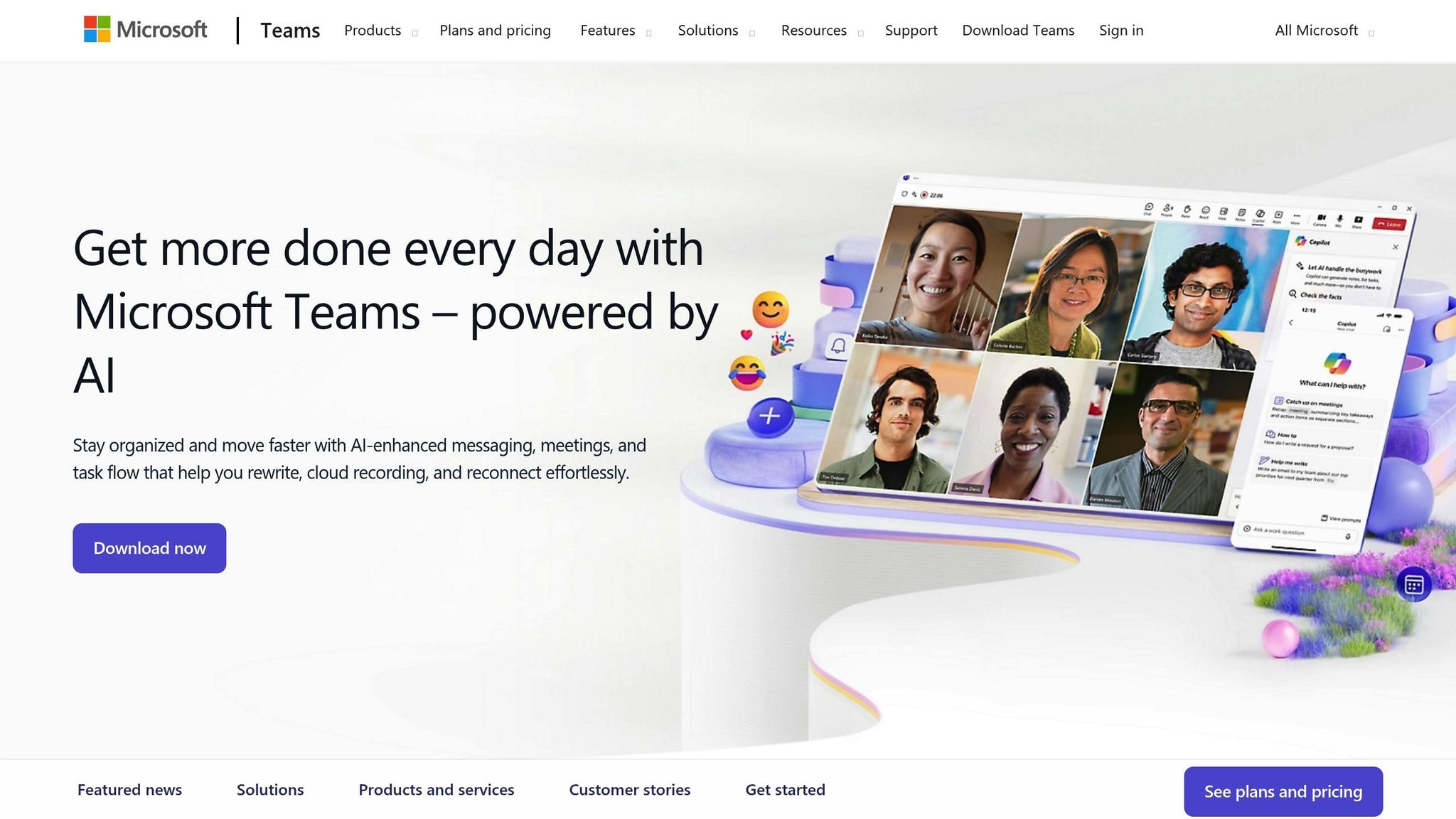
Microsoft Teams has become a go-to tool for organizations already using Microsoft 365, offering a central hub for instant messaging, group chats, and file sharing. One standout feature is the Walkie Talkie functionality, which essentially transforms smartphones into push-to-talk devices. This is a game-changer for drivers needing quick answers on the go.
Another highlight is Microsoft 365 Copilot, an AI-powered assistant that can summarize documents and generate meeting notes automatically. For logistics teams, this can simplify tasks like compliance paperwork or route documentation, saving precious time.
Shift scheduling and team coordination
The Shifts app within Teams is a powerful tool for managing schedules. Managers can create rosters, and drivers can view their shifts, request swaps, or manage their schedules right from their phones. A handy feature here is shift-based tags - using something like "@DriversOnShift" ensures that only those clocked in receive notifications.
Teams also supports mobile clock-in/out and integrates seamlessly with workforce management systems like Zebra Reflexis, making it easier to track time and manage breaks. Managers can even send out updates, such as policy changes or route adjustments, to the entire team in real time. While these features are robust, it’s worth noting that access to the Shifts app requires a paid license, whereas Pebb offers a free, all-in-one solution tailored specifically for frontline logistics teams.
Mobile accessibility
Microsoft Teams doesn’t just stop at desktop functionality - it offers mobile apps for both iOS and Android. For frontline workers with F licenses, the mobile experience is streamlined, with tools like Shifts, Walkie Talkie, and Tasks automatically pinned to the app bar for easy access. For companies already invested in the Microsoft ecosystem, this mobile-first approach makes Teams a solid choice.
Pricing and affordability
Microsoft Teams is bundled with Microsoft 365 F1 and F3 licenses, which are tailored for frontline workers. However, the cost can vary depending on your existing agreements with Microsoft. For organizations not already tied into the Microsoft ecosystem, this could make Teams a pricier option. On the other hand, Pebb offers a free all-in-one employee app for communication and operations, with a premium plan available for just $4 per user per month - an affordable alternative worth considering.
Next, we’ll dive into how Slack approaches communication for logistics teams.
3. Slack
Real-time communication features
Slack provides a suite of tools for real-time messaging, audio/video calls, and huddles, making it easier for drivers to share ETAs or flag issues in organized threads. With its Canvases feature, teams can centralize resources right within the chat, transforming discussions into actionable plans. It also integrates with tools like Google Maps, enabling seamless location sharing and dynamic route coordination on the go.
The platform goes beyond just communication, offering integrations that help manage team schedules and workflows.
Shift scheduling and team coordination
Unlike Pebb's built-in scheduling tools, Slack relies on third-party apps like When I Work or Homebase, which can be integrated through bots. These apps allow teams to handle shift updates, swap requests, and reminders directly in Slack channels. Plus, Slack's workflow builder can automate notifications for on-call drivers or streamline route handoffs, which is especially useful in high-pressure environments.
Mobile accessibility
Slack’s mobile apps for iOS and Android are designed with drivers in mind, offering features like offline message queuing, push notifications, and voice-to-text functionality. Even without WiFi, drivers can stay connected using mobile data. The app’s customizable notifications ensure that urgent updates, like route changes, are prioritized - perfect for quick checks while on the road.
Pricing and affordability
Slack’s pricing might give some teams pause. The Pro plan costs $8.75 per user per month (or $7.25 if billed annually), which is significantly higher than Pebb's premium plan at $4 per user per month. For teams needing more features, the Business+ plan is priced at $15.00 per user per month, and the Enterprise Grid plan requires custom pricing. In contrast, Pebb provides a free all-in-one employee app for communication and operations, with premium options still coming in at just $4 per user per month.
Next, let’s dive into how Firstup handles communication for logistics teams.
4. Firstup
Real-time communication features
Firstup focuses on top-down communication, making it a go-to tool for sending company-wide updates, safety alerts, or policy changes. It’s especially helpful for roles like dispatchers who need to notify drivers in specific regions about issues like weather delays. The platform allows targeted messaging based on roles, locations, or shifts, so the right people get the right updates. That said, it falls short when it comes to peer-to-peer interaction. If your team needs a tool for quick back-and-forth conversations, this might not be the best fit.
Mobile accessibility
The Firstup mobile app is compatible with both iOS and Android, delivering notifications and updates in a simple, read-only format. Users can easily view announcements and access company resources, but that’s about it. The app doesn’t allow drivers to start conversations or collaborate with teammates. Compared to tools like communication software for logistics companies like Pebb or Slack’s channels, it feels limiting for teams that thrive on real-time collaboration.
Pricing and affordability
Here’s where things get tricky: Firstup doesn’t publish its pricing. You’ll need to request a customized enterprise quote, which can be a barrier for smaller logistics teams with tighter budgets. From what I’ve seen in industry reports, it’s positioned as an enterprise-level solution. On the other hand, Pebb offers a free option and premium features for just $4 per user per month, making it a more budget-friendly choice. Next up, let’s see how Workvivo compares for logistics communication.
5. Workvivo
Real-time Communication Features
Workvivo takes a unique approach to keeping logistics teams connected. It offers real-time communication tools designed specifically for warehouse staff, drivers, and dispatchers. These include secure mobile chat, as well as voice and video calling for when issues need immediate attention. What’s really handy is Workvivo AI, which allows workers to quickly search for policies, procedures, or shift updates - no need to wait for a manager to step in. On top of that, its social feed and "Shoutout" feature let team members recognize each other's efforts, which can go a long way in boosting morale.
Mobile Accessibility
The Workvivo mobile app acts as a one-stop shop for logistics workers, housing everything from route plans to safety manuals and procedural guides. The company also offers Digital Forms, which simplify tasks like safety checklists and shift handovers.
Pricing and Affordability
Workvivo is aimed at enterprise-level organizations, and pricing is available only through custom quotes. They make a strong case for their value by highlighting the high cost of turnover in logistics - replacing an employee can run up to twice their annual salary. That said, Pebb offers a more budget-friendly alternative. Our all-in-one employee app for communication and operations is free to start, with a premium plan priced at just $4 per user. For teams looking for enterprise-grade tools without breaking the bank, Pebb remains the most accessible option in the logistics space.
6. Staffbase
Real-time Communication Features
Staffbase is built with frontline workers in mind, offering tools that connect deskless employees with office teams seamlessly. Its integrated chat supports one-on-one, group, and managed user group conversations, making it easy for drivers and warehouse workers to stay in touch with office staff - even during busy shifts. Voice messaging is a game-changer here, allowing workers to communicate hands-free while on the move - a practical solution for people constantly on the go. Emergency alerts via SMS ensure critical updates, like safety notices or disruptions, reach everyone promptly. Push notifications, combined with an AI assistant that delivers instant answers to policy-related questions, further streamline communication. And with auto-translation covering over 75 languages, diverse teams can easily overcome language barriers. A great example of this in action is DHL's "Smart Connect" app, powered by Staffbase, which keeps 600,000 employees connected across time zones and delivery routes.
Mobile Accessibility
Staffbase also shines with its mobile app, which is specifically designed for workers in the field. This app acts as a one-stop hub where drivers and warehouse staff can access safety protocols, training materials, and company updates - even if they don’t have a corporate email address. Its offline functionality is a huge plus, allowing employees to pull up critical documents even in areas with poor connectivity. Transdev, for instance, saw an 89% satisfaction rate among its frontline employees after consolidating multiple tools into a single Staffbase app. This mobile-first approach pairs perfectly with the platform's broader communication features, ensuring teams stay informed and engaged no matter where they are.
Pricing and Affordability
Staffbase is tailored for enterprise-level organizations and requires a custom quote based on the size of the team. While its features are robust, the pricing may be a stretch for smaller businesses. For logistics teams looking for high-quality tools without breaking the bank, Pebb offers an alternative: the only free all-in-one employee app for communication and operations, with premium features starting at just $4 per user.
7. Simpplr
Real-time Communication Features
Simpplr offers a suite of tools designed to keep teams in sync, especially in fast-moving environments like logistics. With real-time messaging, push notifications, and live chat channels, it ensures that drivers and warehouse staff are instantly informed. What sets it apart is its AI-driven content feed, which prioritizes critical updates - think traffic delays, priority shipments, or sudden route changes. This means no one misses vital information. Companies using Simpplr have reported up to a 70% boost in employee engagement and a 50% drop in missed updates. For teams juggling live ETAs or last-minute load changes, these instant notifications can cut response times by 30–40% compared to older communication systems.
Mobile Accessibility
One of the standout features is Simpplr's mobile app, which works seamlessly on both iOS and Android. It even offers offline access to recent updates, syncing notifications as soon as you're back online. For delivery teams, this mobile-first approach makes it easy to grab shift updates or company announcements right from their phones - no desktop needed. It’s a game-changer for staying connected on the go.
Pricing and Affordability
When it comes to pricing, Simpplr operates on a subscription model starting at around $8 per user per month, with enterprise options priced closer to $15. They also offer annual plans with discounts of up to 20%. While this pricing works for mid-sized teams, Pebb stands out as the more affordable option. At just $4 per user per month, Pebb delivers a full suite of premium tools - like work chat, shift scheduling, analytics, voice and video calls, and integrations - for half the cost of Simpplr's basic plan. And here's the kicker: Pebb even offers a free all-in-one solution, making it a strong contender for budget-conscious teams.
Feature Comparison
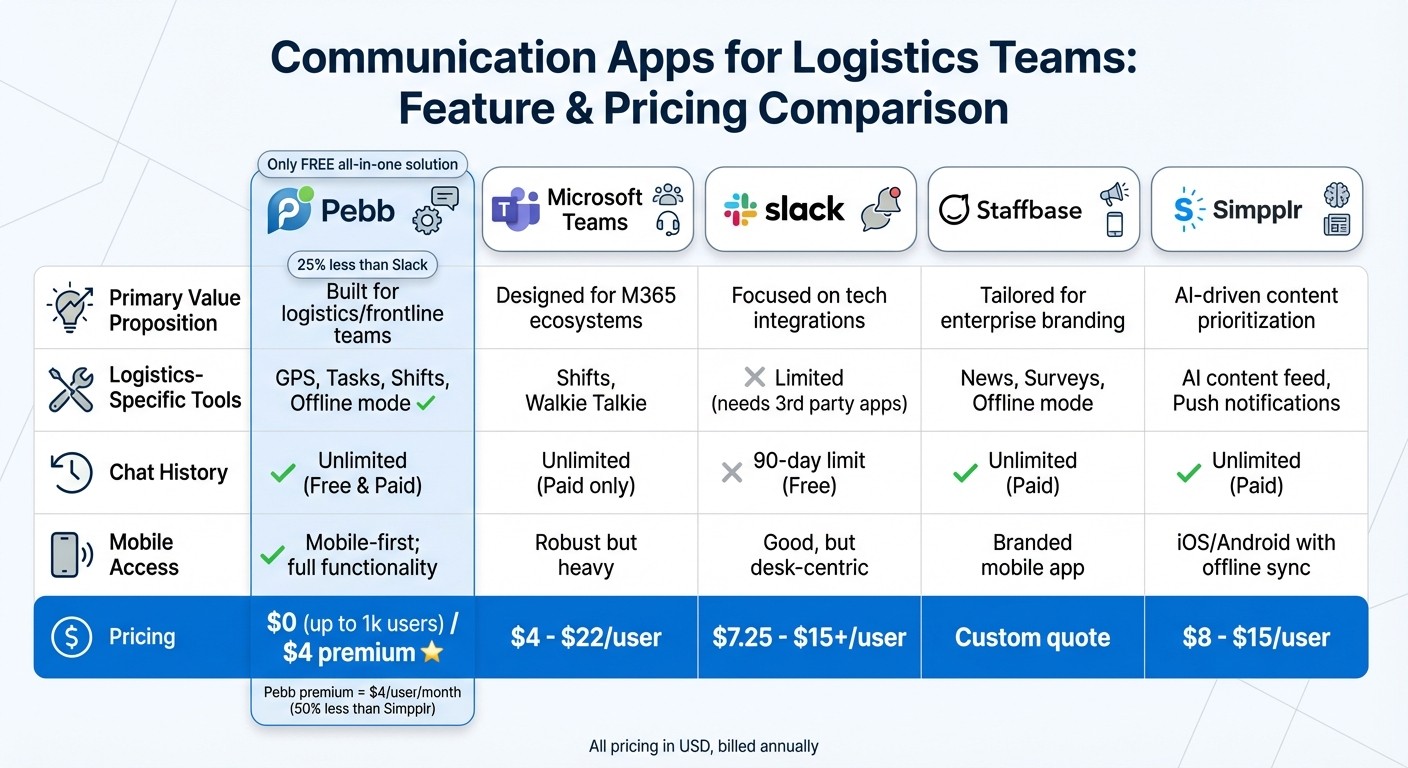
Communication Apps for Logistics Teams: Feature and Pricing Comparison
When you're managing a logistics team, you know how critical it is to have tools that can handle real-time challenges. We’ve laid out a side-by-side comparison of Pebb and its competitors - Microsoft Teams, Slack, and Staffbase - focusing on the features that matter most: real-time communication, shift scheduling, mobile access, and pricing. Here’s how they stack up:
Feature | Pebb | Microsoft Teams | Slack | Staffbase |
|---|---|---|---|---|
Primary Value | Built for logistics/frontline teams | Designed for M365 ecosystems | Focused on tech integrations | Tailored for enterprise branding |
Logistics Tools | Tasks, Digital forms, Calendar, Clock in, Shifts | Shifts, Walkie Talkie | Limited (needs 3rd party apps) | News, Surveys, Offline |
Chat History | Unlimited (Free & Paid) | Unlimited (Paid) | 90-day limit (Free) | Unlimited (Paid) |
Mobile Access | Mobile-first; full functionality | Robust but heavy | Good, but desk-centric | Branded mobile app |
Pricing | $0 (up to 15 users) / $4 | $4 - $22/user | $7.25 - $15+/user | Quote-based |
What makes Pebb stand out? For starters, it’s the only free, all-in-one employee app for communication and operations for teams of up to 15 employees. And if you need more, the premium plan is just $4 per user per month - way less than what you’d pay elsewhere.
Unlike competitors, Pebb combines everything logistics teams need - communication, tasks, digital forms, calendar events, clock in, scheduling, and operational tools - into one platform that’s easy to use. With Microsoft Teams, you might need IT support just to get started, and Slack leans heavily on third-party integrations for basics like shift management. Pebb, on the other hand, is built specifically for frontline workers like drivers, warehouse teams, and delivery crews. It’s mobile-first and built to keep frontline teams connected and organized in one simple app.
"Pebb has entirely redefined our communication. It feels like Facebook, but for work." - Loren Tekoah, Consulting Firm
If you're running a logistics operation, Pebb offers everything your team needs - at a price that works for you. And if you’re just getting started? It’s free.
Wrapping It All Up
When it comes to choosing a communication app, it’s all about finding one that truly fits your team’s needs. Think about features like offline functionality for drivers navigating dead zones or integrated GPS for real-time route updates - those little things can make a big difference.
The shift toward tools designed specifically for frontline teams is growing, and it’s easy to see why. Repurposing office software just doesn’t cut it anymore. Start small with a phased rollout - test it out on a single route. And during demos, ask the practical questions: How many clicks does it take to complete a task? Can offline mode handle the real-world challenges your team faces?
This is exactly where Pebb steps in. We’ve created an all-in-one employee app for communication and operations that’s built with teams like yours in mind - drivers, dispatchers, warehouse crews - anyone who needs simple, effective tools without the headache of complexity or sky-high costs. Here’s the kicker: our platform is free for up to 15 employees, and our premium plan is just $4 per user per month. No hidden fees. No enterprise minimums. Just tools that work the way your team does.
FAQs
How does Pebb work offline for drivers?
Pebb keeps drivers in the loop by offering access to key information and communication tools, even without an internet connection. This ensures smooth coordination and continuous updates, regardless of network conditions.
Can Pebb replace texts, calls, and route apps?
Yes, Pebb brings everything logistics and delivery teams need into one platform. With real-time chat, voice and video calls, tasks, digital forms, calendar events, and shift scheduling, it eliminates the need for juggling between texts, calls, and separate route apps. It’s all about simplifying communication and boosting efficiency, so your team can focus on getting the job done.
What’s included in Pebb’s free plan vs. $4 plan?
Pebb offers a free plan packed with core tools that both frontline and office teams can rely on. It includes work chat, a news feed, knowledge library, tasks, digital forms, calendar, clock in, shift scheduling, and PTO management - everything you need to stay connected and organized.
For teams looking to step up their game, the $4 premium plan builds on the free version by adding analytics, unlimited admins, permissions control, advanced work chat, advanced posts, voice and video calls, integrations, Enterprise SSO, and premium SLA support. The free plan works perfectly for small teams, while the premium option is a budget-friendly choice for larger groups that want an all-in-one platform without breaking the bank.
