
Author: Ron Daniel
How to Keep Drivers and Dispatchers Connected on the Go
Reduce delays and miscommunication with a mobile-first platform using real-time GPS, offline messaging, automated routing, and instant driver-dispatch feedback.
Question: What happens when a driver is stuck in traffic, facing a sudden road closure, and there’s no clear update from dispatch?
The answer is simple: chaos. Every minute wasted means burning more fuel, missing delivery windows, and leaving customers frustrated. I’ve seen it firsthand. Before we introduced Pebb, our team was juggling a patchwork of apps and tools that barely worked together. Dispatchers couldn’t track drivers effectively, route changes didn’t reach the field in time, and drivers were left piecing together updates while trying to stay safe on the road. It was messy, inefficient, and downright stressful.
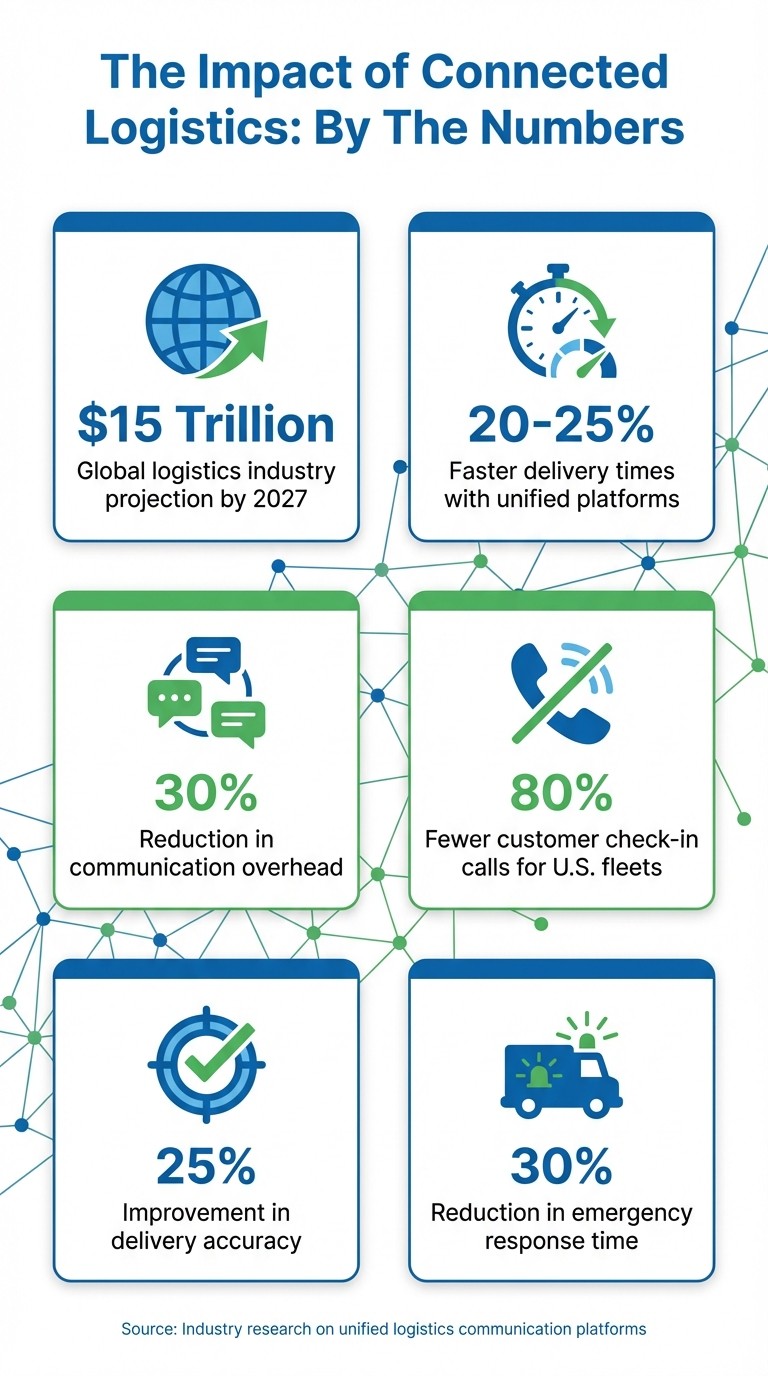
Here’s the kicker: the logistics industry is growing fast - projected to hit $15 trillion globally by 2027. Yet, so many teams are still stuck using outdated systems that can’t keep up. That’s why we built Pebb, an all-in-one employee app for communication and operations that solves these pain points in one place. From instant messaging to shift scheduling, tasks, digital forms, clock in, PTO management, and voice and video calls, we designed it to make life easier for both drivers and dispatchers.
In this article, I’ll walk you through how tools like Pebb are transforming communication in logistics. You’ll learn how to simplify coordination, reduce delays, and keep your team connected - even when the signal drops. Let’s dive in.
Benefits of Unified Logistics Communication Platforms: Key Performance Metrics
Using Real-Time GPS Tracking for Better Coordination
Let me tell you, GPS tracking has been a game-changer for coordination. It takes the guesswork out of the equation, cutting down on delays and miscommunication. Picture this: dispatchers can see every driver's location on a live dashboard. No more endless back-and-forth phone calls - just a quick glance at the map, and jobs are assigned in seconds.
How GPS Reduces Communication Gaps
Here’s how it works: automated GPS tracking eliminates the need for constant manual updates. Dispatchers can monitor real-time locations without bothering drivers. Dan Robin summed it up perfectly:
"A real-time dashboard shows where everyone is. They [managers] can proactively manage the day instead of reacting to it."
This shift from reactive to proactive management makes a noticeable impact. Take this example: a plumbing company shaved 30% off its average emergency response time by using GPS data. They identified the closest technician, sent job details straight to their phone, and boom - instant coordination.
And in critical situations, GPS becomes more than just a convenience - it’s a safety net. The Zello Team put it like this:
"With the press of a button, a driver can alert dispatch that they are in trouble. Then, using GPS mapping technology, dispatchers can instantly pinpoint the driver's exact location and send help."
This kind of functionality isn’t just nice to have - it’s essential.
Connecting GPS with Communication Platforms
Now, let’s talk about integration. Combining GPS data with team messaging apps takes coordination to the next level. Using separate apps to communicate with employees and track locations? That’s a recipe for inefficiency. The magic happens when everything works together seamlessly. At Pebb, we’ve built everything your team needs right into the system. Dispatchers can see driver locations, messages, job updates, and route changes all in one spot.
Here’s an example of how it works: when a driver taps "delivery completed", the dashboard updates instantly, and the next job is assigned without skipping a beat. The key is simplicity - drivers should be able to handle common tasks like updating status or checking routes in just three taps or fewer. Anything more complex? That’s when mistakes or unsafe shortcuts start creeping in.
Using Mobile-Friendly Communication Apps
When you're managing logistics teams, mobile apps are the glue that keeps everything running smoothly. GPS integration is great, but without a reliable way to communicate, it’s like having a map with no way to share directions. Drivers are out there battling traffic, unpredictable weather, and tight schedules - so they need tools that work with them, not against them.
Here’s the thing: traditional methods like email chains or phone calls just don’t cut it in this fast-paced world. Emails get lost in crowded inboxes, calls can distract drivers and compromise safety, and juggling multiple apps? That’s a recipe for frustration. What you need is a mobile communication app that simplifies the process, keeps everyone connected, and doesn’t add to the chaos.
Key Features to Look for in a Communication App
Not all apps are created equal. The best ones come with a few standout features that make life easier for teams on the move:
Offline messaging that syncs later: Because dead zones happen, but communication can't stop.
Push notifications for urgent updates: So no one misses a critical change.
Voice and video calls: For when typing just isn’t practical.
And let’s not forget about integration. The app should seamlessly connect with tools you’re already using - like GPS tracking, scheduling systems, or route planning - so conversations stay tied to the task at hand.
Simplicity is key. If a field worker can’t complete an action in three taps or fewer, it’s already too complicated. Dan Robin from Pebb put it perfectly:
"The goal isn't to find the app with the longest feature list. The real goal is to find the one that creates the least amount of noise."
Streamlined functionality isn’t just a nice-to-have; it’s essential. Features like integrated messaging ensure that issues - whether it’s a damaged package or a last-minute route change - stay directly linked to the relevant job ticket.
Why Pebb Works for Mobile Teams
This is where Pebb really shines. It’s designed specifically with mobile teams in mind, bringing everything together in one place. Need to check your schedule, message a dispatcher, update your status, complete a task or form, or even request time off? You can do it all from Pebb, without switching between apps.
Loren Tekoah, a consultant who works with logistics teams, summed it up perfectly:
"Pebb has entirely redefined our communication. It feels like Facebook, but for work."
The app’s interface is intuitive, so drivers can use it effortlessly whether they’re on the road or in the warehouse. And here’s the kicker: Pebb’s Standard plan is free for up to 15 employees. If you need more, the Premium plan is just $4 per user per month.
Automating Route Planning and Updates
Let me paint you a picture: dispatchers scrambling to piece together driver schedules, guessing their way through traffic delays, and frantically handling last-minute changes. Sound familiar? Manual route planning can feel like trying to juggle flaming torches - it’s chaotic and time-consuming. But here’s where automation steps in, flipping the script entirely. Instead of reacting to the chaos, dispatchers can take control, orchestrating their day with precision and ease. That’s the power of automated route planning, and it’s a game-changer we’ve embraced at Pebb with our integrated route updates.
Why Automated Route Planning Matters
Automation doesn’t just streamline logistics - it redefines it. By using smart scheduling, the system identifies the best driver for the job based on real-time factors like location, skills, and workload. This reduces errors and speeds up response times.
Take this example: In 2024, a plumbing company adopted a mobile workforce management tool to handle emergency leaks. Instead of endless back-and-forth calls, the tool automatically assigned the nearest technician and sent job details straight to their phone. The result? A 30% drop in average emergency response time. That’s the kind of efficiency automation brings.
Dan Robin, one of our team members at Pebb, put it best:
"It's the difference between being a dispatcher and a conductor. Instead of reacting to noise, they can orchestrate the day."
How Pebb Simplifies Route Updates
At Pebb, we’ve taken team coordination to the next level by integrating it directly into our all-in-one employee app for communication and operations. Here’s what that means: dispatchers can instantly send out route changes, trip updates, and schedules through our centralized news feed. No more hopping between apps or wondering if drivers got the message.
Picture this: a road closure pops up unexpectedly. With Pebb, dispatchers can instantly share updates, schedule changes, and tasks in real time. Drivers always have the latest details, announcements, and team communication in one place. Our all-in-one approach keeps everything - routes, communication, and scheduling - in one place, so nothing slips through the cracks. It’s about making life simpler and more efficient for teams managing the daily grind of logistics.
Setting Up Instant Messaging and Feedback Loops
Picture this: a driver hits a snag on their route or needs clarification on a delivery. Waiting 20 minutes for a response? That's just not an option. Instant messaging swoops in to save the day, transforming potential delays into quick resolutions. It creates a direct, two-way channel where drivers feel heard, and dispatchers can make decisions on the fly. This is the foundation for building solid feedback loops.
Creating Two-Way Feedback Channels
Two-way communication isn't just about sending orders; it's about creating a space for drivers to share real-time insights from the field. Maybe they've spotted a faster route or encountered a customer who needs to reschedule - it’s all valuable information.
The key here is keeping conversations tied to specific jobs or routes. For example, when a driver asks about delivery details or parts availability, that question should be linked to the relevant work history. This way, no one has to dig through endless chat threads to find what they need. It’s all about context - making sure the right information is accessible at the right time.
And let’s be honest, simplicity is everything. Drivers are more likely to embrace a tool that actually makes their lives easier. Less paperwork? Fewer phone calls? More time on the road? That’s the kind of pitch that gets buy-in.
Using Pebb for Instant Messaging
At Pebb, we’ve made instant messaging a seamless experience. Drivers and dispatchers stay connected through efficient chat that ensures timely responses. But we didn’t stop there - our platform also includes voice and video calls, so calls can happen without juggling multiple apps.
Loren Tekoah, a consultant, summed it up perfectly:
"Pebb has entirely redefined our communication. It feels like Facebook, but for work".
The interface is designed to be user-friendly, so drivers can pick it up in no time. Whether they’re at the warehouse, cruising down the highway, or wrapping up their last delivery, everything they need is right there. By bringing real-time communication into one place, Pebb equips your team with the tools for a fully connected logistics workflow.
Using All-in-One Platforms Like Pebb for Team Coordination
Let me paint you a picture: you're juggling multiple apps to keep your team in sync - one for scheduling, another for messaging, and yet another for updates. It's chaotic, right? Drivers end up toggling between apps, and crucial information can slip through the cracks. That's exactly the kind of headache Pebb was designed to solve.
How Pebb Brings It All Together
Pebb takes all the moving parts - scheduling, PTO, group chats, tasks, forms, calendar events, and updates - and wraps them into one app. Imagine this: drivers can check their shifts, request time off, and stay in the loop on company news, all without hopping between platforms.
The scheduling tool is a game-changer. It automatically updates assignments, so there's no need for those dreaded call-backs to confirm who's covering what. And PTO management? It ensures no one gets pinged about deliveries while they’re lounging on a beach somewhere.
But here’s where it really shines: communication. Instead of messy group texts where critical details get buried, Pebb lets you create focused groups for each shift or route. Need to share important news? The built-in news feed broadcasts updates like weather alerts, route changes, or policy tweaks to everyone at once. U.S. fleets using platforms like this have reported slashing customer check-in calls by up to 80% and cutting delivery times by 20-25%.
A Smart Investment for Teams
Now, let’s talk numbers. At just $4/user/month, Pebb’s Premium plan gives you voice and video calls, analytics, unlimited admins, permissions control, integrations, and Enterprise SSO. When you compare that to the cost of cobbling together separate tools for communication, scheduling, and operations, the savings are crystal clear.
For smaller trucking fleets, this pricing delivers real results. Teams using unified platforms like Pebb have seen 25% better delivery accuracy and trimmed communication overhead by 30%. And if you’re not ready to commit, the free Standard plan supports up to 15 employees, giving you a chance to test it out without spending a dime. No hidden fees, just straightforward pricing that fits lean budgets.
Coming up, I’ll dive into how to tackle connectivity issues and make sure your team can use these tools effectively, even in areas where the signal is spotty. Stay tuned!
Solving Connectivity Problems on the Road
Spotty cell service can be a nightmare for logistics. Imagine a driver heading through a remote stretch or a tunnel, completely cut off. Critical updates? Stuck in limbo. You’re left crossing your fingers, hoping they got the message about that last-minute route change.
Maintaining Network Access
Here’s where platforms like Pebb shine. Unlike old-school radio systems that tend to drop signals at the worst times, Pebb works seamlessly on any network - whether it’s Wi-Fi or cellular.
And it’s not just about staying connected; it’s about making communication smarter. Take voice and video calls, for example. Drivers and dispatchers can connect instantly without juggling separate tools, so teams can respond faster and stay aligned. It’s a simple feature, but a game-changer for efficiency. Ken Wooden, Operations Analyst at Crossroads Courier, summed it up best:
"Zello has helped us numerous times with locating drivers, helping drivers out, and seeing where they are in real time. It's a lifesaver."
But even the best tech is only as good as the people using it. That’s where training comes in.
Training Teams on New Technology
Here’s the thing: communication software for logistics companies, no matter how advanced, won’t fix problems if your team doesn’t know how to use them. And let’s be honest - new systems can feel like just another corporate headache. That’s why it’s crucial to focus on what drivers actually care about. Show them how Pebb simplifies their day, cutting down on endless phone calls and reducing piles of paperwork. As Dan Robin, an industry author, wisely put it:
"The tool has to serve the team, not the other way around. If it feels like a chore, it will be treated like one."
Practical, hands-on training makes all the difference. For example, demonstrate the hands-free features that comply with FMCSA regulations, like one-touch communication and specialized speaker mics that let drivers keep their focus on the road. Teach them how to set up prioritized call queues so no request gets overlooked. When drivers see how these tools solve their real-world challenges, they’re far more likely to embrace them. Adoption isn’t just about the tech - it’s about making life easier for the people who rely on it every day.
Getting Started with Pebb for Your Team
When it comes to logistics, getting your team on the same page is everything. That’s why we’ve made Pebb’s onboarding process simple, fast, and effective. Whether you’re managing a handful of drivers or a fleet of hundreds, our platform is designed to get your team communicating in real time and working efficiently - right out of the gate.
Setting Up Your Team on Pebb
Here’s how it works: head over to our website and sign up with your business email. After verifying your account, you’ll be ready to create user profiles for your team. Add each member’s name, role, phone number, and email. If you’re managing a large team, skip the manual entry and use our bulk upload feature to import your team with a simple CSV file.
Next, organize your team into groups - whether by region, route, or however your operation runs best. Our drag-and-drop group management tool makes it a breeze to assign members to the right teams. Plus, you can customize permissions. For example, dispatchers can access multiple groups, while drivers only see the information that’s relevant to them.
Once that’s done, Pebb sends email invitations to your team members, guiding them to download the app on iOS or Android. From there, it’s a quick one-time setup: upload a profile photo, assign vehicles, and enable two-factor authentication for added security. One mid-sized carrier told us they got their entire team onboarded in just 2 hours - and noticed smoother coordination almost immediately.
Making the Most of Pebb's Features for Logistics Teams
Now that your team is set up, it’s time to dive into Pebb’s tools. First up: shift scheduling. With our drag-and-drop calendar, you can manage and update schedules in real time. Drivers see their shifts instantly in the app, and any last-minute changes trigger push notifications - no more chasing people down. The system even helps you manage availability and schedule changes in real time, so you avoid unnecessary headaches.
Communication is another game-changer. Use Pebb’s live chat feature to keep everyone connected. Create dedicated chats for each team or branch, where drivers can share updates, leave voice notes, and get instant confirmations from dispatchers. Want to simplify feedback? Add reaction emojis or send out digital forms after a shift. These tools create an audit trail that helps resolve issues quickly and keeps operations running smoothly.
And let’s talk about the Knowledge Library. This is your go-to hub for storing route maps, safety protocols, and compliance guidelines. Everything is searchable, so drivers can find what they need without having to call dispatch. It’s a small feature that saves a ton of time.
The results speak for themselves. Many of our users report cutting delivery times by 20–25% and reducing communication overhead by up to 30%. Plus, with our Premium plan priced at just $4 per user per month, you’ll get access to voice and video calls, analytics, advanced permissions, and more - without blowing your budget.
Wrapping It All Together
Bringing drivers and dispatchers onto the same page starts with combining all the critical tools into one easy-to-use platform. By integrating real-time GPS tracking, mobile-friendly communication, automated route planning, and instant messaging, you eliminate the chaos of juggling multiple apps. The result? Your team gets the right info at the right time - without the hassle.
Here’s the kicker: unified platforms don’t just make life easier - they deliver measurable results. Companies using these solutions report cutting delivery times by 20-25% and reducing communication headaches by 30%. That’s not just smoother operations; it’s serious savings and happier customers.
At Pebb, we’ve designed a solution that fits like a glove for mobile teams. Drivers can easily access everything they need from their phones, while dispatchers stay in control from anywhere. And with plans starting at just $4 per user per month (or free for up to 15 employees on our Standard plan), you’re getting an all-in-one employee app for communication and operations without breaking the bank.
The logistics world is moving fast - set to hit a staggering $15 trillion globally by 2027. Staying connected and coordinated isn’t a luxury; it’s how teams thrive. Pebb brings all your tools together in one place so you can focus on what matters most: delivering results. Ready to see the difference? Sign up today and take the first step toward transforming your operations.
FAQs
How does Pebb help drivers and dispatchers stay connected on the move?
Pebb bridges the gap between drivers and dispatchers with real-time communication tools that truly keep everyone in sync. Whether it’s instant messaging, voice and video calls, or group chats, staying connected has never been easier - even when your team is constantly on the move. Quick updates and smooth coordination are just a click away.
But that’s not all. Pebb’s all-in-one employee app goes beyond communication. It simplifies operations with features like shift scheduling, PTO management, tasks, digital forms, calendar events, and clock in, cutting down on confusion and boosting efficiency. And here’s the kicker: our Premium plan comes at just $4/user/month. It’s hands down the most budget-friendly way to keep your team running like a well-oiled machine.
What features does Pebb’s mobile app offer for keeping logistics teams connected?
Pebb’s mobile app is built to keep logistics teams connected, no matter where they are. It offers real-time messaging, voice and video calls, tasks, digital forms, and calendar events - so whether you’re a driver on the road, a dispatcher at the office, or part of the support crew, everyone stays on the same page.
What makes it so effective is its centralized communication platform. Everything is in one place, which means faster coordination, quicker responses, and smoother teamwork. In the hustle of logistics, having a tool like this can make all the difference.
How does Pebb ensure reliable communication in remote areas?
Pebb is all about keeping communication rock-solid, even in those hard-to-reach places. We’ve crafted mobile-first tools that help teams stay connected wherever work happens. With features like real-time messaging, voice and video calls, tasks, and digital forms, drivers and dispatchers stay in sync, whether they’re in the heart of the city or miles off the grid.
What makes it work so well? We focus on lightweight, easy-to-use functionality paired with a design that feels natural. This means logistics and transportation teams can stay coordinated and get the job done, even when the environment throws a curveball.
