
Author: Ron Daniel
Building Trust In Cross-Functional Teams: Guide
Proven tactics to build and measure trust across cross-functional teams: credibility, reliability, transparent communication, shared goals, and tech for remote work.
Building Trust In Cross-Functional Teams: A Guide
Have you ever been part of a team where it felt like everyone was speaking a different language? I don’t mean literally - I’m talking about marketing throwing around buzzwords, engineering diving deep into code, and sales focused on closing deals. It’s like everyone’s rowing in their own direction, and the boat just spins in circles. I’ve been there, and let me tell you, it’s frustrating. But here’s what I’ve learned: the secret to getting everyone on the same page isn’t more meetings or fancy tools - it’s trust.
Here’s the kicker: trust isn’t just a feel-good concept. The data backs it up. Teams with high trust levels see 50% higher productivity and 76% more engagement. On the flip side, when trust breaks down, collaboration suffers, communication falls apart, and costly mistakes happen. Just look at NASA’s Mars Climate Orbiter - an entire mission failed because two teams didn’t align on something as basic as measurement units. Trust isn’t optional; it’s the foundation for everything.
So how do you build trust in a team where no one has direct authority? That’s what I’m diving into today. I’ll share the exact strategies we use at Pebb.io to create a culture where teams trust each other, collaborate effortlessly, and deliver results. Let’s get into it.
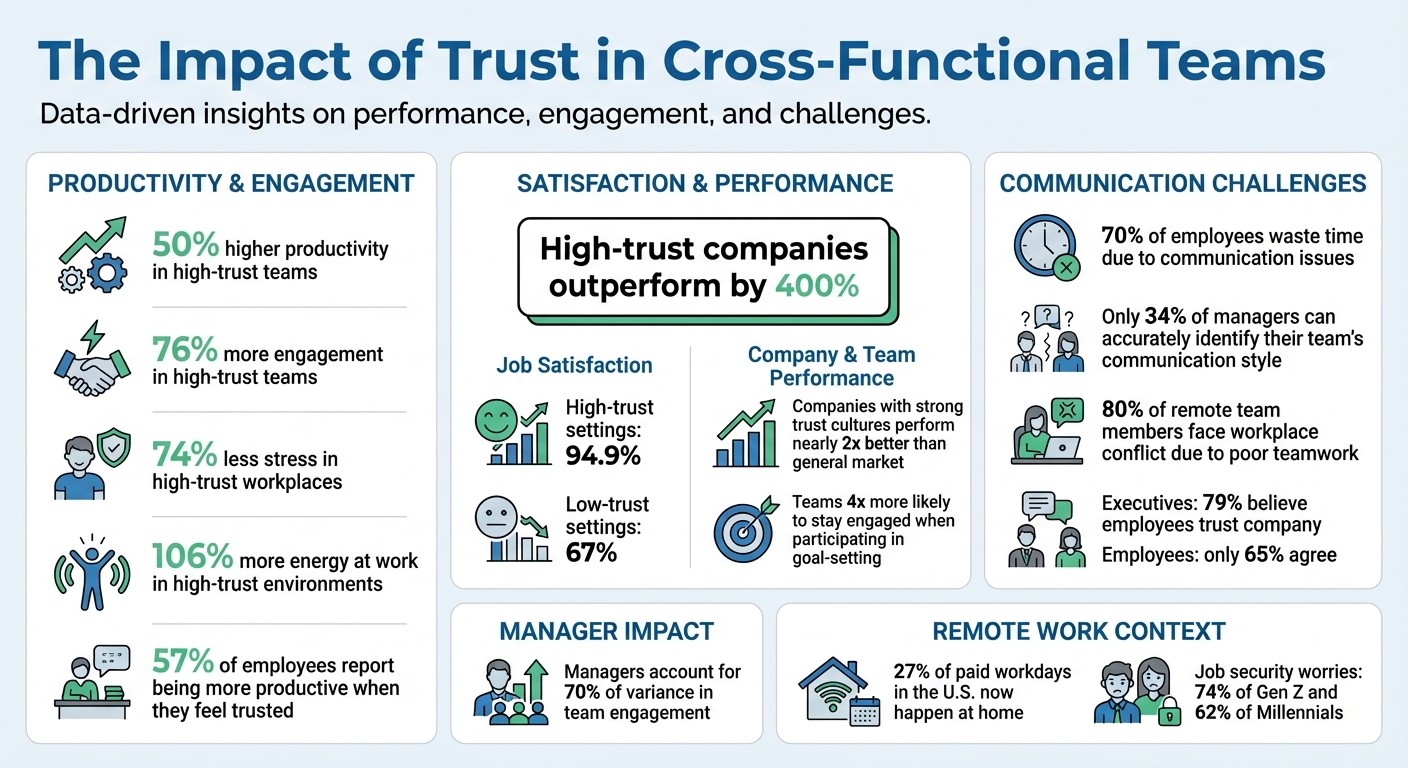
Trust in Cross-Functional Teams: Key Statistics and Impact
4 Core Elements of Trust in Cross-Functional Teams
Building trust in cross-functional teams isn’t automatic - it’s earned. At its heart, trust rests on four key pillars that create the foundation for effective collaboration. Let me walk you through each one.
Credibility and Competence
Let’s start with credibility. This boils down to how much your teammates trust what you say. And the quickest way to build that trust? Show your expertise consistently. When your team knows you’re reliable in your area of expertise, they’ll naturally lean on you for input.
Rick Lepsinger, President of OnPoint Consulting, explains it well:
"Credibility: How much team members believe what a person says".
Here’s the kicker: high-trust environments driven by credibility can increase productivity by 50% and improve employee engagement by 76%. At Pebb.io, we’ve seen this firsthand by pairing team members from different departments on projects. For example, when a developer collaborates with a marketer, they get a front-row seat to each other’s skills. It’s a simple yet powerful way to build mutual respect. Another tactic we swear by is celebrating individual contributions publicly - whether it’s a shout-out in the company news feed or a quick highlight during team meetings.
But credibility alone isn’t enough. It needs to be backed by reliability.
Reliability and Consistency
Expertise might open the door, but reliability is what keeps it open. Reliability is all about following through on commitments. Without it, trust can crumble. When team members can’t count on each other, hesitation creeps in, blame gets passed around, and collaboration takes a hit.
So how do we keep reliability strong? Treat action plans like contracts. Clearly outline who’s responsible for what and set specific deadlines. At Pebb.io, we’ve found that creating a "collaboration contract" works wonders. It’s a simple document that spells out what each department needs and when. Ron Ashkenas sums it up perfectly:
"When people know what's needed, in what form, and by when, they can then tell you whether it's possible or not, and then you can have a real dialogue about what can be done".
This kind of clarity and consistency naturally leads to better communication.
Open Communication and Transparency
Here’s the thing: transparency is the glue that holds trust together. When one department hoards critical information, it forces others to guess - and those guesses are often wrong. Did you know only 34% of managers can accurately identify their team’s natural communication style? That stat alone shows how much room there is for improvement.
The solution? Centralize key resources like product specs, market reports, or troubleshooting guides. At Pebb.io, we use shared news feeds to make sure updates reach everyone - marketing, product, and customer service - all at the same time. And before any project kicks off, we clarify how decisions will be made. Will it be consensus-based or top-down? Laying this out upfront avoids a ton of headaches later.
As TeamDynamics puts it:
"Trust starts with fairness. Fairness starts with transparency".
This brings us to the final piece of the puzzle: a team-first mindset.
Team-First Mindset
A team-first mindset means putting collective goals above department-specific agendas. It’s about creating a culture where collaboration thrives. One way we’ve done this at Pebb.io is by giving other departments oversight on their areas of expertise during larger projects. It’s a small shift, but it makes a huge difference in building trust.
Another game-changer? Cross-departmental learning sessions. These are opportunities for teams to share insights about their roles and even explain their jargon. It’s amazing how much empathy and understanding this can build, breaking down those pesky “us versus them” walls.
When everyone’s rowing in the same direction, admitting mistakes or asking for help feels safe. And that’s when real collaboration happens.
How to Build Trust in Cross-Functional Teams
Let’s get into the nuts and bolts of building trust. These aren’t just abstract ideas - they’re the exact strategies we use at Pebb.io every day, and I can tell you firsthand, they deliver results.
Maintain Regular Communication
Did you know that 70% of employees waste time because of communication issues? It’s a staggering number, but it’s also completely avoidable. At Pebb.io, we’ve learned that consistent communication beats chaotic bursts of interaction every time. Here’s what we do:
Bi-weekly 15-20 minute syncs: We connect departments like R&D and Marketing for quick, focused check-ins. These aren’t drawn-out marathons; they’re efficient updates to ensure product development aligns with market needs.
Clear email protocols: Urgent emails get standardized subject lines, like "IMMEDIATE ACTION REQUIRED: [Topic]." This way, critical messages don’t vanish into inbox black holes.
Purpose-driven meetings: Before any meeting, we clarify whether it’s for sharing updates or making decisions. This keeps discussions tight and actionable.
Asynchronous video messaging: For our global teams, we rely on tools like Loom to share context without dragging everyone into a live call. It’s a lifesaver for time zones.
Here’s the game-changer: we centralized everything. At Pebb.io, all our communication - whether it’s chat, tasks, news, or knowledge libraries - lives in one platform. No more app-switching or chasing down files from weeks ago. When information is easy to find, people trust the system - and each other - more.
Once communication is running smoothly, the next step is to establish clear roles and shared goals.
Create Shared Goals and Accountability
Trust falls apart when people aren’t sure who’s doing what. That’s why we swear by the RACI matrix. It’s a simple framework that defines who is Responsible, Accountable, Consulted, and Informed for every task. This clarity avoids overlap and keeps things running smoothly.
Ron Ashkenas put it best:
"When people know what's needed, in what form, and by when, they can then tell you whether it's possible or not, and then you can have a real dialogue about what can be done".
At Pebb.io, we take this a step further with something we call a "collaboration contract." It’s a straightforward document that maps out the project timeline, responsibilities, and deliverables. Everyone knows what’s expected, and - here’s the key - they’re encouraged to speak up if something feels off. This kind of transparency fosters respect and prevents misunderstandings.
Another trick? Align incentives. Instead of siloed goals like "sales targets" for one team and "lead generation" for another, we create shared metrics. For example, we track "qualified leads that convert within 90 days." When everyone’s success is tied together, trust grows naturally.
With roles and goals locked in, the next step is making collaboration feel effortless.
Encourage Collaboration Across Departments
Here’s the thing: breaking down silos isn’t about forcing people to work together. It’s about creating the right conditions for collaboration to happen naturally. Here’s what’s worked for us:
Rotating team pairings: We regularly pair people from different departments for short-term projects. Over time, this builds a network of trust across the company.
Learning sessions: These are gold. Representatives from each team explain their workflows, challenges, and even their jargon. When Marketing understands the hurdles that Developers face, or Customer Service sees the research behind product changes, empathy skyrockets.
Respect autonomy: Nothing kills trust faster than stepping on toes. We make it a point to publicly reaffirm that each department has the final say over its domain. This keeps collaboration voluntary and prevents teams from becoming defensive.
We’ve also created dedicated project spaces for cross-functional work. These are private, focused hubs where teams can share updates, documents, and ideas. Everything stays organized and accessible, so no one wastes time hunting for information.
The payoff? Employees who experience high levels of collaboration are overwhelmingly satisfied - 94.9% report being happy with their jobs. When collaboration is easy and rewarding, trust isn’t just a goal - it’s the natural outcome.
Using Technology to Build Trust in Remote and Hybrid Teams
Let me tell you something I’ve learned while working with remote and hybrid teams: the real challenge isn’t the distance - it’s the disconnection. When 80% of remote team members say they’ve faced workplace conflict due to poor teamwork, it’s clear that trust doesn’t just appear out of thin air. And here’s the kicker: without the right technology, trust crumbles.
Remote work has become the norm, with 27% of paid workdays in the U.S. now happening at home. But there’s a huge problem - 1 in 4 leaders still cling to outdated productivity metrics, tracking hours instead of actual results. That’s what we call "productivity theater", and it’s a surefire way to destroy trust. The fix? Technology that prioritizes outcomes, fosters transparency, and builds genuine connections. Let me walk you through how we’ve tackled this at Pebb.
Communication Platforms That Truly Connect Teams
When we set out to build Pebb, we had a clear mission: simplify the chaos. I’ve seen too many teams juggling Slack for chat, Google Drive for files, Asana for tasks, and email for... well, everything else. It’s exhausting, and worse, it creates gaps that erode trust.
With Pebb, everything is in one place: group chats, task tracking, voice and video calls, knowledge libraries, and even a news feed. No more app-hopping, no more missed messages. Centralizing communication makes every interaction smoother, and trust naturally follows.
The real game-changer? Asynchronous collaboration. For global teams, recorded video messages and AI-generated summaries mean fewer awkwardly timed live calls. This approach respects personal boundaries and curbs burnout - a critical factor when employees in high-trust environments report 50% higher productivity and 106% more energy at work.
And let’s talk value. Pebb is free for up to 15 users, and our premium plan costs just $4 per user per month. Compare that to Slack at $7.25+ or Workvivo at $8-$12, and you’re getting more functionality for less. Seamless communication isn’t just about convenience - it’s about building trust through transparency.
Transparency Starts with Centralized Tools
Warren Buffett once said:
"Trust is like the air we breathe - when it's present, nobody really notices; when it's absent, everybody notices".
That quote hits home. At Pebb, we’ve designed centralized tools to make sure everyone has access to the same information. Task tracking, knowledge libraries, shared calendars - these tools aren’t just conveniences; they’re trust-builders. Everyone knows who’s working on what, by when, and where to find the details they need.
Here’s why this matters: when employees feel included and trusted, 57% report being more productive than they were before the pandemic. Transparency makes people feel valued. Features like our news feed broadcast company updates so no one feels left out, and when teams participate in setting goals, they’re nearly 4 times more likely to stay engaged.
We’ve also made sure to protect against burnout. With tools to set working hours, status updates, and time zone boundaries, Pebb helps teams respect each other’s limits. Trust thrives when people know their well-being is a priority.
Building Relationships Beyond Work
Here’s something I’ve learned: you can’t build trust if your team only connects over deadlines and deliverables. People need spaces to be themselves, and that’s why we created private clubs in Pebb. Whether it’s a book club, a fitness challenge, or just a meme-sharing hangout on Fridays, these spaces let people bond as humans, not just coworkers.
We also added a recognition channel where wins - big and small - are celebrated publicly. Recognition goes a long way, especially when 74% of Gen Z and 62% of Millennials worry about job security. Feeling seen and appreciated builds trust like nothing else.
Another tool we love? Automated check-ins. Weekly stand-ups give remote teams a chance to align on goals, share feedback, and admit when something isn’t working - without the fear of being judged. This creates the kind of psychological safety that high-trust companies thrive on. And trust me, it works: companies with high-trust cultures outperform their competitors by up to 400%.
At the end of the day, technology should bring people closer, not push them apart. Every feature we’ve built at Pebb is designed with that in mind. When your team trusts the tools they use, they start trusting each other more, too. And that’s when the magic happens.
How to Measure and Maintain Trust in Your Teams
Trust is the bedrock of any successful team - without it, everything else crumbles. Yet, too often, teams assume trust is simply "there" until cracks start to show. By then, it's often too late. Here's the thing: trust isn’t an abstract, magical quality. It leaves behind clues, and if you know where to look, you can measure it, strengthen it, and keep it alive.
Spotting the Signs of Trust
Trust comes in two flavors: cognition-based and affect-based. Cognition-based trust is all about logic and reliability - like whether Sarah consistently follows through on her promises or if Marcus shares information that helps the team succeed. On the other hand, affect-based trust dives into the emotional side of things - whether teammates genuinely support each other beyond their day-to-day tasks.
At Pebb, we've made it easy to track these trust markers. Our platform includes quick updates through news, chat, tasks, and calendar tools that help teams stay aligned without adding extra tools to their workflow. These check-ins are like a radar system, picking up early warning signs like micromanagement, reluctance to ask for help, or finger-pointing. And let me tell you, they’re especially crucial for cross-functional teams where no one has direct authority - trust is the glue that holds everything together.
Here’s a stat that might surprise you: while 79% of executives believe employees trust their company, only 65% of employees feel the same way. That disconnect is risky. Tools like McAllister's Affective and Cognitive Trust scale or simple team retrospectives with questions like, "What’s helping us move forward?" and "What’s holding us back?" can bridge that gap. These aren’t just fluffy exercises - they’re your early warning system for potential trust issues.
Armed with these insights, you can shift into action with consistent feedback and open communication.
Build Trust Through Feedback and Check-Ins
Did you know that managers account for 70% of the variance in team engagement? That’s huge. It means how you approach check-ins can make or break the trust within your team. Weekly one-on-ones, team retrospectives, and even asynchronous feedback threads are all opportunities to create what psychologists call "psychological safety." This is the kind of environment where people feel safe to fail, speak up, and challenge ideas without fear of backlash.
At Pebb, we’ve embraced this idea with something we call "Feedback Fridays." Every week, teammates hop into a shared chat or task thread to recognize each other’s wins or flag any blockers. It’s simple, but it works. And here’s another tip: at the end of every meeting, take five minutes to ask, "What should we keep doing?" and "What should we change next time?" These small rituals can defuse tension before it turns into something bigger.
The benefits are undeniable. Employees in high-trust workplaces report 74% less stress and 106% more energy. That’s the difference between a team that’s thriving and one that’s barely hanging on.
Celebrate Wins the Right Way
Here’s a truth I’ve learned: celebrating achievements isn’t just about boosting morale - it’s about reinforcing trust. But not all praise is created equal. Generic comments like "Nice job" don’t cut it. Specific, meaningful recognition does. For example, instead of saying, "Good work on the report", try this:
"The way you structured the data in that report made it so much easier for the team to make a quick decision. That really moved the needle!"
See the difference? You’re not just acknowledging the effort; you’re showing how it made an impact.
At Pebb, we’ve added recognition through our news feed to highlight wins - whether it’s a big milestone or a small but meaningful contribution. Some teams prefer formal shout-outs, like "MVP of the Week", while others lean into spontaneous celebrations. The trick is understanding what your team values. Some people thrive on public recognition, while others prefer a quiet "thank you." Respecting those preferences goes a long way in building trust.
And the payoff? High-trust workplaces see 76% higher employee engagement and 50% greater productivity. Companies with strong trust cultures even perform nearly twice as well as the general market. It’s proof that simple acts - like saying "thank you" in a thoughtful way - can ripple out into something much bigger.
Dale Carnegie said it best:
"A person's name is, to that person, the sweetest, most important sound in any language."
So, use it. Be sincere. And watch trust flourish.
Conclusion
Trust is the glue that holds cross-functional teams together. Without it, deadlines slip, efforts get duplicated, and frustration takes root.
Here’s the kicker: companies that cultivate high-trust cultures consistently outperform their peers - nearly twice as much. Employees in these environments report 74% less stress, 94.9% job satisfaction compared to just 67% in low-trust settings, and are far less likely to quietly disengage from their work.
So, where do you start? Pick one strategy from this guide and make it your focus. It could be something as simple as introducing weekly check-ins, defining roles with a RACI matrix, or setting up a recognition channel to celebrate wins. The key is consistency. Trust doesn’t appear overnight - it’s built through steady actions and a genuine commitment to your team’s well-being.
At Pebb, we’ve taken these strategies and turned them into tools that make building trust easier. Whether it’s news feeds that amplify wins, tasks and calendar tools that keep work on track, or group chats that keep everyone on the same page, we’ve got your back. The best part? You can start with our free plan for teams of up to 15 people, or upgrade to our premium plan for just $4 per user.
With the right approach, tools, and dedication, you can create a culture where people feel safe to take risks, share bold ideas, and show up as their best selves. That’s when teamwork stops being a chore - and starts creating magic.
FAQs
How do credibility and competence help build trust in cross-functional teams?
Credibility and skill are the glue that holds cross-functional teams together. When teammates regularly show they're dependable and know their stuff, it gives everyone peace of mind that work will be done right and choices will be smart.
This kind of trust does more than just keep projects moving - it fosters a space where people genuinely rely on and respect each other’s abilities. It’s about more than just completing tasks; it’s about creating a team dynamic where everyone grows and succeeds together.
How does technology help build trust in remote teams?
Technology has completely reshaped how we build trust in remote teams. It’s not just about keeping everyone in the loop - it’s about making communication, collaboration, and transparency second nature. Take Pebb, for example. With features like group chats, voice and video calls, news feeds, and shared task management, it’s like having your entire team in one virtual room. These tools help everyone stay connected, informed, and, most importantly, engaged - laying the groundwork for trust to grow.
Here’s why it works: when communication is smooth, misunderstandings shrink, and people feel both supported and accountable. With Pebb, real-time feedback and updates are baked into the system, encouraging openness and dependability - two cornerstones of trust in any team. By ensuring everyone is on the same page, no matter the miles between them, technology creates a space where trust isn’t just possible - it’s inevitable.
What’s the best way to measure and maintain trust in a team?
Trust is the bedrock of any strong team, and understanding how to measure it starts by observing how people interact daily. Are team members openly sharing ideas? Do they collaborate without hesitation? These are the subtle yet powerful signs that trust is alive and well. Tools like regular feedback sessions, quick pulse surveys, or even just paying close attention to team dynamics can reveal where trust is flourishing - or where it might need a little attention.
Keeping that trust intact requires consistency. It’s about setting clear goals, communicating openly, and holding everyone accountable - including yourself. The little things matter too: acknowledging someone’s hard work, giving thoughtful feedback, or creating an environment where everyone feels included. That’s where tools like Pebb step in to make life easier. With features like group chats, shared knowledge libraries, calendar events, tasks, and employee directories, staying connected becomes second nature.
Building trust doesn’t happen overnight, but with effort, honesty, and a culture where everyone feels valued, it becomes the invisible thread that ties your team together.
