
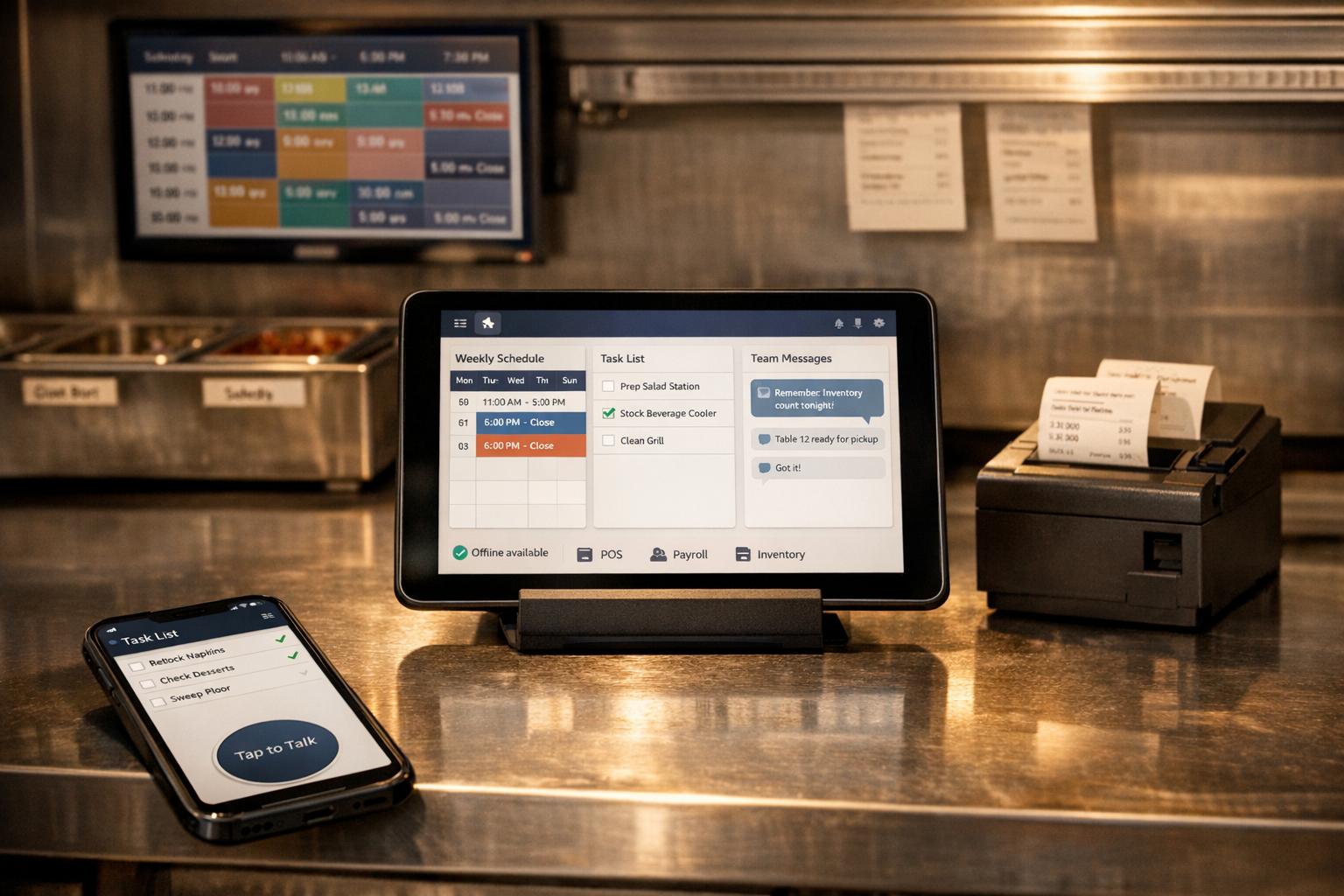
Author: Ron Daniel
The Best Communication Apps for Restaurants and Hospitality Teams
Compare top communication apps for restaurants—scheduling, task management, offline access, integrations, and pricing to simplify team operations.
Running a restaurant isn’t just about food - it’s a constant balancing act of schedules, last-minute changes, and making sure everyone knows what’s happening. Let me tell you, I’ve seen firsthand how chaotic things can get. I once talked to a gastropub manager who shared how their WhatsApp group was a total mess - important messages buried under memes, checklists lost in the shuffle, and no way to remove ex-employees from chats. Sound familiar? They were also juggling three different apps just to keep the team running. It was exhausting and inefficient.
Here’s the kicker: 80% of restaurants still rely on personal messaging apps that weren’t designed for professional use. These apps might work in a pinch, but they lack the tools restaurants need, like task tracking, scheduling, and admin controls. And when you’re dealing with a turnover rate that can hit 75% annually, it’s a recipe for disaster.
That’s why I’m excited to dive into this topic. We’re breaking down the best tools out there - apps like Pebb, Xenia, 7shifts, and more - that are built specifically for restaurant and hospitality teams. Whether it’s shift scheduling, real-time communication, or task management, these platforms can simplify your day-to-day operations. Let’s explore how you can finally ditch the chaos and get back to what you do best: creating amazing experiences for your guests.
1. Pebb
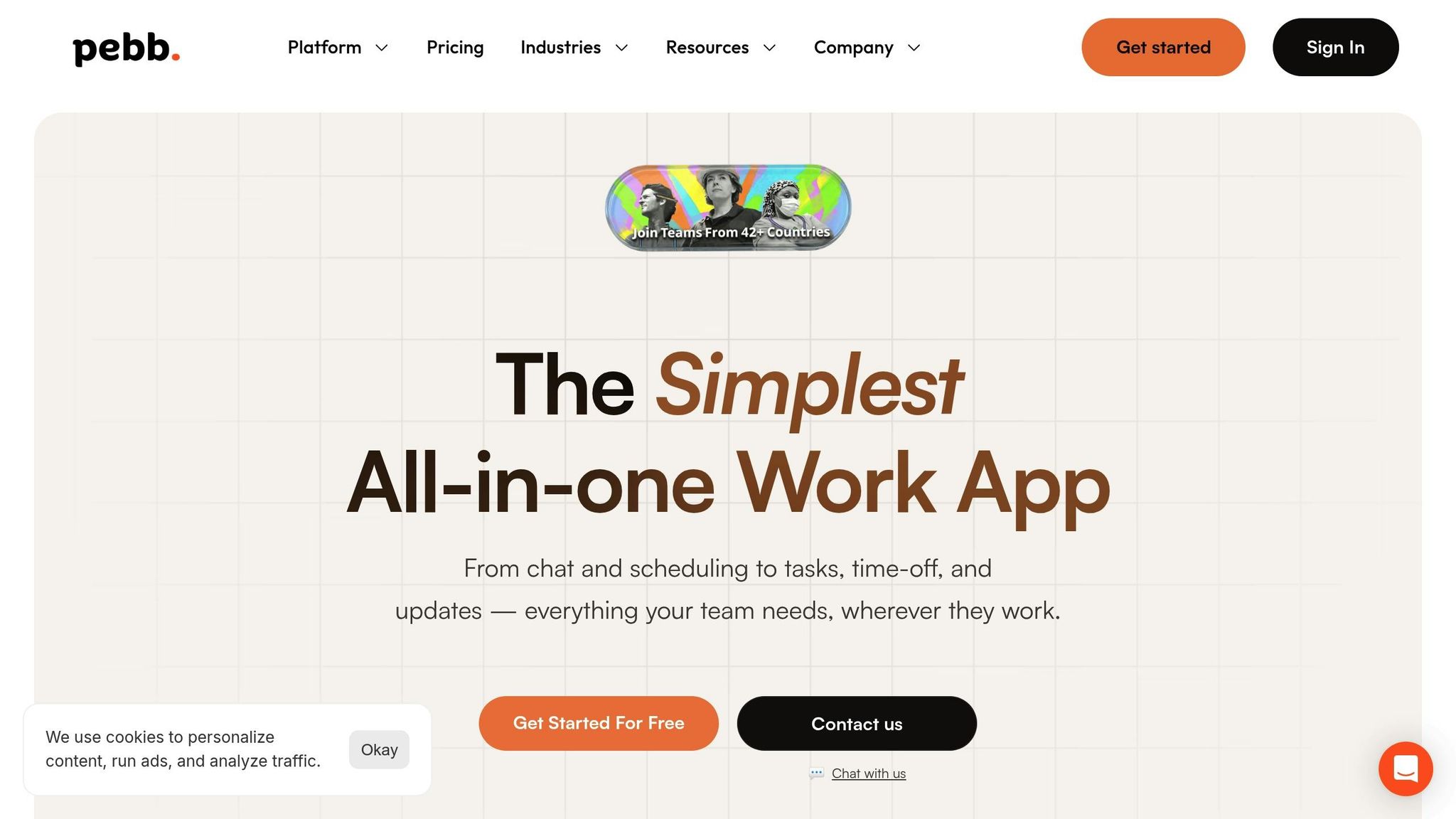
We created Pebb with teams like yours in mind - the kind that juggle the fast-paced chaos of a dinner rush while managing a roster of employees across multiple shifts. It’s an all-in-one platform designed to replace the patchwork of apps many restaurants rely on daily. No more jumping between WhatsApp for messages, Google Sheets for schedules, and sticky notes for task lists. With Pebb, everything lives in one place. Let me walk you through how it simplifies scheduling, communication, operations, and more.
Shift Scheduling
Our drag-and-drop scheduler is a game-changer. It comes with pre-made templates for common shifts, and adjusting it for last-minute changes is a breeze. Employees can set their availability, request time off, or even swap shifts - all from their phones. Say goodbye to those midnight texts about shift changes. Plus, our mobile time clock tracks attendance and punch-in locations, giving you a clear picture of who’s on the clock. And here’s the kicker: all that data flows seamlessly into your workflows thanks to integrations included in our Premium plan, alongside enterprise-ready tools like SSO.
Task Management
Keeping track of tasks has never been easier. You can assign workflows - like prep lists, cleaning schedules, or inventory checks - and monitor progress in real time. For example, when your sous chef marks the morning prep checklist as complete, you’ll see it instantly. No more guessing if a task got done. Everything is logged with timestamps, so there’s always accountability.
Collaboration and Operations
This is a lifesaver in the hospitality world: all-in-one workflows. Even during your busiest hours, your team can still manage schedules, digital forms, clock in and out, and task lists in one place. No missed updates, no added stress.
Pricing
We keep pricing simple and transparent. Our Standard plan is completely free for teams of up to 15 employees. It includes features like work chat with unlimited history, a news feed, knowledge library, tasks, digital forms, calendar, clock in, shift scheduling, PTO management, and apps. For teams that need more, the Premium plan is just $4.00 per user per month. It adds extras like voice and video calls, analytics, unlimited admins, permissions control, advanced work chat, advanced posts, enterprise SSO, integrations, and Premium SLA support. Unlike other platforms, we don’t charge extra for the tools your team actually needs. At this price point, we’re proud to offer a solution that delivers real value without hidden fees.
2. Xenia
Navigating the crowded space of restaurant communication apps, Xenia has carved out its niche by zeroing in on operational efficiency. While Pebb is a free, all-in-one employee app for communication and operations, Xenia focuses on task-driven management. It simplifies multi-location restaurant operations with features like standardized checklists, temperature logs, and cleaning schedules, all backed by timestamps and photo documentation. Let me walk you through how Xenia’s task management, system integration, and offline functionality make it a solid choice for restaurant teams.
Task Management
One of Xenia’s standout features is its ability to streamline daily processes with standardized checklists and compliance tracking. It provides access to over 1,000 templates tailored to restaurant needs, covering everything from health inspections to line checks. What’s more, its AI assigns tasks based on employee skills, certifications, and workload, ensuring nothing slips through the cracks. Each task is logged with a timestamp, offering full accountability. A Tempstop owner shared this insight: "Getting all of our employees across multiple locations to adhere to daily processes has been a challenge. Xenia's checklist scheduling features have essentially eliminated that concern".
Integration with Restaurant Systems
Xenia shines when it comes to system integration. For instance, it works with Bluetooth and LoRaWAN temperature sensors to continuously monitor critical areas like walk-in coolers. If a freezer’s temperature veers out of range, the system immediately notifies the right team member and initiates corrective actions. It also syncs with 7shifts, so whenever new employees are added to the schedule, they’re automatically granted Xenia access with the right permissions. Plus, kitchen equipment can be tagged with QR codes, linking directly to training videos and operating procedures.
Offline Functionality
Here’s a feature that’s a lifesaver during connectivity hiccups: Xenia allows staff to complete tasks offline. Once the connection is restored, all data syncs seamlessly.
Pricing
Xenia’s pricing structure is straightforward. It offers a free plan for up to five users. For larger teams, the Starter plan costs $99 per month for up to 15 users, while the Premium plan is priced at $199 per month. Custom pricing is available for bigger teams. With a glowing 4.9/5 star rating on Capterra, it’s clear that many restaurant owners value what Xenia brings to the table.
3. Slack
Slack is a well-known messaging app designed for workplace communication, and while it wasn’t created specifically for the hospitality industry, many restaurants have adopted it to streamline team interactions. The app organizes conversations into channels - imagine something like #kitchen-updates or #server-notes - to help keep teams and topics neatly separated. D'Andre Carter from Soul & Smoke shared his perspective:
It allows our management team greater visibility into what's happening at all of our locations at any given time.
However, because Slack is a general-purpose tool, it doesn’t offer the specialized features that restaurant-specific platforms like Pebb or apps such as 7shifts bring to the table. Let’s dive into how Slack fits into the fast-paced rhythm of a restaurant.
Task Management
When it comes to managing daily tasks, Slack provides options like reminders and pinned messages. But here’s the catch - it doesn’t include built-in checklists for things like prep work or inventory tracking. During peak hours, the sheer volume of messages can also bury important updates. Florian Pfahler from Hannah's Bretzel explained:
It's the most efficient way to communicate with a specific individual or the entire team and bring new items and issues to their immediate awareness.
That said, the system’s efficiency depends heavily on constant monitoring, which isn’t always realistic when the kitchen is buzzing or the dining room is packed.
Integration with Restaurant Systems
One of Slack’s strengths is its ability to integrate with over 2,600 apps, making it possible to set up channels for tasks like ingredient planning or sharing training materials. Duane Peck, Head of Industry Marketing at Slack, highlighted how this works in practice:
We have a farm-to-table restaurant, SingleThread, on Slack that's often updating their menus, so they have an ingredient planning channel.
Managers can also upload training videos - covering things like table setups or closing procedures - that staff can revisit as needed. Plus, Slack’s search feature is a lifesaver for tracking down archived information, like seasonal planning notes from last year. Still, while these integrations are helpful, they don’t fully address the unique challenges of running a restaurant, which is where dedicated platforms often shine.
Pricing
Slack’s free plan comes with some limitations, like a 90-day cap on message history, which can be frustrating for teams that need long-term access to conversations. If you’re considering a paid plan, the Pro tier starts at $7.25 per user per month when billed annually (or $8.75 monthly). The Business+ plan ranges from $12.50 to $15.00 per user per month. For a team of 20, that’s a monthly cost of $145–$300, not including any additional fees for shift scheduling tools. By comparison, Pebb offers a free plan for up to 15 employees and a premium option at just $4.00 per user per month, making it a more budget-friendly choice tailored specifically for restaurant needs.
4. 7shifts
When it comes to scheduling tools designed specifically for restaurants, 7shifts stands out. With over 55,000 restaurants and 1.5 million professionals using the platform, it’s become a go-to solution for managing staff schedules and more.
Shift Scheduling
7shifts makes scheduling simple with its drag-and-drop interface. Managers can plan out schedules weeks in advance, make adjustments for overtime, and handle last-minute changes like no-shows. Employees also benefit from features like setting their availability, requesting time off, claiming open shifts, or swapping shifts - with manager approval, of course. Tayler Book, Co-founder of Beechwood Doughnuts, summed it up perfectly:
"I just copy over the schedule from the week prior, make whatever changes I need; it takes 15 minutes. 7shifts has given me time back to focus on the day-to-day operations and the future of the business".
But here’s where it gets even better - 7shifts syncs with your POS system to project sales with an impressive 95% accuracy. This helps managers schedule staff more effectively. Erhan Seven, Owner of The Factory Girl, explained:
"7shifts tells you if you publish that planned shift, you will lose money, but if you optimize that specific date and specific hours you will decrease your employee cost".
Scheduling is just one piece of the puzzle, though. The platform also offers tools for managing tasks.
Task Management
While 7shifts doesn’t aim to be an all-in-one solution, its task management feature is a handy addition. Managers can create customizable digital checklists for both front-of-house and back-of-house operations. Whether it’s daily, weekly, or one-off tasks, everything can be scheduled and tracked. Features like photo proof and specific readings (think fridge temperature checks) make it especially useful for restaurant operations. Briley Birkey, Owner Operator of Nautical Bowls, shared:
"What I love most about 7shifts is the task management - it gives me total peace of mind. From detailed opening checklists in the morning to closing procedures at night, every task is clearly outlined and followed".
Task completion rates reportedly jump by 37% when using 7shifts’ task management feature. However, it’s worth noting that this feature is only included in the highest-tier plan or as a $12.99/month add-on.
Now, let’s talk about how 7shifts integrates with other systems.
Integration with Restaurant Systems
7shifts connects seamlessly with POS and payroll systems, consolidating sales and labor data to save managers hours of admin work. For instance, synced sales and time-clocking data feed directly into a tip pool calculator, ensuring accurate tip outs without the hassle of manual calculations. Richmond Green, Partner and VP of Operations at gusto!, highlighted:
"The payroll integration has made a process that's typically a headache [into] a smoother process. Now, it takes minutes".
Another useful feature is the Manager Log Book, which keeps leadership teams aligned across shifts, replacing scattered communication methods like WhatsApp or paper logs. Automated reminders for shifts, breaks, and tasks also help cut down on calls, texts, and emails by 50%.
Pricing
7shifts uses a tiered pricing model based on the number of locations. Here’s how it breaks down:
Comp Plan: Free for single locations with up to 20 employees. Includes basic scheduling, time clocking, and team communication.
Entrée Plan: $29.99 per location per month for up to 30 employees.
The Works: $69.99 per location per month for unlimited employees, adding labor compliance tools and budgeting.
Gourmet Plan: $135 per location per month, which includes task management, onboarding, and advanced reporting.
For a team of 20, the cost ranges from $0 to $135 per month, depending on the features you need. Keep in mind, there are optional add-ons like task management ($12.99/month) or payroll ($39.99/month plus $6 per employee).
And if comprehensive communication and operations tools are a priority, restaurants might consider Pebb for real-time messaging, voice and video calls, tasks, digital forms, clock in, and scheduling - all for just $4.00 per user per month.
5. WhatsApp Business
For small restaurants and single-location hospitality teams, WhatsApp Business often becomes the go-to option. It’s free, familiar, and doesn’t require any training - perfect for quick coordination or one-off messages. Plus, let’s face it, it’s already on nearly everyone’s phone, making it super convenient for teams to adopt without a second thought.
Offline Functionality
One of WhatsApp’s standout features is its offline capability. Picture this: you’re in a basement storage room or a walk-in cooler with spotty Wi-Fi. Normally, messages might get lost in the void. But with WhatsApp, messages queue up and send automatically once the connection is back. It’s a simple but effective way to ensure nothing critical gets lost during a hectic shift.
Pricing
Here’s the deal with pricing: WhatsApp Business is free if you’re using it on a single device. But if you want to tap into its API for advanced features, you’ll start incurring per-message costs. Compare that to Pebb’s straightforward premium plan at $4.00 per user/month, with a free plan for up to 15 employees, and you start to see the difference.
That said, WhatsApp has its limitations. It doesn’t offer dedicated channels for different departments, native digital checklists for tasks like opening or closing, or built-in shift scheduling [12, 19]. Important updates can easily get buried in chaotic chat threads, and relying on personal phone numbers can blur professional boundaries. There’s also the risk of seasonal staff keeping access to group chats long after they’ve moved on, which could lead to potential security concerns [12, 13, 19].
If you’re running a small, single-location operation and just need basic communication, WhatsApp can do the trick. But if your team needs features like task management, scheduling, digital forms, clock in, and better accountability, platforms like Pebb are a game-changer. For just $4.00 per user/month, you get all that plus voice and video calls - a much more complete solution for teams looking to streamline operations.
6. Resy and OpenTable
Resy and OpenTable are well-known for handling guest reservations, table assignments, and front-of-house operations. However, they fall short when it comes to supporting internal team communication and coordination.
Integration with Restaurant Systems
One area where Resy and OpenTable shine is their ability to integrate with popular restaurant systems like Toast, Square, Clover, and Lightspeed. These integrations allow them to automatically pull in sales data, which helps managers align staffing levels with demand. For example, managers can analyze peak hours versus slower times to adjust schedules more effectively. Additionally, these systems can flag employees nearing 40 hours, helping to avoid unnecessary overtime costs. That’s great for reservation management, but here’s the catch: they don’t offer much when it comes to internal team communication. That’s where Pebb steps in, offering a much-needed solution with its comprehensive communication, scheduling, tasks, and digital forms features.
Pricing
Resy and OpenTable charge subscription fees based on the size of the restaurant and the volume of bookings, covering only reservation management. On the other hand, Pebb offers a more affordable and versatile option at just $4.00 per user/month. For that price, you get more than just reservation tools - you gain real-time team coordination, shift scheduling, task management, digital forms, and clock in. No need to juggle multiple subscriptions or platforms.
While Resy and OpenTable are excellent for managing guest reservations, they leave a gap in addressing the internal communication needs of your team. If you're looking for an all-in-one solution that combines guest management with robust team coordination, Pebb is the clear choice.
Pros and Cons
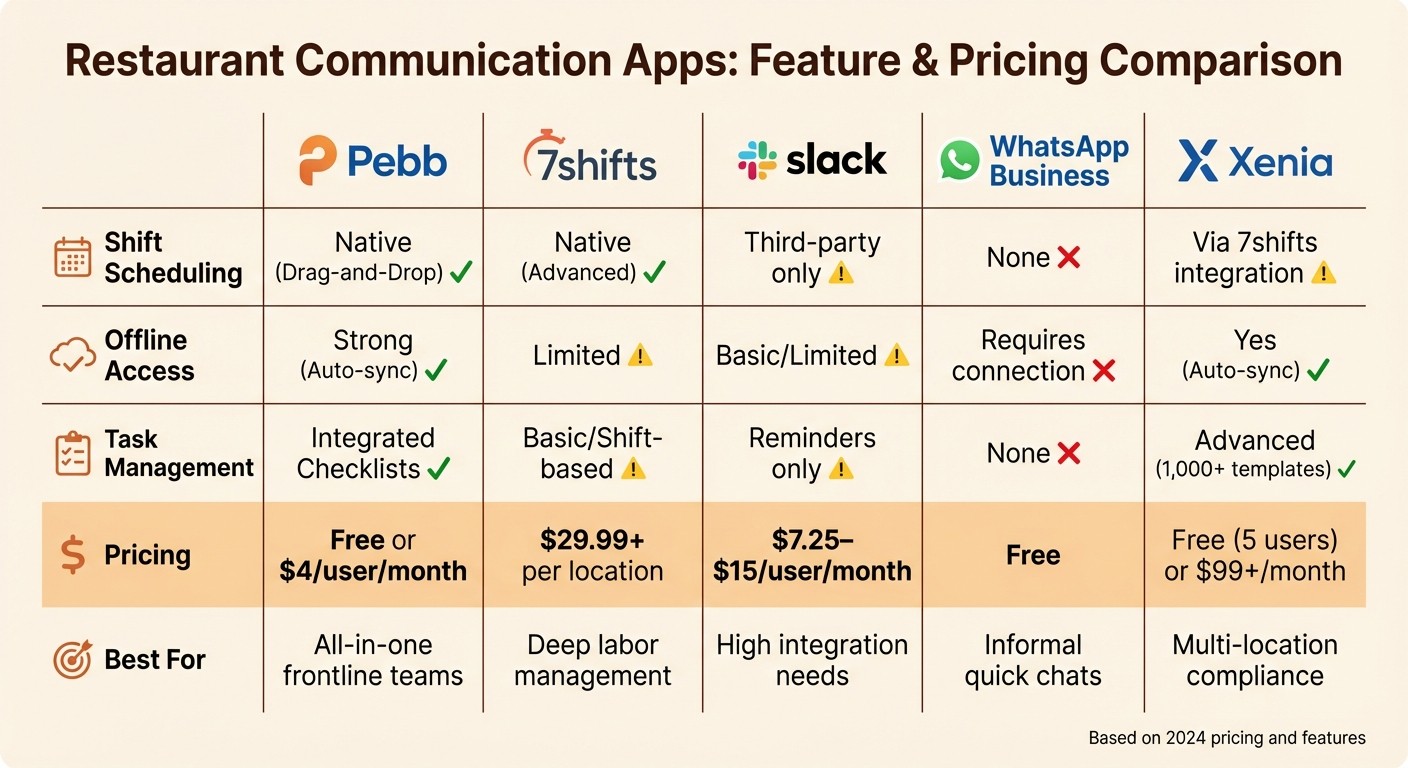
Restaurant Communication Apps Comparison: Features and Pricing
When it comes to choosing the right app, it’s all about weighing the strengths and weaknesses of each platform. Let me walk you through what each option brings to the table - and where they might fall short.
Let’s start with Pebb. It’s designed specifically for hospitality teams, offering everything you need in one affordable package. For teams of up to 15 users, it’s completely free, and beyond that, it’s just $4.00 per user, per month. That price includes native shift scheduling, task management, digital forms, clock in, and seamless team communication - all in one place. Its mobile-first design makes it a perfect fit for frontline teams who need quick, on-the-go access. While it’s a newer platform, its focus is on solving real-world communication and operations problems without throwing in unnecessary bells and whistles.
Now, 7shifts is a solid choice if you’re looking for advanced scheduling tools and labor analytics. It’s particularly strong in areas like tip pooling. But here’s the catch: pricing starts at $29.99 per month per location, which can get expensive if you’re managing multiple sites. Communication tools are basic, and offline access is limited. That said, it’s been shown to reduce restaurant calls, texts, and emails by 50% - a big plus for busy managers.
Then there’s Slack, which is all about powerful messaging and its 2,600+ integrations. However, it doesn’t include native scheduling features - you’ll need third-party apps for that. Pricing ranges from $7.25 to $15 per user, per month, and it’s better suited for tech-savvy office teams rather than frontline workers who need fast, simple tools.
WhatsApp Business is the familiar face in the mix. It’s easy to adopt because most people already know how to use it. But it lacks professional features like shift scheduling, task tracking, or offline support. Similarly, platforms like Resy and OpenTable are great for managing guest reservations but offer almost nothing for internal team coordination. That’s where a platform like Pebb comes in to fill the gap.
Here’s a side-by-side comparison to make things clearer:
Feature | Pebb | 7shifts | Slack | WhatsApp Business |
|---|---|---|---|---|
Shift Scheduling | Native (Drag-and-Drop) | Native (Advanced) | Third-party only | None |
Digital Forms & Clock In | Included | Limited | Third-party only | None |
Task Management | Integrated Checklists | Basic/Shift-based | Reminders only | None |
Pricing | Free or $4/user/month | $29.99+ per location | $7.25–$15/user/month | Free |
Ideal For | All-in-one frontline teams | Deep labor management | High integration needs | Informal quick chats |
At the end of the day, Pebb is built to deliver everything hospitality teams need in one place, at a price that won’t break the bank. If you’re looking to improve communication, streamline operations, reduce turnover, and keep your team connected, Pebb might just be the perfect fit for your restaurant.
Conclusion
When it comes to picking the right communication app, it all boils down to what your team needs and how much you're willing to spend. If you're managing a small to mid-sized restaurant or hospitality operation and want everything in one place - like shift scheduling, team chat, task management, digital forms, clock in, and more - Pebb might just be the solution you’re looking for. Here’s why: it’s free for teams of up to 15 users, and the premium plan is just $4.00 per user per month. That’s a price point that’s hard to beat, especially for frontline teams.
Now, if your focus leans more toward optimizing labor costs and diving deep into scheduling analytics, 7shifts could be a better fit. But keep in mind, their pricing starts at $29.99 per location per month, which can add up fast if you’re running multiple sites. And for teams already entrenched in the Microsoft ecosystem, Microsoft Teams is an option - but you’ll need to rely on the Shifts app to make it work effectively for hospitality.
Here’s a stat that really stands out: 60% of restaurant employees cite poor communication as their biggest frustration. On top of that, restaurants using digital tools report 30% fewer service mistakes and 25% faster problem resolution. Those numbers aren’t just impressive - they’re game-changing when it comes to reducing turnover and keeping operations smooth.
The bottom line? Stick to one comprehensive platform. Test it with a small group for 30 days before rolling it out company-wide, and ditch the chaos of juggling WhatsApp, email, and paper schedules. Pebb was designed to tackle these exact challenges, keeping your team connected and your operations running like clockwork.
FAQs
What are the advantages of using a communication app like Pebb for restaurant teams?
Using an all-in-one employee app like Pebb has completely transformed how restaurant teams stay connected and organized. Gone are the days of juggling group texts, emails, and cluttered bulletin boards. With Pebb, everything happens in real time - messaging, shift scheduling, task management, digital forms, and clock in - neatly bundled into one platform. It’s like having a digital command center that keeps everyone aligned, even when last-minute changes pop up or shifts get hectic.
What’s really a game-changer are the efficiency-boosting features. Shift swaps? Handled. PTO requests? Streamlined. Team chats? All in one place. Managers save hours of time and avoid those classic scheduling headaches. And since it’s mobile-friendly, staff can check updates or make changes on the go - perfect for a fast-paced restaurant setting where every second counts. Here’s the kicker: it’s just $4 per user. For an all-in-one tool tailored to restaurant teams, that’s a deal that’s hard to beat.
By bringing Pebb into the mix, restaurants can cut down on miscommunication, avoid unnecessary disruptions, and build a more engaged, collaborative team. The result? Smoother operations, better service, and a happier crew.
What makes Pebb the best communication tool for restaurant and hospitality teams?
Pebb is designed as an all-in-one employee app for communication and operations for the unique demands of restaurant and hospitality teams, where every second counts. It brings together everything you need - work chat, a news feed, shift scheduling, PTO management, tasks, digital forms, clock in, groups, a people directory, calendar events, and even voice and video calls - into one simple, easy-to-navigate platform.
Here’s what sets Pebb apart: it offers a free plan with zero hidden fees, and if you’re looking for more, the premium plan is just $4 per user. That’s it - no surprise costs or expensive extras. Many other platforms might seem affordable at first but often require pricey add-ons or integrations to deliver the same level of functionality. With Pebb, you get a complete toolkit that not only simplifies communication but also keeps your team running efficiently, all without breaking the budget.
Why is offline access essential for communication apps in restaurants?
Offline access isn't just a nice-to-have feature for restaurant communication apps - it’s absolutely essential. Think about it: frontline employees like servers and cooks often find themselves in areas where internet connectivity is spotty at best. Without offline capabilities, they risk missing crucial updates - shift changes, safety alerts, or even task assignments. And we all know how quickly miscommunication can throw a wrench into a restaurant's operations.
That’s where apps like Pebb step in to save the day. They ensure that key information, such as schedules, task lists, digital forms, and clock-in tools, stays organized in one place. This keeps the team informed and organized, no matter how chaotic things get during a dinner rush. And the best part? Everything your team needs stays connected, so everyone remains on the same page without skipping a beat.
